


More news on this day
Texas airspace is heading into another peak season with airport data showing packed planes, record passenger volumes and an aggressive buildup of airline capacity across Dallas, Houston and Austin.
Get the latest news straight to your inbox!
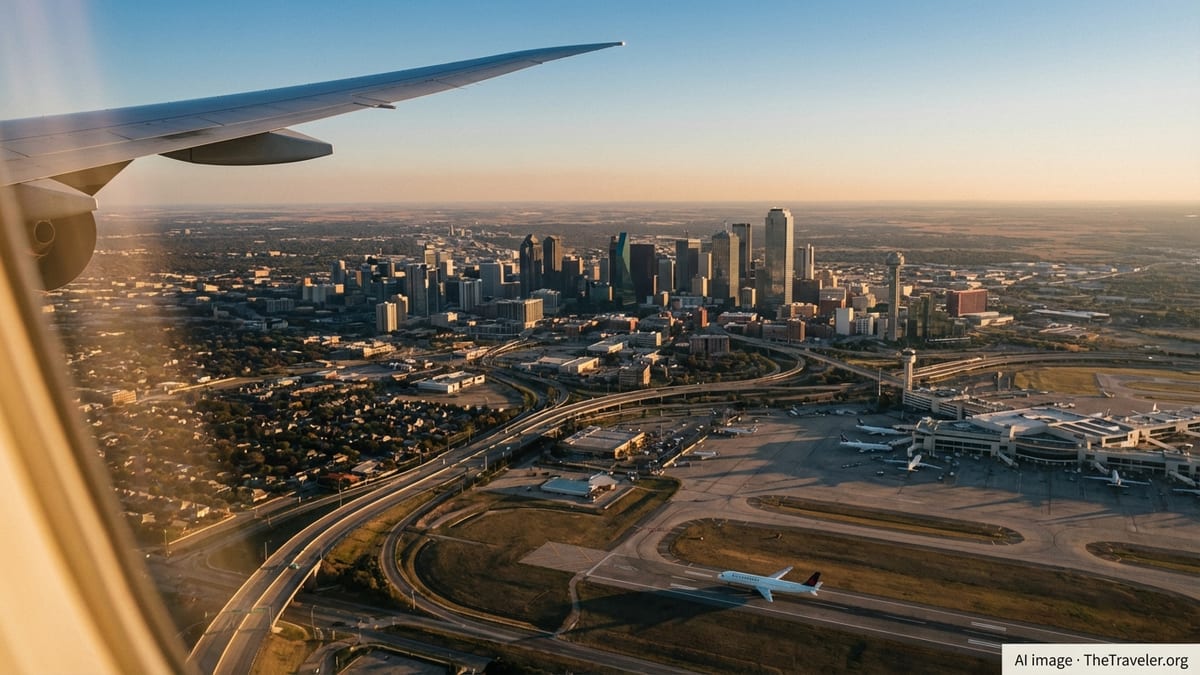
Record Passenger Volumes Across Major Texas Hubs
Publicly available traffic figures show that Dallas Fort Worth International Airport continues to rank among the world’s busiest hubs, with passenger totals nearing 90 million travelers annually. Aviation statistics indicate that the airport has logged strong year over year growth in both passenger traffic and aircraft movements, underscoring the scale of demand funneled through North Texas.
State economic reports highlight that Texas’ largest metropolitan areas are home to a substantial share of the state’s population, supporting the rise of multiple high volume airports. Dallas Fort Worth, Houston and Austin all appear in federal passenger enplanement tables, with Dallas Fort Worth and Houston Bush Intercontinental consistently ranking near the top of U.S. and North American league tables.
Houston’s airport system has also been trending upward. Recent summaries from Houston Airports point to a combined record of more than 60 million passengers in 2024 at George Bush Intercontinental and William P. Hobby, with forecasts suggesting another heavy summer travel period. Travel peaks around Spring Break, Memorial Day and Independence Day have helped push totals to new highs.
Austin Bergstrom International Airport, while smaller than Dallas and Houston, continues to climb the national rankings. Federal and local planning documents show that Austin is handling more than 20 million passengers annually, with passenger benchmarks indicating robust year over year increases even as the airport works through terminal expansion and gate constraints.
Airlines Bet Big on Texas Capacity
Major carriers are leaning into Texas as a cornerstone of their domestic and international networks. American Airlines has outlined record schedules from Dallas Fort Worth, with summer 2024 plans calling for more daily departures and more seats than at any other time in the airline’s history. The airport remains American’s largest hub, feeding both long haul international flights and dense domestic connections.
Network announcements from American describe new or expanded long haul routes from Dallas Fort Worth, including additional frequencies to leisure markets and international destinations. The carrier has also detailed plans to add seats to popular beach regions and South America, reinforcing Dallas Fort Worth’s role as a connecting gateway for travelers from across the United States.
Delta Air Lines has been working to shore up what it has previously described as a relative gap in its Texas presence. Company updates show added flights and new routes at Austin Bergstrom, along with extra capacity at Dallas Fort Worth and Dallas Love Field, and solid year round service into Houston and San Antonio. Peak day seat counts across the state are projected to rise, suggesting a coordinated push into the Texas market.
Low cost and ultra low cost carriers are also sharpening their focus on North Texas. Frontier Airlines has pursued route expansion from Dallas Fort Worth with additional daily flights and new city pairs, a strategy that pairs lower fares with rapidly growing demand in the Dallas Fort Worth metroplex. Budget carriers have signaled similar interest in secondary Texas cities as they look for growth beyond traditional coastal markets.
Holiday Peaks Showcase Sizzling Demand
Federal Aviation Administration data on daily flight volumes across the national airspace system illustrate how Texas traffic surges fit into broader patterns. The agency reports handling tens of thousands of flights and millions of passengers nationwide each day, with Texas hubs consistently featuring among the most active origins and destinations.
Holiday periods have acted as stress tests for the system. Reports from Houston show that the July 4 travel window recently brought more than 1.7 million passengers through the city’s airports over a roughly ten day stretch, with the Transportation Security Administration screening record numbers of travelers on peak days. Memorial Day and Spring Break have delivered similar spikes, hinting at underlying demand that persists well beyond school holidays.
In Dallas and Austin, airline schedule filings and airport statistics point to heavy summer and shoulder season traffic, with Thursday and Sunday often emerging as the busiest days. Published coverage notes that some of the highest passenger totals have occurred on ordinary weekdays not tied to major holidays, suggesting that business and convention travel remains an important contributor to the crush.
Travelers on the ground have encountered the results in the form of crowded terminals, fuller flights and tight parking conditions. At Austin Bergstrom, city documents describe the need to phase terminal and airfield improvements while simultaneously accommodating sustained growth. That balancing act has led to temporary gate closures and operational reshuffling even as airlines continue to chase the region’s expanding technology and lifestyle economy.
Infrastructure Strains and Expansion Plans
The rapid rise in passenger numbers is putting pressure on airport infrastructure across Texas. Planning reports from the Texas Comptroller and local airport authorities reference long term terminal expansion, new gates and airfield improvements as central to keeping pace with demand. Dallas Fort Worth is in the midst of significant capital projects that will add gate capacity and modernize facilities in several terminals.
In Houston, development plans focus on terminal modernization and airfield efficiency at Bush Intercontinental, with Hobby continuing to serve as a growing base for domestic and near international travel. Forecasts cited in city presentations anticipate continued growth in passenger counts and aircraft operations, reinforcing the need for additional investment across terminals, roadways and support facilities.
Austin’s challenge is particularly acute. City appendices show that enplanements have outpaced earlier projections, forcing planners to accelerate a multi year expansion program. While new concourse and gate projects are expected to add capacity later in the decade, construction phases are occurring alongside strong traffic, leading to a tight gate environment and periods of congestion.
Smaller airports in San Antonio, El Paso and other Texas cities are also weighing their options as airlines adjust their networks. Community discussions captured in public forums and local coverage indicate that travelers in these markets watch Austin and Dallas closely, looking for clues about how future route decisions and potential mergers could shift capacity within the state.
Texas as a Strategic Sun Belt Aviation Crossroads
Behind the packed concourses and busy runways lies a broader Sun Belt growth story. Statewide reporting notes that Texas continues to attract residents and employers at a rapid clip, with the Dallas Fort Worth, Houston and Austin regions drawing a significant share of new arrivals. Those demographic trends, combined with a central geographic position, help explain why airlines are routing more flights through Texas skies.
Industry rankings from Airports Council International list Dallas Fort Worth among the top airports in North America by passenger volume and aircraft movements, placing it alongside hubs such as Atlanta and Denver. Houston’s system and Austin Bergstrom appear further down the rankings but are climbing as airlines add new connections and larger aircraft to meet demand.
For travelers, the effect is a mix of opportunity and challenge. More flights and routes from Texas cities expand options for both domestic and overseas trips, often bringing more competition and a wider range of fares. At the same time, fuller planes, busier security checkpoints and infrastructure projects can add friction to the journey, particularly during severe weather or peak holiday periods.
As airlines refine their schedules for upcoming seasons, the data suggests that Texas will remain one of the brightest spots on the aviation map, with carriers of all sizes continuing to pack millions of passengers into flights that crisscross some of the busiest airspace in the United States.