


More news on this day
The opening of the Sheraton Nouakchott Hotel in early April 2026 has introduced Mauritania’s first internationally branded hotel, marking Marriott International’s debut in the country and signaling a new phase of hospitality growth in Northwest Africa.
Get the latest news straight to your inbox!
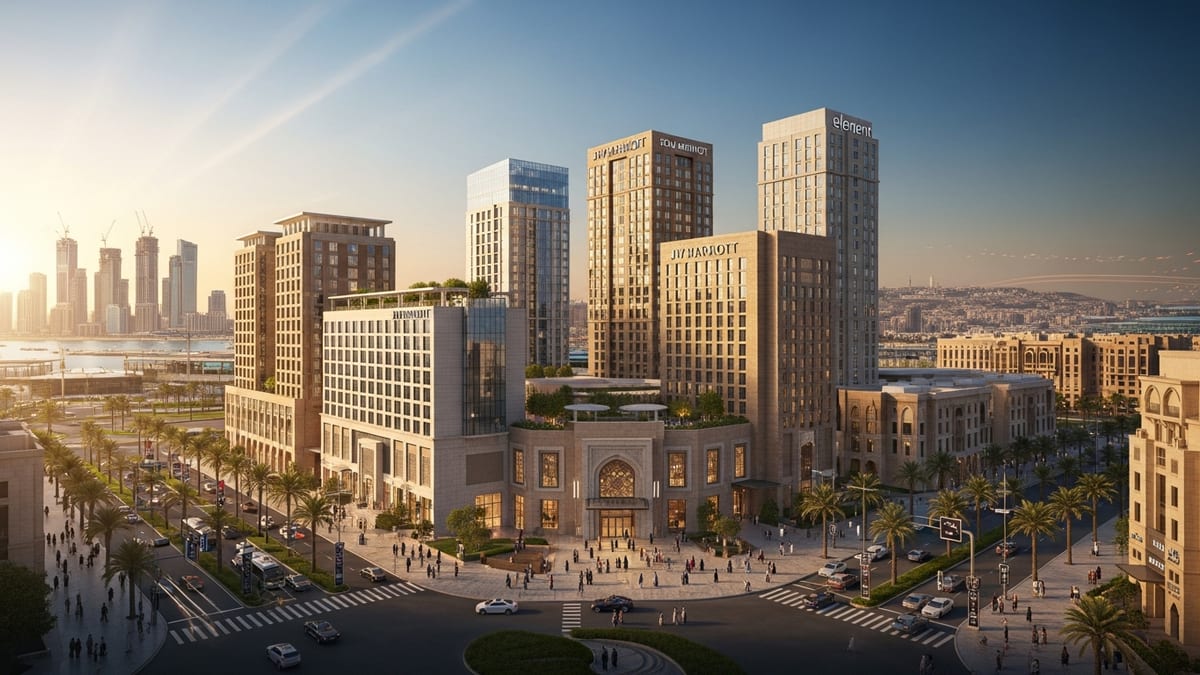
Milestone Opening for a Frontier Hospitality Market
Publicly available information shows that Sheraton Nouakchott is the first hotel operated by Marriott International in Mauritania and the first major global brand to establish a presence in the country’s capital. The 200 room property is positioned as an upscale, full service hotel designed to international standards, a notable shift for a market long dominated by locally run and unbranded accommodation.
Reports indicate that the opening in April 2026 follows several years of rising interest in Mauritania from mining, fisheries, infrastructure and energy investors. Industry coverage suggests that this new supply of branded rooms is intended to serve both corporate visitors linked to these sectors and a modest but growing flow of leisure travelers drawn to the country’s desert and Atlantic landscapes.
Recent hospitality trade reporting describes Sheraton Nouakchott as a strategic entry point for Marriott into one of West Africa’s least penetrated hotel markets. The move expands the group’s African footprint at a time when global operators are competing to secure positions in frontier economies that show gradual improvements in connectivity, diplomatic activity and business travel demand.
Analysts following the region note that the debut of a globally recognized flag can also serve as a signal of confidence to other international investors. A branded property often becomes a reference point for risk assessments, helping to reshape perceptions of a destination that has historically received limited tourism coverage compared with nearby countries.
Design, Facilities and a Dual Business Leisure Focus
Available fact sheets describe Sheraton Nouakchott as incorporating contemporary interiors with references to local Mauritanian design, aiming to blend international expectations with a sense of place. The hotel’s layout is reported to include multiple dining outlets, a spa and fitness center, and outdoor leisure areas intended to appeal to both short stay business guests and longer stay visitors.
Coverage on specialist hotel platforms highlights more than 2,600 square meters of meetings and events space, including a large ballroom, breakout rooms and pre function areas. This capacity positions the property as one of Nouakchott’s most substantial venues for conferences, corporate gatherings and social events, a segment that has so far been constrained by limited infrastructure.
Room categories are described in booking channels as offering city views and modern amenities targeted at international travelers, such as high speed connectivity, workspaces and standardised bedding and bathroom products. Industry observers note that this level of consistency has often been missing in the local market, where quality can vary significantly across existing midscale and upscale properties.
The dual focus on business and leisure aligns with Marriott’s broader regional strategy, which seeks to capture demand from multinational companies while also tapping into niche tourism segments. In the case of Mauritania, those include small group adventure travel focused on Saharan itineraries, nature tourism along the Atlantic coast and culturally oriented trips centred on historic desert towns.
Strategic Location in Nouakchott’s Urban Fabric
According to published coverage, Sheraton Nouakchott occupies a central position in the city, within reach of the Marché Capitale, the National Museum of Mauritania, the fishing port and popular Atlantic beaches. This placement gives the hotel access to both the administrative core and key cultural and commercial sites that appeal to international visitors.
Travel trade reports note that the property lies a short drive from Nouakchott International Airport, with road connectivity that supports same day arrivals for regional business trips. Proximity to government offices and diplomatic missions is expected to be a further draw, especially as Mauritania hosts more multilateral meetings and regional conferences.
Being situated between the Sahara Desert and the Atlantic coast, Nouakchott already serves as a natural base for itineraries that combine urban meetings with excursions into the interior. The presence of an international brand may make it easier for tour operators to package city stays with trips to desert oases, coastal bird reserves and heritage sites in the Adrar region, particularly for first time visitors who prefer familiar hotel names.
Urban planners and tourism consultants quoted in sector analyses have argued that high profile hotel projects can influence surrounding neighbourhood development over time. In Nouakchott’s case, observers will be watching whether the Sheraton’s arrival encourages improvements to public spaces, retail offerings and supporting services in the immediate vicinity.
Implications for Mauritania’s Tourism and Business Travel
Industry commentary frames the Sheraton Nouakchott opening as a potential catalyst for broader tourism development in Mauritania. The presence of a global loyalty program, in this case Marriott Bonvoy, connects the city to millions of frequent travelers who may be more inclined to consider the destination once it appears in familiar booking channels and search filters.
Reports from travel trade media suggest that local tour operators, event organisers and transport providers could benefit from increased demand generated by the hotel’s marketing reach. International branded properties typically invest in digital campaigns, corporate sales outreach and partnerships with airlines and destination marketers, which can amplify overall visibility for a relatively unknown country.
At the same time, analysts note that the impact will depend on parallel progress in areas such as air connectivity, visa facilitation and destination promotion. While the Sheraton opening expands available room stock at the upper end of the market, continued growth in arrivals will require coordinated efforts across public and private stakeholders to address perceptions related to remoteness and to clarify on the ground logistics for visitors.
Business travel is expected to remain the primary driver in the short term, supported by Mauritania’s role in regional mining, energy and fisheries value chains. However, the hotel’s positioning as a gateway to Saharan and Atlantic experiences suggests a long term bet on diversified tourism segments, including small meetings and incentives groups looking for new destinations.
A New Chapter in Marriott’s African Expansion
The debut of Sheraton Nouakchott also fits into a wider pattern of Marriott International expanding across Africa’s emerging and secondary markets. Recent openings in countries such as Cape Verde and ongoing projects in other West and Central African destinations indicate a strategy that balances established business hubs with frontier locations.
Hospitality trade publications have pointed to growing competition among major global groups to secure first mover advantage in markets where modern, branded hotel supply remains scarce. In Mauritania, Marriott has now claimed that position, setting a benchmark that rival operators may seek to match with their own future projects.
Observers tracking the region suggest that the performance of Sheraton Nouakchott over the next several years will be closely watched as an indicator of how quickly demand can materialise in a country that is still at an early stage of tourism development. Occupancy levels, conference bookings and the mix of international versus domestic guests will all provide signals for potential follow on investments by both local and foreign owners.
For now, the opening of Sheraton Nouakchott stands out as a symbolic and practical step in Mauritania’s efforts to position itself on the map of global travel and business destinations. The hotel’s arrival brings the country into the portfolios of one of the world’s largest hospitality companies and underscores a gradual shift in how the region is perceived by international travelers and investors.