


More news on this day
Singapore Airlines passengers can now reach a far wider range of cities in the United States on a single ticket, following a new interline partnership with Southwest Airlines that links Changi Airport to nearly 120 destinations across the American carrier’s domestic network.
Get the latest news straight to your inbox!
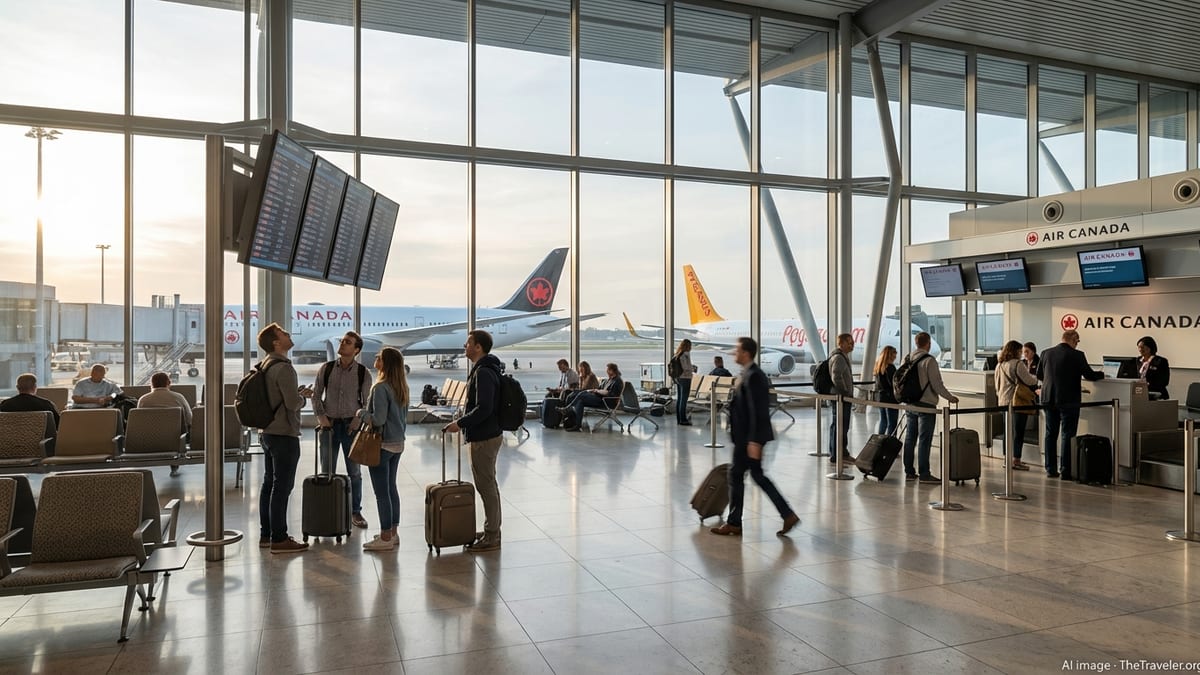
New interline partnership broadens Singapore–US connectivity
Publicly available information from both carriers indicates that the interline agreement took effect in early June 2026, coinciding with the International Air Transport Association’s Annual General Meeting in Rio de Janeiro. The tie-up allows journeys involving both airlines to be issued as one ticket, reducing the need for separate bookings and manual recheck of baggage at transfer points.
Under the arrangement, Singapore Airlines services into the United States feed into Southwest’s extensive domestic network, which serves around 120 destinations across the country. Passengers arriving from Singapore and other points on the flag carrier’s network can connect through shared gateways such as Los Angeles, San Francisco and Seattle, among others, before continuing to secondary cities on Southwest-operated flights.
Reports indicate that itineraries can be booked through Singapore Airlines’ sales channels and travel agents, with both airlines’ flights reflected under a single reservation. The deal does not change Southwest’s model of selling its own flights directly on its website and app, but it effectively brings the low-cost carrier into the long-haul booking flow for international travellers heading to smaller US cities.
The interline structure stops short of a codeshare, meaning each airline continues to operate and market flights under its own designator code. However, the cooperative ticketing and baggage handling arrangements mark a significant step-up in how the two carriers interact, particularly for long-haul passengers seeking smoother connections.
Single-ticket benefits: through check-in and baggage protection
Interline agreements are designed to make multi-airline journeys feel more like a single trip. For passengers flying with Singapore Airlines and Southwest, the practical benefits include being able to check in once at the start of the journey and receive boarding passes for all eligible flight segments on the same ticket.
Baggage is a central part of the appeal. According to published coverage of the partnership and general interline practices, checked bags are tagged through to the final destination when the entire itinerary is booked under one ticket and complies with international transit rules. This reduces the need for passengers to reclaim and recheck luggage during tight connections, especially at busy US gateways where immigration and customs processes already add complexity.
Another element is schedule protection. When a connection is sold on a single ticket under interline conditions, travellers typically benefit from misconnection handling, such as rebooking on a later flight if an incoming sector is delayed. In contrast, separate tickets usually leave passengers to shoulder the cost and logistics of disruptions themselves, which is a key reason the new partnership is being framed as a convenience upgrade for long-haul travelers.
While each carrier’s own fare rules, cabin products and fee structures remain separate, the integrated ticketing is expected to simplify the journey planning process. Travellers booking a Singapore Airlines long-haul flight to the US can now add a Southwest domestic leg in the same reservation, rather than relying on online travel agencies or manual self-connection strategies.
Strategic move for Southwest’s growing partner portfolio
The link-up with Singapore Airlines also reflects a broader strategic shift at Southwest Airlines, which has been steadily expanding its list of interline partners. Public information from the carrier’s partnership pages and previous announcements shows existing arrangements with airlines such as Icelandair, EVA Air, China Airlines, All Nippon Airways, Condor, Philippine Airlines and Turkish Airlines.
By adding Singapore Airlines, Southwest strengthens its role as a domestic connector for a larger slice of traffic flowing between Asia-Pacific and the United States. The US carrier operates a point-to-point network rather than a traditional hub-and-spoke model, but it maintains key focus cities and high-frequency stations that lend themselves to international feed from long-haul partners.
Industry commentary notes that the succession of new partnerships over the past year signals a more outward-looking approach for Southwest, which historically concentrated on point-to-point leisure and business travel within North America. Interline agreements with Asian and European carriers broaden that focus, positioning the airline as a convenient onward option for foreign visitors whose primary ticket is issued by an overseas partner.
For Singapore Airlines, tapping into Southwest’s domestic reach offers a way to deepen its presence beyond major US gateways. The flag carrier currently serves a limited set of cities in North America directly, and relies on partnerships and alliances to extend its footprint. The new deal is expected to make its US services more attractive to passengers bound for non-gateway destinations that would otherwise require additional planning and separate bookings.
What the tie-up means for travellers in Asia and North America
For travellers starting in Singapore or elsewhere in Asia-Pacific, the key change is the ability to search and purchase itineraries that include both the intercontinental leg and the onward domestic sector under one fare. Instead of piecing together options across multiple websites, passengers can book a route such as Singapore to a smaller US city with a Southwest connection packaged into a single journey.
This has the potential to reshape travel patterns, especially for itineraries to mid-sized and secondary US markets that are not served directly by long-haul carriers. The partnership effectively converts Singapore Airlines’ US gateways into stepping stones to destinations that previously required separate domestic arrangements, such as cities in the Midwest, the Mountain West or the US South.
North American travellers heading to Southeast Asia, South Asia or Australasia may also benefit. Those living in cities served only by Southwest can now access Singapore Airlines’ long-haul network more easily by booking a single-ticket itinerary that begins with a Southwest segment into a shared gateway, followed by a connecting Singapore Airlines flight beyond.
Travel analysts observe that this type of arrangement can improve fare transparency and itinerary reliability for consumers. While prices will vary depending on demand and routing, the simplified booking path and coordinated handling of irregular operations may make interline journeys more appealing than stitching together independent tickets, particularly for infrequent flyers and long-haul leisure travellers.
Interline, not alliance: what does not change
Despite the expanded connectivity, the SIA–Southwest tie-up does not amount to a full alliance or deep joint venture. Each airline remains outside the other’s loyalty ecosystem, and there is no indication in public materials that frequent flyer benefits such as mileage accrual or elite recognition will be extended across the partnership at this stage.
Southwest continues to operate as a single-class, no-frills carrier with its own fare types and policies, while Singapore Airlines maintains a multi-cabin, full-service model on its long-haul routes. Travellers booking itineraries that combine the two can expect a notable contrast in onboard experience between the long-haul and domestic segments, even as the ticketing and baggage flow become more unified.
Additionally, the interline does not alter existing visa, customs or immigration requirements. Passengers connecting in the United States on a Singapore Airlines–Southwest itinerary must still comply with entry rules and security checks, which can affect minimum connection times in certain airports. Travel agents and online booking tools typically factor these constraints into the constructed itineraries.
Industry observers suggest that the partnership will be closely watched as both airlines evaluate demand patterns and operational performance. If the tie-up proves successful, it could encourage deeper cooperation or similar arrangements between other long-haul carriers and large domestic operators, further blurring the lines between traditional network airlines and low-cost point-to-point players.