


More news on this day
Six passengers sailing aboard the MSC Divina were arrested in Italy after a fake emergency announcement over the ship’s public address system sparked confusion and alarm among fellow travelers, according to multiple news reports and local coverage.
Get the latest news straight to your inbox!
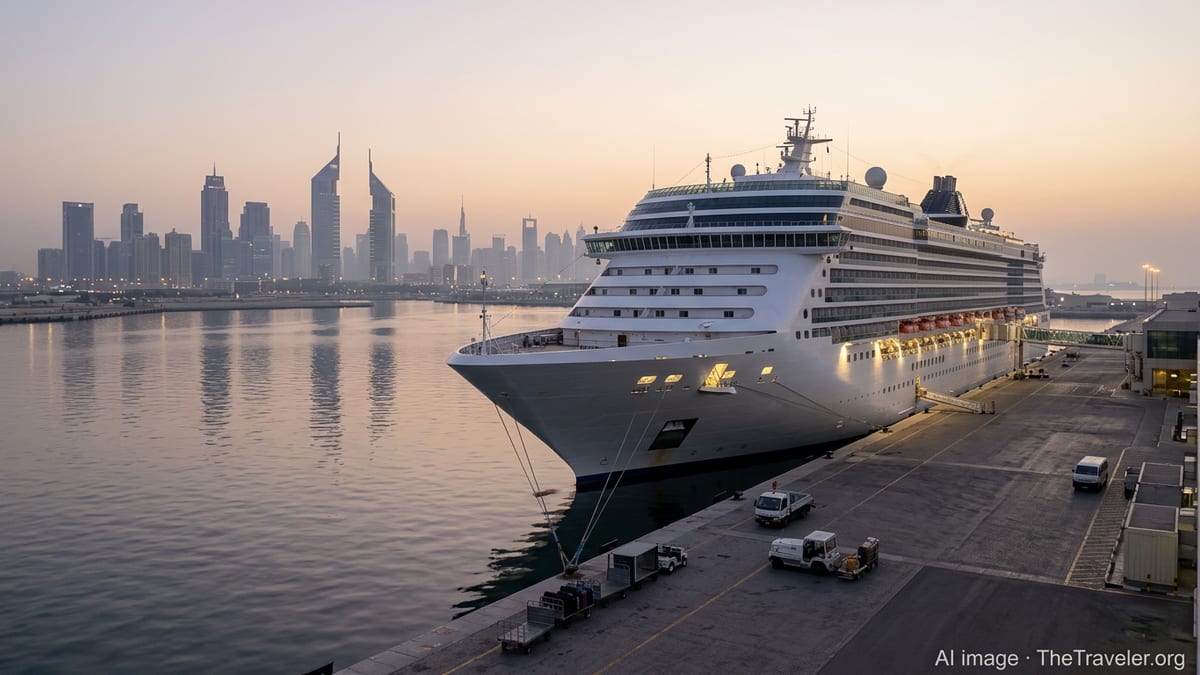
False Emergency Broadcast Triggers Confusion at Sea
Reports indicate that the incident occurred on July 30, during an MSC Divina itinerary between Marmaris, Turkey, and Naples, Italy. A small group of passengers is alleged to have gained access to the ship’s internal announcement system and used it to broadcast false emergency alerts while the vessel was underway in the eastern Mediterranean.
According to publicly available accounts, the bogus messages resembled serious safety warnings and were heard in guest areas, prompting some passengers to fear that the ship might be facing an imminent threat. Social media posts and online discussions describe moments of uncertainty as travelers tried to determine whether they needed to proceed to muster stations or await further instructions from the crew.
The MSC Divina, which can carry several thousand passengers and crew, continued its scheduled course as the situation was clarified. Information shared after the event suggests that the confusion subsided only once genuine announcements were made explaining that there was no real emergency affecting the ship.
Intervention in Naples and Arrests Reported
Publicly available information from Italian news outlets and subsequent English-language coverage indicates that authorities were alerted while the vessel was en route to Naples. The reports describe passengers notifying Italian maritime coordination centers after hearing what they believed to be legitimate emergency broadcasts from the ship.
When MSC Divina arrived in Naples, law enforcement officers boarded the vessel and identified six passengers suspected of being involved in the false announcements. Local coverage cited by international media states that the individuals were detained in connection with the misuse of the public address system and the resulting disturbance onboard.
Initial reports describe the passengers as Italian nationals traveling together as part of a larger holiday group. The precise method by which they allegedly accessed the ship’s communication equipment has not been fully detailed in open sources, but accounts suggest the actions were considered serious enough to warrant criminal investigation and potential charges under Italian law.
MSC Cruises Responds and Reviews Security Measures
In statements quoted across several news and travel outlets, MSC Cruises has emphasized that the incident did not involve any external hacking of onboard systems. Publicly available information portrays the episode as an unauthorized internal use of the vessel’s public address network rather than a cyber intrusion.
The company has been cited as noting that, while the ship itself was never in danger, the unauthorized announcements had the potential to cause unnecessary alarm among guests and disrupt normal operations. The cruise line has indicated that it has reviewed internal access controls and technical safeguards around the public address system to prevent a repeat of similar behavior.
Reports indicate that MSC Cruises has implemented additional procedures so that guest areas cannot be used to trigger shipwide emergency-style messages without proper authorization. These measures, as described in coverage of the case, are intended to reinforce the distinction between genuine safety communications and any other audio heard around the vessel.
Why False Alarms Are Taken So Seriously at Sea
Maritime safety specialists and public records on past cruise incidents show that clear, accurate communication is critical during emergencies at sea. Passenger drills, muster station briefings, and routine safety announcements are designed to ensure that travelers recognize signals such as alarm tones and emergency broadcasts and respond quickly when a real incident occurs.
False alarms can undermine that system by creating confusion, leading passengers either to overreact or, in later situations, to ignore genuine warnings. Accounts from previous maritime investigations and safety hearings illustrate how mixed messages, unclear instructions, or conflicting announcements can contribute to panic and delay orderly evacuation in an actual emergency.
On large cruise ships carrying thousands of people, any announcement that suggests imminent danger can trigger crowd movement in confined spaces, increasing the risk of injuries. This is one of the key reasons why interfering with emergency channels, whether by prank or deliberate misuse, is treated as a serious matter by both cruise operators and port-state authorities.
Implications for Cruise Travelers and the Industry
The reported arrests on MSC Divina highlight how behavior that might be viewed as a prank in other settings can carry significant legal and financial consequences at sea. Cruise contracts and widely available terms of carriage typically prohibit tampering with safety equipment, interfering with crew duties, or creating situations that may endanger or severely disturb other guests.
Travel industry observers note that, as cruise demand continues to rebound on Mediterranean and Caribbean routes, operators are under pressure to demonstrate robust safety cultures and swift responses to any incident that could undermine passenger confidence. Episodes involving false alarms, disruptive conduct, or hoaxes are increasingly likely to be met with strict enforcement and potential bans from future sailings.
For travelers, the case serves as a reminder that shipboard systems associated with safety, including public address networks, emergency signage, and alarm panels, are not entertainment devices. Misuse can quickly attract the attention of security personnel and, once in port, local law enforcement. As the MSC Divina incident in late July shows, actions that trigger a moment of chaos can follow passengers long after disembarkation through possible criminal proceedings and travel restrictions.