


More news on this day
A SkyWest operated American Eagle flight from San Francisco International Airport to Arcata–Eureka in Northern California returned to San Francisco shortly after departure, drawing attention from travelers watching the busy regional route along the North Coast.
Get the latest news straight to your inbox!
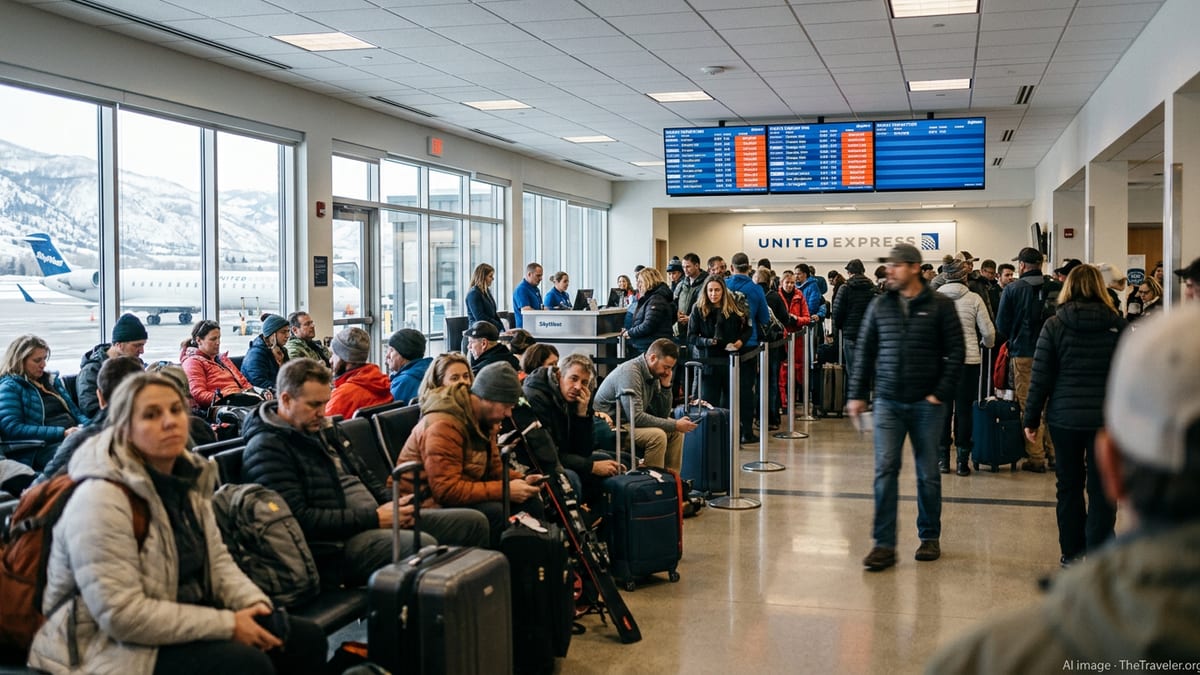
What Is Known About Flight AAL5480’s Diversion
Publicly available flight tracking data indicates that American Airlines flight AAL5480, operated by SkyWest using a Canadair CRJ-700 regional jet, departed San Francisco International Airport bound for California’s Arcata–Eureka Airport before turning back to San Francisco. The aircraft climbed out over the Bay Area, leveled off at a relatively low cruising altitude for the short sector, and then reversed course toward San Francisco rather than continuing north to the Humboldt County coast.
Information from flight status boards and aviation tracking platforms shows that the return occurred early in the flight, typically within the first segment of the 280 kilometer route. In such cases, airlines generally choose to return to the departure airport where maintenance teams, spare aircraft, and alternative connections are more readily available for passengers.
There have been no publicly reported injuries associated with this particular diversion at the time of writing. Available data focuses on the aircraft’s track, timing of the turnback, and the eventual safe landing at San Francisco International Airport rather than any emergency landing declaration or runway closure.
While the exact cause for this specific diversion had not been formally detailed in open sources, aviation incident history on similar routes shows that common reasons include potential mechanical irregularities, cockpit or cabin alerts, minor smoke or odor reports, or operational considerations such as performance limits, weather, or dispatch decisions.
How Diversions Like This Typically Work
When a regional jet such as the CRJ-700 encounters an issue after takeoff, flight crews work from established checklists to determine whether it is safer or more practical to continue to destination or to divert. For very short routes such as San Francisco to Arcata, returning to the large hub is often operationally preferable, because the origin airport offers more support services, multiple runways, and better access to airline and airport resources.
Airline operations centers monitor every flight in real time and coordinate with dispatchers and ground personnel when a diversion is considered. The decision process balances the nature of the irregularity, fuel on board, weather at potential diversion airports, air traffic conditions, and the availability of maintenance support. Even comparatively minor indications in the cockpit can trigger a precautionary return, particularly when the aircraft has only just departed and remains close to a major airport.
In many previous cases at San Francisco International Airport, aircraft have returned due to reports of unusual smells in the cabin, cockpit indications related to pressurization or environmental systems, or other mechanical alerts that ultimately proved noncritical once inspected. Historical incident coverage also shows that modern airline procedures tend to favor conservative choices that prioritize a timely return to a well equipped airport whenever there is doubt about a system’s performance.
For passengers, a diversion may feel dramatic, but much of the process is highly procedural from the flight crew’s perspective. Turnbacks and diversions are part of routine safety planning and are practiced regularly in simulators by crews flying for both mainline and regional carriers.
Impact on Passengers Traveling Between San Francisco and Arcata
The San Francisco to Arcata–Eureka corridor is an important regional link for Northern California, connecting the Humboldt County area to a major international gateway. When a flight such as AAL5480 diverts back to San Francisco, the immediate concern for most passengers is how quickly they can be rebooked or reach their final destination.
On short intra state routes, airlines commonly attempt to place affected travelers on the next available departure operated by the same or a partner carrier, subject to aircraft availability and crew duty limits. In some cases, a diverted aircraft can be cleared to operate again the same day if maintenance inspections confirm that a suspected issue is resolved or if the cause is easily addressed. In other cases, travelers may be moved to a different aircraft while technicians continue to inspect the original jet.
Weather along the North Coast can add another layer of complexity. Arcata–Eureka is known for low clouds and coastal fog, which at times can affect arrival minimums and schedules. When a diversion coincides with challenging weather, knock on effects can include additional delays or even cancellations if the operating window for daylight and visibility becomes constrained.
For passengers connecting onward from San Francisco, a return to the hub can both complicate and facilitate travel. While missed connections are a risk, the breadth of flights from San Francisco often provides more alternative options than would be available from a smaller regional airport, particularly for those with flexible routing or overnight accommodation possibilities.
Safety, Equipment and the CRJ-700’s Role on the Route
SkyWest operates the Canadair Regional Jet CRJ-700 family for several major U.S. carriers under capacity purchase agreements, including flights sold by American Airlines under the American Eagle or American marketed flight numbers. The CRJ-700 typically seats around 65 to 70 passengers in a mix of premium and economy seating, making it well suited for regional routes with consistent demand but not enough volume for larger narrowbody jets.
Regional jets such as the CRJ-700 are certificated under the same federal safety and maintenance standards that apply to larger commercial aircraft. Diversions like that of AAL5480 are part of a system designed so that if any irregularities emerge, pilots and airline operations have clear procedures to bring the aircraft back to a suitable airport as a precaution. This conservative approach often leads to a safe, uneventful landing and later confirmation that the issue was minor, but it is central to modern airline risk management.
San Francisco International Airport functions as a critical maintenance and control point for regional operations serving smaller communities throughout Northern California and the Pacific coastal region. Returning to SFO allows engineers to perform detailed inspections, access specialized parts and tooling, and coordinate with manufacturer guidance when needed, which may not be practical at smaller outstations.
From a traveler’s perspective, the use of smaller regional aircraft on routes into airports such as Arcata–Eureka is part of how airlines maintain connectivity to remote coastal regions with limited runway length and demand. Events like a precautionary diversion can draw attention to these operations but also illustrate how regional fleets are integrated into the broader safety and reliability framework of major carriers.
What Travelers Should Do When Their Flight Diverts
For those who may be on a future flight affected by a diversion similar to AAL5480, the most practical step is to wait for airline instructions delivered via gate agents, mobile apps, or customer service channels. When a flight returns to its origin, airlines typically reassign gates, schedule maintenance inspections, and adjust crew schedules before rerouting passengers, all of which can take time.
Keeping boarding passes, baggage claim tags, and any electronic confirmations readily available can help streamline rebooking, particularly for passengers connecting to international flights or traveling on multiple tickets. Travelers are often rebooked automatically into the airline’s next available seats, but speaking with an airport agent or using the carrier’s mobile tools can reveal additional routing options.
Passengers may also want to review their rights under current U.S. Department of Transportation rules regarding delays, cancellations, and accommodations. While mechanical related diversions for safety reasons are treated differently from controllable schedule disruptions, clear documentation of what occurred and when can be useful if travelers later seek refunds, vouchers, or other remedies.
Although an unexpected return to the departure airport can disrupt carefully planned itineraries, diversions such as the SkyWest operated American Airlines flight AAL5480 highlight how modern commercial aviation is structured around precaution, redundancy, and the ability to bring aircraft quickly back to a major airport when any concern arises.