


More news on this day
As sanctions push Russia to rewire its trade and India looks for routes that bypass traditional chokepoints, the long-discussed International North-South Transport Corridor is again under scrutiny as a potential backbone for direct rail-and-sea connectivity between Moscow and New Delhi.
Get the latest news straight to your inbox!
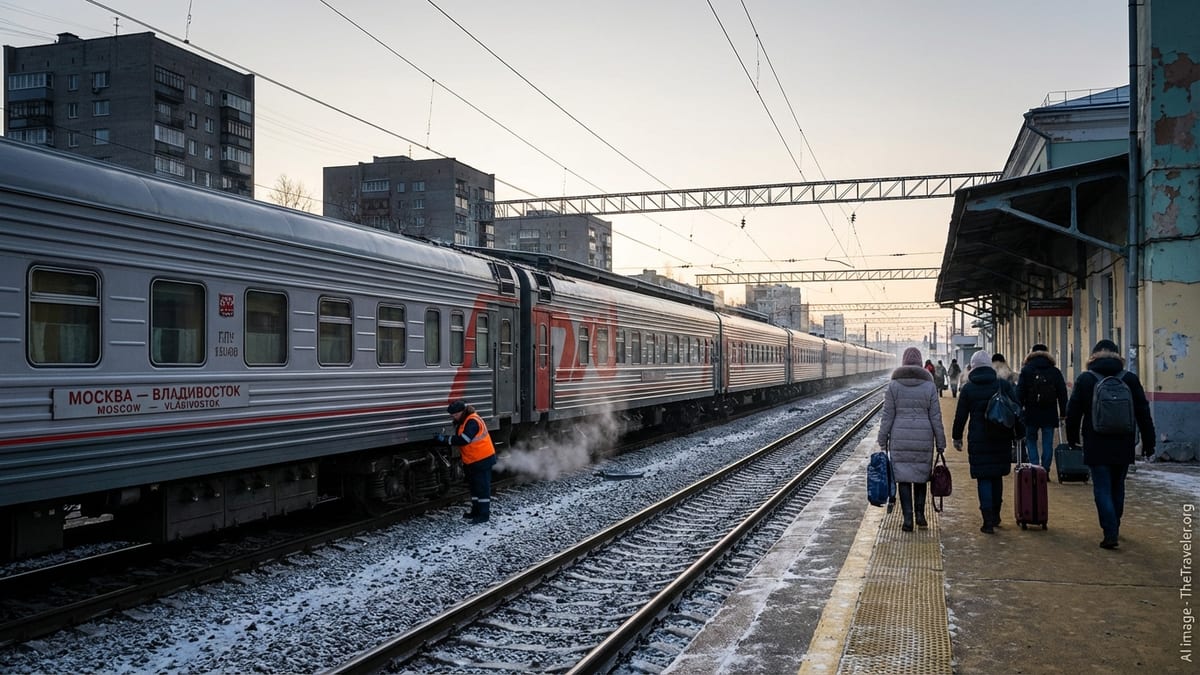
A Corridor Two Decades in the Making
Conceived in 2000 as a 7,200‑kilometre multimodal chain of rail, road and sea links, the International North-South Transport Corridor was designed to slash transit times between India, Iran, Russia and onward to Europe. Instead of routing cargo via the Suez Canal and Mediterranean, the project promised an overland shortcut through Iran and the Caspian basin, cutting journey times by an often-cited 30 to 40 percent, according to public studies and government assessments.
The idea gained fresh momentum after Russia’s full-scale invasion of Ukraine in 2022, which triggered sweeping Western sanctions on Russian logistics and shipping. Analyses by policy institutes tracking Russian trade indicate that Moscow has since promoted the corridor as a strategic outlet to southern markets, positioning it as part of a broader effort to diversify away from Europe and towards Asia and the Persian Gulf.
India’s motivations have been more varied. For New Delhi, the INSTC is not only about faster access to Russian markets but also about reaching Central Asia without transiting Pakistan, and about strengthening its footprint in Iran’s ports and logistics network. That has placed the long-delayed project at the crossroads of infrastructure planning, great-power rivalry and sanctions policy.
Despite years of declarations, the corridor remains only partially operational. Some sections, particularly on Russia’s and Azerbaijan’s rail systems and Iran’s older north-south routes, already carry limited volumes of freight, but the seamless, high-capacity connection between Moscow and India that planners once imagined has yet to fully materialise.
Rail Gaps and the Crucial Astara–Rasht Link
At the heart of the challenge lies a missing stretch of railway in northern Iran. The Astara–Rasht–Qazvin line is intended to knit together rail networks in Russia, Azerbaijan and Iran, allowing cargo to travel overland from Russian hubs such as Moscow through the Caucasus to Iran’s Caspian ports and onward to the Persian Gulf. While segments around Qazvin and Rasht have progressed, the Rasht–Astara section has suffered repeated delays and financing hurdles.
Recent reporting and official statements highlight a renewed push to close this gap, with Russian financing and Iranian commitments to accelerate construction. Analysts argue that until heavy freight can move uninterrupted along this route, the INSTC will struggle to compete with well-established sea lanes in cost and reliability, even if smaller test shipments continue to move along the existing tracks and highways.
For India and Russia, the railway bottleneck is more than an engineering issue. It determines whether they can rely on predictable schedules for bulk commodities such as fertilizers, coal and agricultural goods, which have underpinned the recent surge in bilateral trade. Without dependable rail transit across northern Iran, much of that cargo will continue to travel by longer maritime routes, diluting the very advantage the corridor was supposed to offer.
Logisticians also point to softer constraints: customs harmonisation, compatible documentation standards and streamlined border procedures across multiple jurisdictions. Experiments with container trains from Russia to India via Iran have demonstrated that the concept works, but have also revealed inconsistent transit times and administrative friction that undermine supply-chain planning.
Chabahar, Sanctions and Changing Geopolitics
Farther south, the future of the INSTC increasingly hinges on Chabahar, the Iranian port that India has sought to develop as its main Indian Ocean gateway into the corridor. A 10‑year agreement signed in May 2024 allowed an Indian state-run firm to operate the Shahid Beheshti terminal, with commitments for new equipment and capacity upgrades. Commentaries at the time described the move as India’s first long-term management of an overseas port and a signal that Chabahar would be fully folded into the INSTC framework.
That optimism has since been tempered by geopolitics. The expiration and subsequent revocation of a dedicated US sanctions waiver for Chabahar, along with renewed tensions and military strikes in and around Iran, have raised questions about the port’s long-term business environment. Budget documents in New Delhi for the 2026–27 financial year show no fresh allocation for the Chabahar project, feeding perceptions that the Indian government is treading carefully amid uncertainty over Iran’s global standing.
Reports on recent disruptions in and near the Strait of Hormuz, and on damage in the wider Chabahar area during US military action, have further complicated perceptions of risk. While Indian officials have indicated that their own terminal has not suffered significant damage, shipping analysts note that insurance costs, security concerns and political signalling all influence whether carriers and freight forwarders are willing to commit long-term volumes to the route.
Even so, specialist studies on Indian connectivity strategy emphasise that Chabahar remains a unique asset. Unlike Pakistan’s Gwadar port, which is closely associated with China’s Belt and Road Initiative, Chabahar offers India a foothold on the Iranian coast and a prospective junction with both the INSTC and overland routes into Afghanistan and Central Asia. Whether New Delhi chooses to sustain that bet in the current sanctions climate will shape the practical prospects of the Russia–India corridor.
Trade Flows Outpacing Infrastructure
Trade between Russia and India has expanded sharply over the past several years, driven largely by discounted Russian crude oil and, to a lesser extent, fertilizers and coal. India’s official trade statistics confirm that bilateral commerce has risen to historic highs since 2022, even as European markets have receded for Russian exports. This surge has produced a substantial trade imbalance in Russia’s favour, prompting periodic debate in New Delhi over how to boost Indian exports northward.
Publicly available data and think-tank analysis suggest that only a small fraction of this trade currently moves along the INSTC, with most oil continuing to sail around via traditional sea lanes. Containerised cargo and some dry bulk shipments have begun to test the corridor, particularly via Iranian ports on the Caspian Sea and the Persian Gulf, but the volumes remain modest compared to overall trade.
For exporters in both countries, the equation is straightforward. They will use the corridor if it reliably saves time and money while reducing exposure to sanctions on conventional routes. That requires not just completed rail track and modernised ports, but also competitive tariffs, predictable customs clearance and transparent governance. In the absence of those conditions, the INSTC risks remaining a niche option used for specific cargoes and political pilot projects rather than a mainstream commercial artery.
The gap between ambition and reality has led some logistics experts to argue that expectations for a rapid transformation should be tempered. They see the coming years less as the debut of a fully fledged Russia–India rail corridor and more as a period of incremental experimentation, in which particular commodities and shippers gradually shift onto the route as each segment reaches a workable level of reliability.
Can Moscow and New Delhi Close the Distance?
Whether the INSTC can finally deliver a robust Moscow–New Delhi connection will depend on how three moving pieces align: Iranian infrastructure, sanctions policy and political will in both Russia and India. On the first, the decisive test will be real progress on the Rasht–Astara railway and on linking Chabahar and other southern ports to Iran’s national rail grid at commercial scale.
On the second, the corridor’s viability will hinge on how sanctions regimes evolve. Sector-specific measures on shipping, banking and insurance strongly influence the cost-benefit calculus for companies considering the INSTC. Any further tightening could deter foreign carriers and financiers, while selective relaxations or targeted waivers could encourage greater use of the route without lifting broader restrictions.
On the third, Moscow appears committed to deepening its logistics ties with Iran and India as part of a wider turn to the Global South. New Delhi, by contrast, is balancing its interest in Eurasian connectivity with its relationships with the United States and Europe. The pause in new budgetary allocations for Chabahar may reflect that balancing act more than any final verdict on the corridor itself.
For now, the INSTC functions less as a single railway or shipping lane and more as a flexible toolkit of overlapping routes linking Russian, Iranian and Indian nodes. If engineering deadlines in northern Iran are met, security risks around the Persian Gulf recede and commercial users see consistent savings, that toolkit could, over time, harden into the kind of reliable Russia–India rail corridor that planners first imagined. Until then, the project will remain a litmus test of how far infrastructure can stretch across a fragmented geopolitical landscape.