


More news on this day
France and Portugal are accelerating plans to link their rail networks more closely with the rest of Europe, positioning high-speed and night trains as the backbone of low-carbon tourism across the continent.
Get the latest news straight to your inbox!
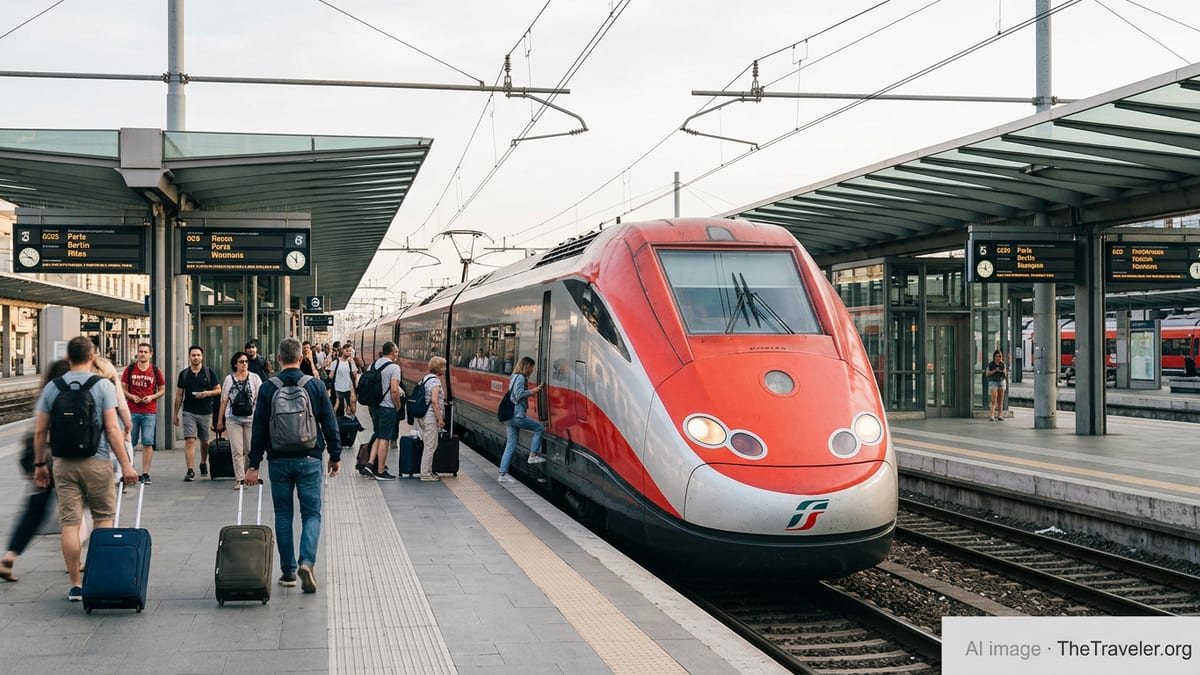
Strategic Rail Investments Target Tourism and Climate Goals
Publicly available information from European institutions shows that rail is being placed at the center of the European Union’s climate and tourism agenda, with new guidance urging member states to expand high-speed lines and improve cross-border services. France and Portugal, already important gateways at opposite ends of the continent, are moving to align national investment with this wider strategy.
In France, government documents and sector analyses indicate a renewed push to modernize the national rail network, building on the long-established TGV system and expanding capacity for both high-speed and night trains. Plans to procure new rolling stock for domestic overnight services and to improve connections into the wider European rail grid are presented as crucial to making long-distance rail a viable alternative to short-haul flights for tourists.
Portugal, for its part, has framed rail upgrades as a pillar of its broader “green mobility” approach. Policy announcements outline a package of measures aimed at transforming passenger and freight transport, with a particular focus on decarbonizing long-distance journeys and strengthening international links to Spain and, indirectly, to France and the rest of the European network. These steps are intended to move more visitors onto electric trains on key tourism corridors, rather than on planes and private cars.
Together, these national strategies feed into an emerging European view of rail as both an environmental tool and a tourism asset. As cross-border connections are upgraded and new services are introduced, France and Portugal are expected to benefit from increased visitor flows that rely on trains for multi-country itineraries.
High-Speed Corridors Connect Tourism Hubs
France has spent decades building one of Europe’s most extensive high-speed networks, and recent policy discussions continue to prioritize corridors that serve major tourism regions. The existing line between Paris and the southwest, for example, has significantly reduced travel times to cities such as Bordeaux, where visitors can step off a high-speed service directly into historic centers and wine regions. Studies comparing rail with air and road on this route highlight substantial emissions advantages for high-speed trains, particularly when powered by low-carbon electricity.
From a tourism perspective, these high-speed corridors act as backbones for broader regional travel. Visitors arriving in Paris can transfer quickly onto trains serving the Atlantic coast, the Mediterranean and the Alps, with onward connections into Spain. As new services and improved timetables are introduced, these routes are increasingly marketed as part of multi-country rail journeys that may later extend into Portugal via Spain’s growing high-speed network.
Portugal is seeking to complement this architecture from the Iberian side. Government statements outline ambitions to strengthen links between Lisbon, Porto and key border points with Spain, enabling faster rail journeys to Madrid and other Spanish hubs. Once in Spain, travelers can already access high-speed lines toward Barcelona and the French border, where they can connect with TGV services deeper into France.
The result is a gradually tightening mesh of high-speed lines that makes it easier for tourists to travel from northern France to Portugal’s Atlantic cities with only a small number of changes. While a single-seat high-speed journey from Paris to Lisbon is not yet available, improved infrastructure and coordinated timetables are shortening overall travel times and making rail-based itineraries more attractive than in previous decades.
Night Trains Revive Long-Distance, Low-Carbon Journeys
High-speed daytime services are being complemented by a renewed interest in night trains, which are widely promoted in travel media and by new rail operators as a climate-friendly alternative to budget flights. Across Europe, several overnight routes are being relaunched or upgraded, connecting major capitals and holiday destinations while allowing passengers to travel as they sleep.
France features prominently in this revival. Domestic overnight trains have been gradually restored after earlier cuts, and national plans to order new sleeper carriages signal a longer-term commitment to this mode. Internationally, independent operators have begun running cross-border night trains involving French territory, including services linking northern Europe to destinations in France and onward connections toward the Alps and Italy.
For travelers heading toward the Iberian Peninsula, the renewed attention to night trains is particularly significant. Although traditional overnight services between Spain and Portugal were discontinued in the early 2020s, discussions around new rolling stock and interoperable trains capable of running across different national systems suggest that longer, cross-border overnight routes could re-emerge over the coming years. Industry reports highlight the technical approvals already granted for new generations of sleeper trains that are compatible with infrastructure in countries including France and Portugal.
The combination of high-speed daytime trains and potential new night services offers travelers more flexible ways to design low-carbon itineraries. A visitor could, for example, use a night train to bridge a long north-south segment to France, then continue by high-speed services across Spain and into Portugal, or the other way round, creating an almost seamless chain of rail journeys instead of taking multiple flights.
Seamless Ticketing and EU Policy Drive Connectivity
One of the main barriers to wider uptake of cross-border rail tourism has been the difficulty of booking multi-operator journeys. Recent European initiatives aim to tackle this issue by promoting the creation of more integrated ticketing systems and by revising passenger rights rules to better protect travelers using combined rail services across borders.
New policy proposals and strategy papers from EU institutions emphasize that easier booking and clear, enforceable rights are essential if tourists are to choose trains for complex trips between countries such as France and Portugal. Documents published in 2026 highlight the goal of building a “single European railway area” in which timetables, fares and reservation systems can be combined more smoothly, allowing passengers to buy one ticket that covers several operators and segments.
These regulatory changes are closely linked to the tourism agenda. European platforms dedicated to tourism data and policy increasingly reference rail as a key component of sustainable travel, and call on member states to coordinate infrastructure investments and service planning. France and Portugal are among the countries expected to benefit as better data and digital systems make it easier to promote rail-based itineraries that cross multiple borders.
For travelers, the practical effect should be more straightforward booking processes, clearer information in case of delays or missed connections, and eventually, greater confidence in choosing rail for long-distance holidays. Combined with the physical expansion of high-speed and night train services, these digital and legal reforms are central to turning the idea of seamless European rail tourism into everyday reality.
Tourism Industry Adapts to Rail-Centred Itineraries
As rail services expand and booking becomes easier, the tourism industry is beginning to adjust its products and marketing. Rail passes and point-to-point tickets are increasingly promoted as part of multi-country packages, and travel companies emphasize the convenience of arriving in city centers without airport transfers, particularly in France and Portugal where major stations sit close to historic districts.
National tourism bodies and regional destinations are also incorporating rail into sustainability messaging. Campaigns about low-carbon holidays highlight the significantly lower emissions of electric trains compared with short-haul flights, drawing on studies that quantify the climate benefits of shifting travelers from air to high-speed rail on routes such as those connecting Paris with southwestern France. Similar arguments are now being applied to planned Iberian corridors and prospective overnight links that would allow visitors to reach Portugal by train from central and northern Europe.
In practice, this means more itineraries built around rail hubs like Paris, Bordeaux, Madrid, Lisbon and Porto, with travelers encouraged to combine cultural stays, coastal breaks and wine tourism while remaining on the rail network. Operators report growing interest from younger travelers and environmentally conscious visitors who see long-distance train journeys as part of the experience rather than simply a way to get from one place to another.
Looking ahead, analysts suggest that continued coordination between France, Portugal and their European partners on infrastructure, rolling stock and digital ticketing will determine how quickly rail can capture a larger share of tourism flows. If planned investments and regulatory reforms proceed on schedule, tourists could see a marked improvement in the ease and speed of rail journeys across the continent over the next decade, with France and Portugal positioned as key anchors of a truly connected European rail tourism landscape.