


More news on this day
A SkyWest Airlines Embraer 175 operating as Flight 5386 from Fort Wayne to Chicago returned to Fort Wayne International Airport shortly after departure, landing safely without reported injuries according to early publicly available flight and airport information.
Get the latest news straight to your inbox!
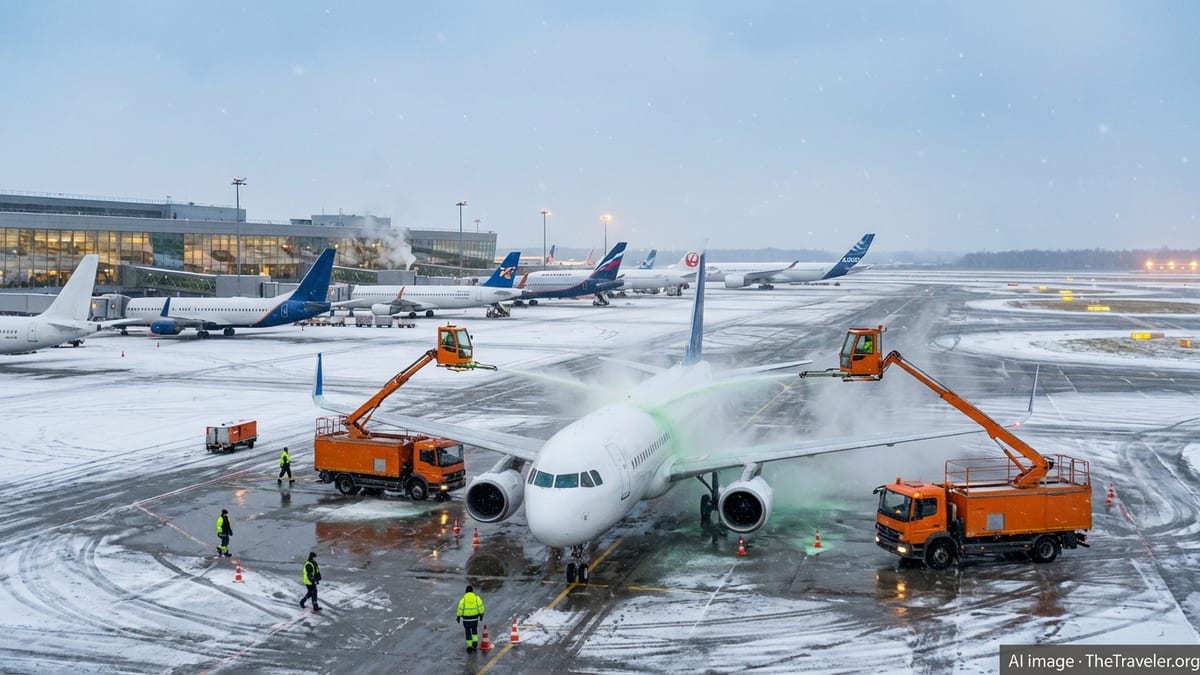
Embraer 175 Turns Back Soon After Departure
Initial tracking data and publicly available airport information indicate that SkyWest Flight 5386, an Embraer 175 service from Fort Wayne International Airport to Chicago, entered the departure phase normally before initiating a turn back toward Fort Wayne. The flight was scheduled as a short regional hop to Chicago, a key hub route for northeast Indiana travelers.
The aircraft climbed away from Fort Wayne and began its route toward Chicago before the crew discontinued the planned track and set a return course to the departure airport. Data available from online flight trackers suggests the turnaround occurred relatively early in the flight profile, consistent with a precautionary decision rather than an en route diversion over more distant airspace.
On arrival back in Fort Wayne, the Embraer 175 landed safely and taxied to the terminal area. There were no immediate indications in public reporting of injuries among passengers or crew, and no early signs that the incident involved a serious structural or control emergency.
While the exact cause of the return has not yet been detailed in public sources, similar regional jet diversions are frequently associated with technical indications, minor mechanical issues, or other non-critical irregularities that are handled conservatively under airline operating procedures.
Fort Wayne to Chicago: A Key Regional Corridor
Fort Wayne International Airport functions as a regional gateway, with Chicago among its most important connecting destinations for both business and leisure travelers. Airport schedules and airline marketing materials highlight the Fort Wayne to Chicago route as a primary link to the national and international networks of major U.S. carriers.
Regional flights on this corridor are commonly operated by partner airlines such as SkyWest under the brands of larger network carriers. These services typically use regional jets including the Embraer 175, which offer a balance between capacity and efficiency on short to medium routes.
For passengers in northeast Indiana, a diversion affecting a Chicago-bound service can disrupt onward connections across the United States and abroad. When flights return to Fort Wayne, airlines generally work within their standard customer-service frameworks to rebook passengers on later departures or alternative routings through other hubs where available.
Despite such operational disruptions, Fort Wayne’s scale and layout can make returns relatively straightforward from an airport-operations perspective, with runway length, apron space, and regional jet support infrastructure suitable for handling unscheduled arrivals of this type.
Safety Priorities and Standard Airline Procedures
Events in which an aircraft returns to its departure airport are regularly treated in commercial aviation as precautionary rather than inherently dangerous. Airline operating manuals, manufacturer guidance, and regulatory frameworks emphasize conservative decision-making whenever cockpit indications, maintenance concerns, or environmental factors raise uncertainty about continuing a flight as planned.
In practice, this means that if a crew receives a warning message, detects an unusual vibration, encounters a potential bird strike, or identifies any irregularity requiring closer inspection, turning back to a familiar airport with full maintenance support is a routine option. Diversions and returns may appear dramatic to travelers, but industry statistics and safety analyses consistently frame them as evidence of a cautious safety culture.
Regional operators such as SkyWest, which fly under the brands of major U.S. carriers, are subject to the same federal safety regulations as larger mainline airlines. Embraer 175 aircraft in particular are widely used in North American regional networks and have accumulated extensive fleets and flight hours across multiple operators.
Incidents involving these aircraft are monitored through regulatory and investigative channels, including the Federal Aviation Administration and the National Transportation Safety Board, which use event data to refine guidance, maintenance practices, and training where necessary.
Passenger Experience During an Unplanned Return
For travelers on a short-haul route like Fort Wayne to Chicago, an unplanned return can be disorienting, particularly if the reason is not immediately clear from onboard announcements. Passengers typically experience an unexpected leveling off or a turn back toward the origin, followed by a routine approach and landing.
After the aircraft reaches the gate, airline staff usually coordinate the deplaning process, possible aircraft changes, and rebooking options. Depending on the nature of the issue and the time of day, some passengers may still be able to make revised connections out of Chicago or through other hubs, while others may face longer delays or overnight arrangements.
Travelers on regional jets like the Embraer 175 often note that the cabin environment feels similar to that of larger mainline aircraft, with standard seat layouts and overhead storage, which can help maintain a sense of normalcy even when a flight does not proceed as originally planned. In many diversion events, passengers later report that the in-flight portion felt largely routine aside from the change in routing.
In cases where a technical inspection is required, the same aircraft may be cleared to continue service after maintenance checks, or the airline may substitute another aircraft from its fleet. Publicly available dispatch and scheduling information typically shows such substitutions in later flights on the same route.
Operational Context for Regional Jet Diversions
The return of SkyWest Flight 5386 fits within a broader pattern of occasional diversions and returns across the regional airline sector. With thousands of daily departures across North America, a small fraction of flights being rerouted or turned back is considered normal within airline operations planning.
Operational data published by airports and aviation authorities show that weather, air traffic management requirements, minor technical issues, and passenger medical needs are among the most common reasons for deviations from filed routes. Short-haul services, such as those between Fort Wayne and Chicago, can be more likely to return to origin if an issue arises quickly after takeoff, simply because the aircraft is still close to a suitable airport.
Observers of the industry often view such events less as extraordinary emergencies and more as visible examples of redundancy and caution built into modern air travel. Aircrews are trained to respond systematically to irregular situations, using checklists and coordination with ground-based dispatch and control centers to select the safest and most practical course of action.
As additional information about the circumstances of Flight 5386 becomes available through public channels, the incident is expected to be assessed in line with standard safety and reliability metrics, contributing to the ongoing data-driven approach that underpins regional airline operations throughout the United States.