


More news on this day
Swedish open-access operator Snälltåget has launched a new direct daytime service between Malmö and Oslo via Gothenburg, adding a fresh cross-border rail option along Scandinavia’s west coast just as demand for lower-carbon travel continues to rise.
Get the latest news straight to your inbox!
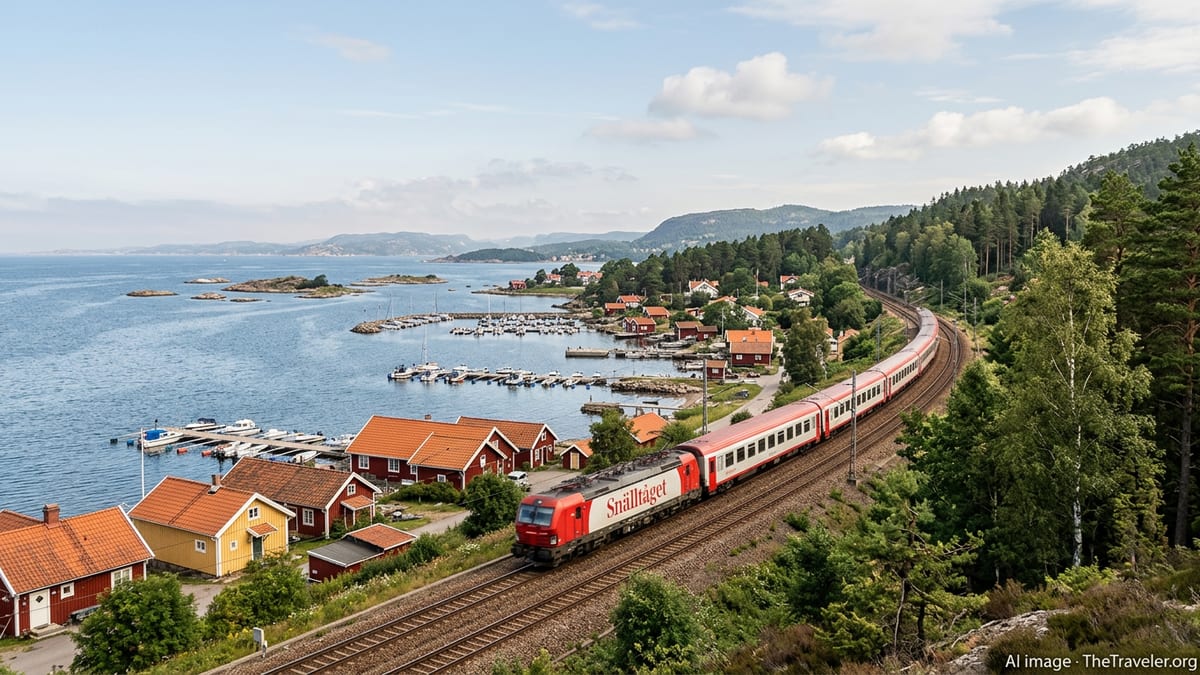
Daily link between southern Sweden and the Norwegian capital
The new Malmö–Gothenburg–Oslo route entered service on 15 June 2026, with daily departures in both directions. Publicly available timetable information shows a morning departure from Malmö Central and an early afternoon return from Oslo Central Station, creating a full daytime connection between the two cities.
The train runs north from Malmö via Lund, Helsingborg, Halmstad and Varberg before reaching the Gothenburg area, then continues through Trollhättan and across the Norwegian border, calling at Sarpsborg and Fredrikstad on the way to Oslo. The journey time is scheduled at around six and a half hours between Malmö and Oslo, positioning the train as a relaxed, daylight alternative to air and long-distance coach services.
Information on Snälltåget’s network indicates that the Malmö–Oslo train is integrated with the operator’s broader long-distance offering. Passengers arriving in Malmö from Berlin, Hamburg or Copenhagen can connect directly onto the new service, creating a rail link that effectively extends to mainland Europe without changing to other operators.
The launch comes as cross-border passenger services between Sweden and Norway have been under renewed scrutiny, with capacity and resilience frequently highlighted by transport analysts and passenger groups. By entering this market on a commercial basis, Snälltåget adds competition and additional seats on a corridor that has historically relied heavily on national operators and buses.
Timetable, on-board experience and target passengers
According to published schedules, the Malmö–Oslo train leaves Malmö early in the morning, allowing travellers to reach Gothenburg by mid-morning and Oslo just after midday. The southbound service departs Oslo in the mid-afternoon and arrives back in Malmö in the late evening, giving passengers a full travel day while keeping connections possible at both ends.
All departures on the route carry Snälltåget’s dedicated restaurant car, branded Krogen. The company’s public information emphasises the availability of seated dining, snacks and drinks throughout the journey, responding to the growing expectation among long-distance rail passengers for café and restaurant service on board. Seating is in classic intercity-style coaches, including options for groups and families who prefer to travel together in one compartment.
The schedule appears designed to appeal to a mix of leisure travellers and flexible business passengers. Holidaymakers gain a straightforward way to combine city breaks in Malmö, Gothenburg and Oslo, or to continue by rail from Oslo towards the fjords and other Norwegian destinations. At the same time, the early arrival in Oslo and late departure southbound create opportunities for same-day meetings or short overnight trips without taking a flight.
Advance-purchase fares promoted in recent coverage suggest that the operator is aiming to compete directly with coaches and discounted flights. Observers note that the presence of an additional open-access operator can influence pricing on the corridor more broadly, especially during peak holiday periods.
Strengthening Scandinavia’s low-carbon travel network
The Malmö–Oslo launch comes against a backdrop of rising interest in climate-conscious travel options across northern Europe. Swedish and Norwegian policy debates have repeatedly highlighted the need to shift short and medium-haul journeys from air to rail where possible, and operators have responded by expanding both night trains and long-distance daytime services.
Snälltåget already runs night trains between Sweden and Germany, with routes linking Stockholm and Malmö to Berlin and, from 2026, to Hamburg on a daily basis. The new Malmö–Oslo service plugs into this network, meaning that passengers can travel from Oslo to Berlin or Hamburg entirely by rail, with a simple change of train in Malmö.
Analysts point out that such through-journey possibilities are crucial if rail is to become a realistic alternative to flying for international trips. By offering a direct daytime service between Norway’s capital and southern Sweden, timed to meet overnight trains to and from central Europe, the operator is effectively building a north–south corridor that connects Norway to the wider European rail system.
Environmental groups and rail travel advocates have long argued that gradual additions like this route, rather than single headline-grabbing high-speed projects, are likely to deliver much of the modal shift away from aviation. While the Malmö–Oslo train runs at conventional intercity speeds, the improved convenience and visibility of a daily direct service may persuade more passengers to book trains where they previously chose planes.
Open-access competition and market context
Industry reports describe the Malmö–Oslo train as an open-access commercial service operating alongside publicly supported national operators. In practice, that means Snälltåget is running the route at its own commercial risk, relying on ticket sales rather than public subsidies for viability.
This model has already reshaped long-distance rail markets elsewhere in Europe, particularly in countries such as Italy and Austria, where private and state-owned companies compete on parallel routes. The arrival of such competition in the Scandinavian cross-border market is being watched closely by transport commentators, who see it as a test case for similar initiatives in the Nordic region.
For passengers, the most visible impact is additional choice. Beyond timetable and price, operators can differentiate through on-board comfort, dining, and the ease with which passengers can book international journeys. Snälltåget has positioned itself as a niche operator focused on distinctive routes and a travel experience that emphasises comfort and atmosphere over outright speed.
Observers note that regulatory frameworks at both EU and national level have gradually been adjusted to allow more such services. The Malmö–Oslo launch fits into a broader European effort to encourage new international rail connections, especially where they can be introduced relatively quickly using existing infrastructure and rolling stock.
Implications for travellers in Sweden, Norway and beyond
For residents of southern Sweden, the most immediate benefit of the new service is the added convenience of reaching Oslo without multiple changes. Travellers from cities such as Lund, Helsingborg and Halmstad now have a direct train north to the Norwegian capital, which may support tourism flows in both directions along the west coast.
In Norway, the route gives Oslo-based passengers a straightforward rail connection to Gothenburg and Malmö, and from there to Copenhagen, Hamburg and Berlin using existing services. Travel writers and booking platforms have already begun highlighting itineraries that combine these links into rail-only journeys from Norway to Germany and the wider continent.
The new trains may also help relieve pressure on busy parallel routes, particularly in peak summer months when flights and buses can be heavily booked and subject to congestion. While capacity on a single daily return service is limited compared with air travel, every additional long-distance train adds hundreds of seats per day on a corridor where options have historically been constrained.
Looking ahead, industry observers will be watching demand patterns, punctuality and passenger feedback during the first operating seasons. If the Malmö–Oslo route proves successful, it may strengthen the case for further privately operated cross-border services in the Nordic region, and provide a template for combining scenic daytime journeys with practical long-distance connectivity across multiple countries.