


More news on this day
Serbia is stepping up preparations for its flagship high-speed rail link to Hungary by sending railway personnel to China for intensive training, as the cross-border corridor moves closer to full passenger operations and promises faster travel for tourists and regional commuters alike.
Get the latest news straight to your inbox!
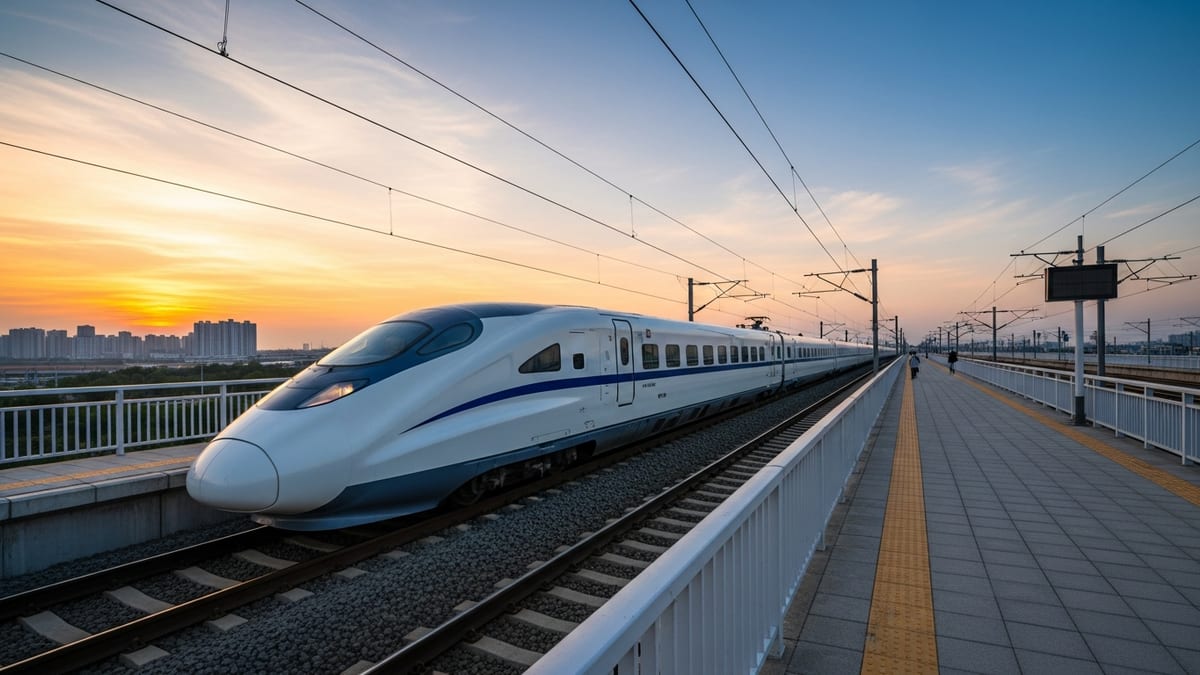
Training in China for a New High-Speed Era
Publicly available information indicates that Serbian rail staff are participating in training programs in China to prepare for full-scale operations on the Hungary–Serbia high-speed railway. The line, which links Belgrade with the Hungarian border and onward to Budapest, has been developed with Chinese financing, engineering and rolling stock, and now depends on specialized skills to manage 200 km/h passenger services.
The training is understood to focus on the operation of new Chinese-built electric multiple units, advanced signalling systems and maintenance regimes that differ markedly from Serbia’s legacy rail network. China’s extensive experience with high-speed rail is viewed in Belgrade as a key asset, providing Serbian personnel with hands-on exposure to operating practices that have been refined across thousands of kilometres of similar lines.
Observers note that the decision to train Serbian crews and engineers in China reflects the depth of cooperation within the broader Hungary–Serbia railway project. It also acknowledges that the imported technology, from traction power to digital control, requires operators who are fully familiar with Chinese standards and manufacturer recommendations before commercial services expand across the border.
According to published coverage, training programmes for foreign partners in China typically combine classroom instruction with simulator work and supervised runs on active high-speed lines. For Serbian personnel, this is expected to translate into more efficient timetable planning, smoother operations at high speed and faster responses in the event of technical issues once services intensify between Belgrade, Novi Sad, Subotica and Hungary.
Belgrade–Budapest Line Nears Full Cross-Border Service
The Hungary–Serbia high-speed corridor has been under phased construction and reconstruction for more than a decade, with the Serbian section advancing more rapidly than the Hungarian side. Serbia’s segment between Belgrade and the Hungarian border has been modernised for speeds of up to 200 km/h, and regular high-speed services are already operating between the capital, Novi Sad and Subotica, sharply reducing journey times within the country.
Reports indicate that testing and certification work is continuing in Hungary, where upgraded tracks are largely designed for speeds up to 160 km/h. Completion of cross-border safety audits and signalling checks is seen as the final step before direct Belgrade–Budapest high-speed trains can enter full timetable service, a milestone that regional media expect around the 2025–2026 timetable change.
The corridor is widely described as a flagship project of cooperation between China, Serbia and Hungary. The line is part of a longer vision to connect Central Europe with Greek ports via a modern rail spine, improving freight flows and offering faster options for passenger travel between major cities such as Belgrade, Budapest, Skopje and Athens.
For travellers, the most immediate change will be in travel times between Serbia and Hungary. Publicly available estimates suggest that the journey between Belgrade and the Hungarian border, once more than five hours on conventional tracks, has already been cut to around 80 minutes thanks to the Serbian upgrades. Once cross-border operations are fully harmonised, end-to-end Belgrade–Budapest times are expected to fall to roughly three hours, reshaping rail’s competitiveness against long-distance buses and short-haul flights.
Chinese Trains, Technology and Know-How
The operational model emerging on the Hungary–Serbia line is heavily influenced by Chinese rail technology. Serbia has ordered several high-speed trainsets from Chinese manufacturers, tailored for the route’s design speeds and local operating conditions. These trains, variants of models widely used in China, are equipped with on-board systems integrated with signalling and communications infrastructure along the corridor.
Training Serbian drivers, dispatchers and maintenance teams in China aligns with this technological framework. Railway specialists highlight that even where European standards govern elements such as signalling interoperability, the underlying hardware and software are often proprietary. Direct training with Chinese rail companies is therefore considered critical to ensure that Serbian personnel can handle diagnostics, fault resolution and routine servicing without extended support from foreign engineers.
In addition to operational skills, exchange programs are understood to cover asset management and lifecycle planning for high-speed fleets. This includes guidance on component replacement schedules, energy-efficient driving techniques and strategies to minimise wear on high-speed track, all of which have a direct impact on operating costs and long-term reliability.
Analysts point out that the knowledge transfer embedded in these training efforts could have spillover benefits across Serbia’s broader rail network. Although other lines are being modernised with European Union support and different standards, exposure to high-frequency, high-speed operations may push domestic operators to adopt more data-driven and customer-focused approaches on conventional corridors as well.
Tourism and Travel Opportunities Along the Corridor
For international travellers, the Hungary–Serbia high-speed route is emerging as a significant new option for exploring Central and Southeast Europe. Belgrade and Budapest are already established city-break destinations, and a faster rail link between them promises to make twin-city itineraries easier to plan, especially for visitors who prefer rail over air travel.
The intermediate Serbian cities of Novi Sad and Subotica also stand to benefit. Novi Sad, known for its historic Petrovaradin Fortress and vibrant cultural scene, has already experienced a tourism lift from the initial high-speed connection to Belgrade. Subotica, close to the Hungarian border and known for its art nouveau architecture, is expected to see increased visitor numbers once through services toward Budapest become routine.
Travel industry observers suggest that tour operators are likely to develop new rail-based packages once the line is fully open across the border. These could include routes that combine Budapest, Belgrade and onward connections toward the Adriatic or the Aegean, leveraging the high-speed corridor as a backbone for multi-country journeys without flights.
For independent travellers using rail passes, the introduction of fast, frequent services is expected to alter traditional overland routes through the Balkans. The Belgrade–Budapest line, once operational from end to end, may become a preferred axis for moving between Western or Central Europe and destinations further south, especially if reservation systems and pricing remain competitive with low-cost carriers.
Strategic Significance for Serbia’s Rail Future
Beyond immediate travel benefits, the decision to train Serbian personnel in China underscores how central the Hungary–Serbia high-speed railway has become to the country’s transport strategy. The project is positioned as a cornerstone of Serbia’s ambition to modernise its rail network and reposition itself as a key transit country between Central Europe and the Balkans.
According to public planning documents and recent analyses, Serbia is already pursuing additional high-speed and fast-rail projects, some supported by the European Union. These include the planned Belgrade–Niš corridor, which could eventually extend modern rail standards further south toward the borders with North Macedonia and Bulgaria, creating a more coherent national and regional network.
In this context, the skills gained in Chinese training programmes may play a role well beyond the initial Belgrade–Budapest axis. As more lines are upgraded and new rolling stock is introduced, Serbia will require a larger cadre of rail professionals familiar with modern signalling, traffic management and customer service expectations that accompany high-speed travel.
For now, attention remains focused on preparing the high-speed link to Hungary for full cross-border operations. With Serbian staff gaining first-hand experience on Chinese high-speed systems and domestic infrastructure nearing completion, the stage is being set for a new era of rail travel that could change how residents and visitors move across this part of Europe.