


More news on this day
Rail operator SNCF has begun restoring services south of Bordeaux after a six day suspension caused by major wildfires in Gironde, bringing cautious relief to travelers heading toward Spain and France’s Atlantic coast.
Get the latest news straight to your inbox!
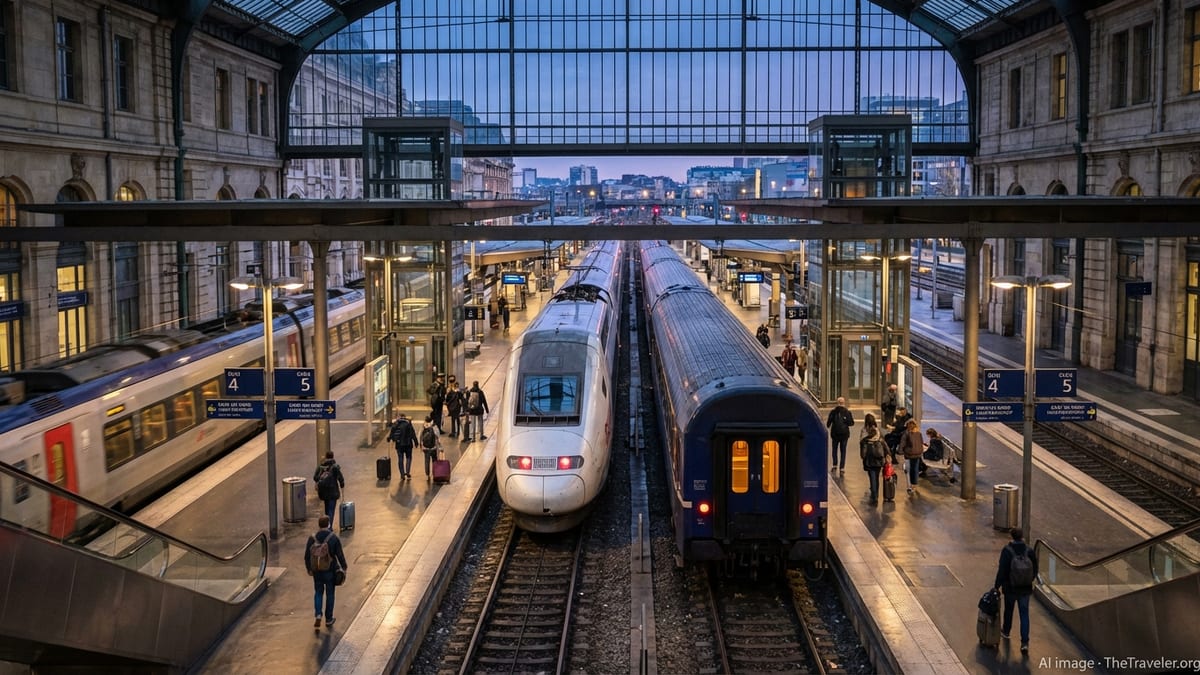
Gradual reopening on key Bordeaux to southwest routes
According to published network updates, rail traffic is resuming in stages on the main axis linking Bordeaux with Bayonne, Hendaye and the Spanish border, as infrastructure checks and safety assessments progress. Initial services are operating with reduced frequency and extended journey times while speed restrictions remain in place on sections affected by smoke and heat.
Publicly available information indicates that long distance TGV services from Paris, which had been terminating at Bordeaux Saint Jean, are now being extended again toward the southwest on selected departures. Regional TER trains are also being reintroduced on priority stretches of line, with operators focusing first on restoring links for residents and essential travel.
Reservation systems show that some trains remain cancelled or marked as “not open for sale” in the coming days, reflecting continuing uncertainty around capacity. Travelers are being encouraged to check timetables close to departure, as rail planners adjust the schedule in response to evolving fire and weather conditions.
Early reports from passengers describe a noticeable increase in available options compared with the previous week, when no trains were operating south of Bordeaux or north of Morcenx and tourism movements across the region were heavily constrained.
Fire damage and safety checks keep capacity limited
The six day shutdown followed an intense period of wildfires in Gironde that led rail managers to suspend all movements south of Bordeaux in order to keep evacuation corridors clear and avoid exposing passengers and staff to smoke or heat near the tracks. According to media coverage and official bulletins, operations teams have since been inspecting track, signaling equipment and overhead power lines along the affected corridor.
Heat from nearby fires can distort metal components and damage cable ducts, while falling trees and debris can obstruct lines. Even in areas where flames did not directly reach railway property, dense smoke and emergency access needs prompted a conservative approach to reopening. Reports indicate that engineering crews have been working around the clock to survey structures, replace damaged elements and verify that signaling systems are fully functional before authorizing the return of regular traffic.
In practice, this means that the restored timetable remains a patchwork of normal and altered services. Some TGVs now run their usual route through to Bayonne and Hendaye, while others still turn back at Bordeaux or are replaced by buses on certain sections. On local lines feeding the coast and rural communities, train frequency is lower than in the peak summer schedule, and last minute changes remain possible.
Timetable data suggests that full capacity is unlikely to return immediately, particularly on routes closest to the most active fire zones. Travelers bound for smaller stations may need to rely on a mix of rail and road connections while infrastructure teams continue their work.
Tourism and cross border trips slowly resume
The restoration of rail links is especially significant for tourism, as the Bordeaux to Bayonne and Hendaye corridor serves popular Atlantic coast destinations and is a main gateway for overland travel between France and northern Spain. During the closure, many visitors were forced to cancel or postpone trips, while others scrambled to reroute via Toulouse or alternative airports.
With trains now running again, albeit on a constrained basis, hotels, guesthouses and tour operators in cities such as Bayonne, Biarritz and Saint Jean de Luz are beginning to see bookings resume. Travel forums and social media posts over recent days describe travelers rebooking journeys that had been on hold, and sharing newly available train options that reconnect Bordeaux with the coast and the Spanish border.
However, publicly available reports also underline that flexibility remains essential. Seats on the first restored services have been in high demand, and some departures are already heavily booked. Rail planners are prioritizing core long distance flows, which means that less frequent regional stopping services may take longer to return to normal patterns.
For international passengers, the reopening helps reestablish overland connections to San Sebastian and onward to Madrid and Barcelona. Interchange at Hendaye and Irun is expected to become smoother as more trains are reinstated, although travelers may still encounter timetable gaps or replacement buses at short notice.
Advice for travelers heading south from Bordeaux
Information from SNCF’s booking platforms and independent journey planners indicates that anyone traveling south from Bordeaux in the coming days should build extra time into their itinerary and monitor their train’s status repeatedly before departure. Delays, rolling cancellations and track diversions remain possible while the network stabilizes.
Travelers holding tickets for cancelled services are generally being offered fee free exchanges or refunds, in line with policies applied at the height of the disruption. Many passengers have already switched to later departures or different routes, contributing to crowding on certain trains, especially those coinciding with peak holiday changeover weekends.
Rail specialists recommend that visitors consider earlier or later trains where possible, and avoid tight connections when planning onward travel by plane or long distance coach. Alternative routings via Toulouse or inland lines may provide additional options on busy days, even if total journey times are longer.
Accommodation near major hubs such as Bordeaux Saint Jean and Bayonne can also provide a buffer for those concerned about last minute changes. Publicly available advice points out that staying overnight near a main station reduces the risk that a missed connection will cascade into significant additional costs.
Wildfire season underscores climate and infrastructure risks
The six day interruption south of Bordeaux has highlighted how vulnerable long distance rail networks can be to climate driven events such as wildfires and heatwaves. Analysts note that the Gironde disruption followed other recent incidents in Europe where fire or extreme heat damaged trackside equipment and forced extended closures on busy passenger corridors.
French infrastructure documentation already categorizes large scale disruptions as high impact events, and the current episode is likely to feed into scenario planning for future summers. Network managers are expected to study how quickly services were able to restart, what bottlenecks emerged and how communication with passengers could be strengthened when conditions change rapidly.
For travelers, the episode is a reminder that even well developed high speed rail systems can experience sudden, climate related shutdowns. Many tourism operators are now encouraging visitors to keep plans flexible, invest in refundable tickets where feasible and factor local risk seasons into their choice of routes.
As repairs continue and more trains are added back to the timetable, the Bordeaux to southwest corridor is gradually returning to its usual role as a key artery for holidaymakers and cross border travelers. The experience of the past week is likely to shape both operational planning and passenger expectations for summers to come.