


More news on this day
SNCF has begun restoring rail services south of Bordeaux after a six-day suspension triggered by major wildfires in Gironde, gradually reopening a key corridor for summer travel to France’s Atlantic coast and the Spanish border.
Get the latest news straight to your inbox!
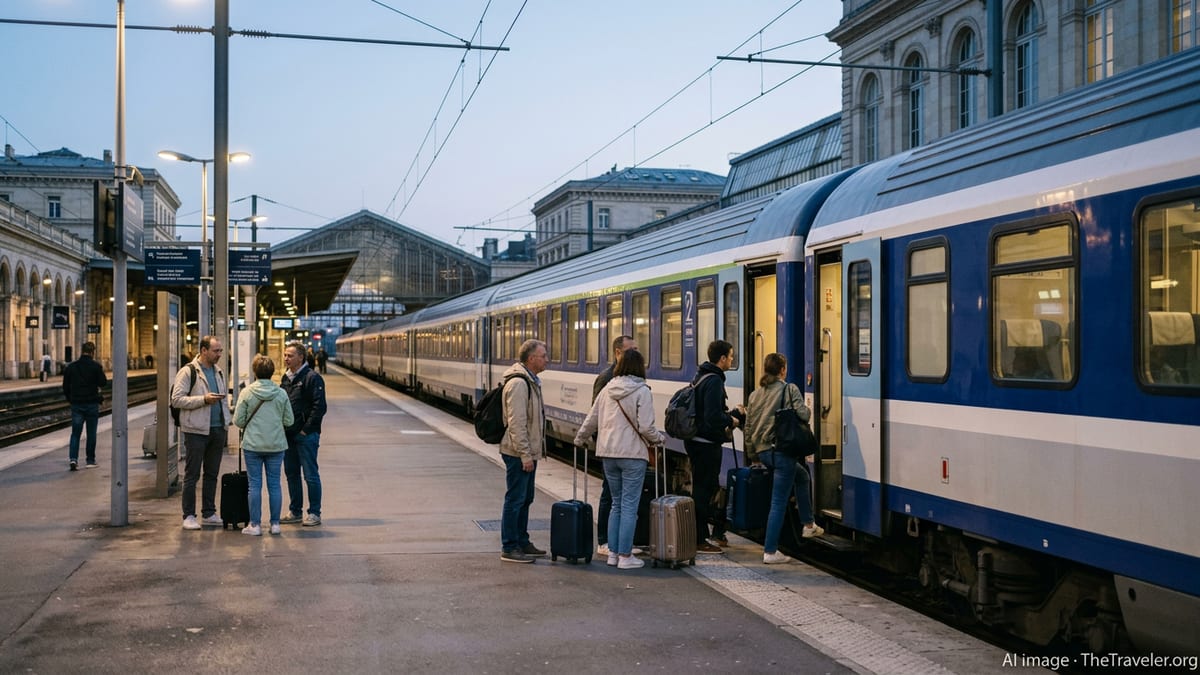
Gradual reopening on a key summer corridor
According to publicly available information from the operator and regional authorities, trains began running again on the main axis linking Bordeaux with the Landes and Basque coast after firefighters brought the most active fire fronts under control. The reopening follows almost a week of halted traffic between Bordeaux and Morcenx, a stretch that effectively severed high-speed and regional links toward Bayonne, Hendaye and the Spanish frontier.
Initial services are operating on a reduced timetable, with priority given to long-distance high-speed trains and essential regional connections. Reports indicate that some temporary speed restrictions remain in place near the most affected forest areas while engineers continue to assess trackside equipment, signalling and electrical infrastructure exposed to intense heat and smoke.
The Bordeaux–southwest axis is one of France’s busiest summer rail corridors, carrying a mix of TGV services from Paris, intercity trains and regional TER services serving coastal resorts such as Arcachon, Biscarrosse and the Basque coast. The six-day closure coincided with peak holiday departures, amplifying the impact on both domestic and international travelers.
Six days of disruption for holidaymakers and locals
During the closure, TGV services from Paris that normally continue toward the Spanish border terminated at Bordeaux Saint-Jean, while regional trains south of the city were cancelled or replaced by limited bus services. Travel forums and social media posts describe a scramble for alternative routes, with some passengers rerouting via Toulouse or opting for rental cars and long-distance coaches.
Publicly available guidance from national and local authorities encouraged travelers to postpone non-essential journeys into the fire zone, in order to keep roads clear for emergency services and potential evacuations. This, combined with the loss of rail capacity, led many tourists to adjust holiday plans at short notice, either staying in Bordeaux or redirecting trips to other regions.
Local accounts suggest that accommodation providers along the Atlantic coast and in the Landes experienced last-minute cancellations as smoke forecasts and transport uncertainties mounted. At the same time, businesses in safer areas reported a late influx of visitors diverted from the worst-affected zones, underlining how quickly wildfire events can reshape regional tourism patterns.
Safety checks and infrastructure inspections along the line
Before authorizing trains to run again, SNCF Réseau teams carried out inspections along the affected section south of Bordeaux, focusing on catenary systems, signalling cabinets and track components that had been exposed to high temperatures. Published technical documentation for the French rail network shows that incidents of this nature are classified on a severity scale and trigger predefined recovery scenarios aimed at restoring traffic progressively while managing residual risks.
Vegetation fires near the rail corridor raise several operational concerns, from damage to power supply cables to deformation of plastic components and trackside equipment housings. In some cases, dense smoke can also interfere with detection systems and visibility for drivers. As services resume, operational plans provide for closer monitoring and the possibility of further adjustments if conditions deteriorate or new hotspots emerge.
Infrastructure managers are also expected to review maintenance and vegetation management strategies along the line. In the Gironde region, where forests sit close to major transport arteries, the latest fires add to a growing body of evidence about the vulnerability of critical infrastructure to increasingly intense summer wildfire seasons.
Knock-on effects for tourism across southwest France
The temporary shutdown of rail links south of Bordeaux had wide-reaching consequences for tourism in Nouvelle-Aquitaine and northern Spain. Travel advisories circulated in recent days highlighted the absence of trains toward popular destinations such as the Basque coast and the wider southwest, prompting some visitors to cancel or delay trips.
With trains now returning, tourism stakeholders are working to salvage part of the high season. Hotels and guesthouses that remained outside evacuation zones are promoting flexible booking policies, while local tourism offices are steering visitors toward unaffected beaches and inland towns. However, uncertainty about fire behavior and the potential for renewed restrictions may continue to weigh on last-minute bookings.
The episode also underscores the importance of reliable, multilingual information for international travelers. Many visitors rely on digital booking platforms and rail apps to monitor disruptions, and the rapid escalation of the Gironde fires left some passengers struggling to understand whether their journeys could proceed, particularly if they did not speak French.
Climate pressures and future resilience on Atlantic routes
The six-day interruption south of Bordeaux comes amid a broader discussion about how France’s rail network can adapt to climate-related disruptions. Scientific studies on the Tours–Bordeaux high-speed line and other parts of the network have already examined the environmental benefits of shifting travel from road and air to rail, but recent summers have highlighted the exposure of lines in forested regions to heatwaves and wildfires.
Policy documents and expert analysis point to several avenues for bolstering resilience, including more systematic vegetation clearance along tracks, enhanced firebreaks near critical junctions, and strengthened protocols for coordinating with civil protection services when fire risk is extreme. Investment in digital monitoring tools to detect anomalies on overhead lines and track components is also cited as a way to speed up post-incident inspections and shorten closure times.
For now, the restoration of services south of Bordeaux marks a significant step toward normality for residents and visitors in southwest France. Yet the scale of the disruption over the past six days is likely to fuel ongoing debates about how to protect vital transport corridors in a region where hotter, drier summers are expected to make severe wildfires more frequent.