


More news on this day
Commuter rail passengers on the South Shore Line between Chicago and northwest Indiana are facing major disruptions after a freight train derailment near East Chicago led to a suspension of service and an adjusted schedule for Friday.
Get the latest news straight to your inbox!
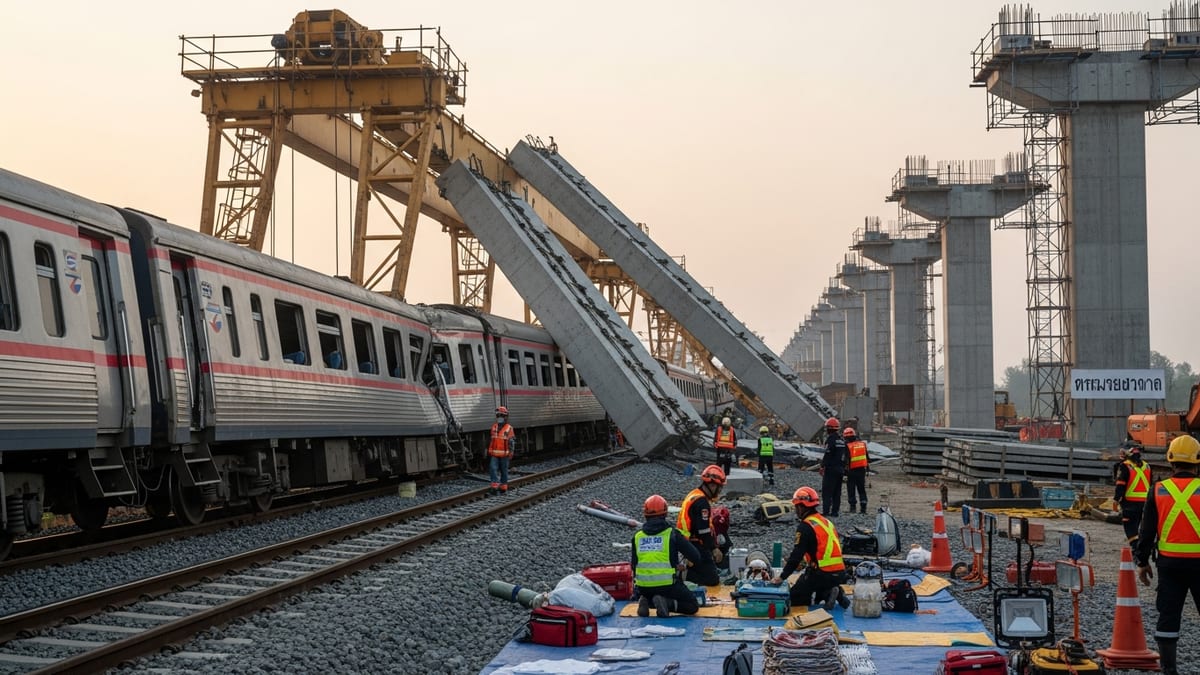
Derailment near East Chicago triggers shutdown
According to published coverage, the disruption began late Wednesday, June 24, when a freight train derailed on tracks used by the South Shore Line near East Chicago along the Indiana Toll Road. Reports indicate several hopper cars tipped or were left leaning on a curving section of track on a bridge over the Grand Calumet River, damaging infrastructure and affecting the overhead electrical system that powers the commuter trains.
Publicly available information shows that the incident also led to a significant power loss in the corridor between East Chicago and Gary. As a result, the Northern Indiana Commuter Transportation District, which operates the South Shore Line, halted all train movements on the route Wednesday night for safety and inspection work.
News reports from regional outlets describe crews working through Thursday to stabilize the derailed freight cars, protect the surrounding area, and begin repairs to track, power and communication systems. Special equipment was brought in to right damaged cars, but rail operators prioritized clearing a path and restoring core systems to enable at least limited commuter service before the weekend.
Initial assessments shared in local coverage indicate that no serious injuries were reported from the derailment. However, the impact on the line’s electrical and communications network was extensive enough to force a multi day operational response.
Service suspension and partial restoration
Public advisories issued Thursday indicated that South Shore Line trains remained suspended for much of the day as crews continued work at the derailment scene. Both the historic Lakeshore Corridor, which links South Bend and Chicago, and the newer Monon Corridor extension into Munster and Dyer experienced significant disruption to normal weekday patterns.
By Thursday afternoon, regional broadcasters reported that the operator began restoring limited Monon Corridor service for the evening rush. Trains running between Millennium Station in downtown Chicago and Munster/Dyer were reintroduced on a scaled back basis, while the main Lakeshore Corridor remained shut down to train traffic as inspections and repairs continued near East Chicago and Gary.
To help stranded riders, publicly available information indicates that Metra Electric District trains honored South Shore Line tickets on Thursday, giving some passengers an alternate path between Chicago and parts of south Cook County. Even with that cooperation, commuters traveling deeper into northwest Indiana faced longer journeys, detours, or the need to rely on car travel and ad hoc carpooling.
Rail operator updates circulated through the South Shore Line website, mobile app, and local media, advising travelers to check for the most current information before heading to stations. Advisories repeatedly emphasized that conditions on the ground near the derailment were changing as crews made progress on repairs.
Adjusted Friday schedule and bus substitutions
As work continued, reports late Thursday stated that the South Shore Line plans to operate on a holiday or weekend style schedule on Friday, June 26, instead of a full weekday timetable. This reduced service pattern is intended to match what the infrastructure can reliably support while the damaged area near East Chicago remains constrained.
Coverage from Chicago and Indiana outlets indicates that rail service will be supplemented by buses on part of the route. Busing is expected between Miller in Gary and Hegewisch on Chicago’s Far South Side, bridging a gap where the electrical system and track remain affected by the derailment and power loss.
These bus substitutions are described as remaining in place until further notice. Passengers traveling between Chicago and communities such as Gary, Ogden Dunes, Portage, Michigan City and South Bend are being urged to plan for extra time, potential crowding and possible transfers between trains and buses.
The holiday style schedule and partial busing approach mirrors strategies used during past construction and weather related disruptions on the line, but this time the trigger is an unexpected freight incident on the shared infrastructure. The operator has not yet provided a detailed timeline for when a full weekday schedule might resume.
Impact on commuters and regional travel
The South Shore Line is a key link between downtown Chicago and communities along the southern shore of Lake Michigan, handling thousands of passenger trips on a typical weekday. With many workers now back to regular commuting patterns following recent expansions and timetable revisions, the derailment related shutdown arrives during a busy summer travel period.
Reports from local coverage highlight that commuters who rely on the line for access to jobs in Chicago’s Loop, university campuses, medical centers and industrial sites in northwest Indiana now face limited choices. Some travelers are turning to Metra Electric District trains combined with local bus routes, while others are opting for highway travel on I 90 and I 94, routes that already see heavy congestion during rush hours.
The disruption also affects leisure and tourism related trips, including travelers heading to beaches, casinos, cultural attractions and sporting events across the region. Reduced frequency and bus segments could discourage discretionary travel, at least until passengers regain confidence that trains are running reliably through the affected corridor.
Transportation observers note that the incident underscores the dependence of regional commuter rail on freight owned infrastructure and power systems. When a freight derailment strikes a shared corridor, the ripple effects can extend well beyond the immediate site, affecting both daily commuters and occasional travelers.
Ongoing repairs and what riders should expect
According to publicly available information, rail and utility crews are continuing work on damaged overhead wires, signal and communication cables, and track components near the derailment. Fiber optic lines that support communication along both the Monon and Lakeshore corridors were reported damaged, requiring extensive replacement before all train control systems can return to normal operation.
Further inspections of bridges and structures in the vicinity are expected as the clean up progresses. Once derailed cars are removed and debris is cleared, engineers will continue to review the condition of the tracks and overhead electrical system to ensure they can support full speed commuter operations.
Until those steps are complete, riders should anticipate an evolving pattern of limited train service, bus substitutions and potential delays. Service advisories suggest that Friday’s adjusted schedule could be followed by additional changes over the weekend as more infrastructure becomes available.
Travel industry observers recommend that passengers who rely on the South Shore Line build extra time into their journeys, verify the latest schedule through official channels before departing, and consider temporary alternatives such as Metra Electric District trains or carpooling where practical. For now, the derailment near East Chicago continues to reshape the daily travel routine for many in the Chicago northwest Indiana corridor.