


More news on this day
Rail passengers across Britain face another day of disruption on Friday as reduced timetables and speed restrictions brought in during this week’s intense heatwave are extended, with operators warning of slower journeys, cancellations and the possibility of short-notice changes.
Get the latest news straight to your inbox!
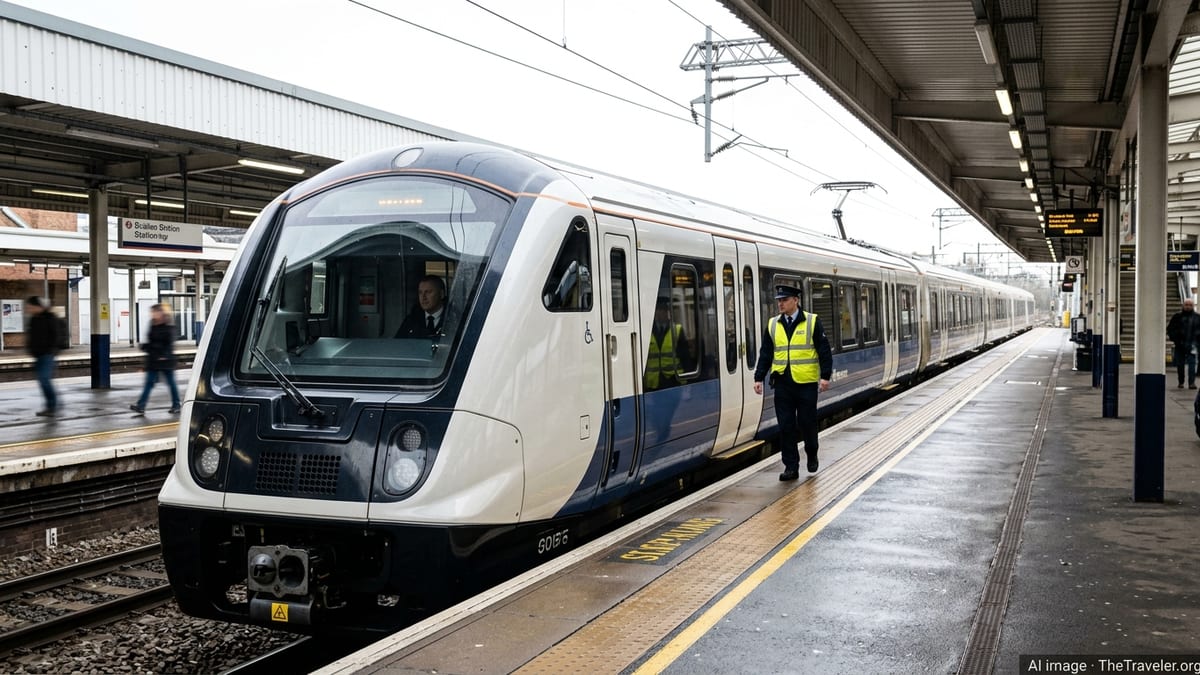
Timetables Cut Back As Heatwave Persists
Network-wide travel advisories indicate that amended timetables first introduced midweek will continue into Friday, particularly on intercity and commuter routes in England and Wales. Network Rail has published guidance stating that trains are running less frequently and at lower speeds on key main lines, with journey times lengthened to protect track and power equipment from failure in the extreme temperatures.
According to publicly available information, the measures are being kept in place as forecasters expect air temperatures to remain well into the 30s Celsius in parts of the country, while rail temperatures climb significantly higher. With a red-level heat warning in force for London and the South East into Friday night, operators are continuing to advise passengers to travel only if necessary and to check their journey before setting out.
Some long-distance operators have announced reduced daytime frequencies, especially on corridors where two or more trains normally run each hour. Reports indicate that services which do run are subject to extended journey times and are more vulnerable to knock-on disruption from even minor infrastructure faults.
Regional and commuter services are also affected, with shorter trains and altered stopping patterns appearing in journey planners. Passenger groups are highlighting concerns about crowding on the remaining services, particularly during the morning and evening peaks, when many commuters have limited flexibility to change their plans.
Heat Restrictions Aim to Protect Tracks and Overhead Lines
Technical guidance on rail operations in high temperatures explains that steel rails expand as they heat up, increasing the risk of “buckling” on continuously welded track. To reduce the likelihood of damage, infrastructure managers impose temporary speed restrictions when rail temperatures approach design limits, which in turn reduces overall line capacity and forces timetable cuts.
Overhead power lines face similar stress in prolonged heat. Publicly available engineering briefings note that wires can expand and sag in high temperatures, raising the risk of contact loss or entanglement with train pantographs. Slower running reduces dynamic forces on the equipment, but also contributes to extended journey times and fewer trains per hour.
Rail industry analyses suggest that Britain’s network is designed for a wide temperature range by international standards, yet is increasingly being pushed to its limits by more frequent and intense heatwaves. Sector commentary indicates that, once track temperatures exceed safe thresholds, running fewer trains more slowly is one of the few immediate tools available to keep services moving while minimising the chance of serious faults.
Infrastructure managers have emphasised in public communications that these restrictions are pre-emptive safety measures rather than a response to individual incidents. However, any faults that do occur in the heat, such as signal or power failures, can take longer to fix, lengthening delays and compounding disruption on already reduced timetables.
Operators Urge Passengers to Replan or Postpone Journeys
Several train companies have updated their travel advice to extend flexible ticketing and encourage passengers to avoid the hottest periods of the day. According to published coverage, some intercity operators are allowing customers with advance tickets for Thursday and Friday to travel on earlier or later services where capacity allows, or to rebook for dates outside the peak of the heatwave without additional fees.
In the South East, operators serving Kent and coastal destinations have reiterated earlier appeals to avoid non-essential leisure journeys, particularly trips to the seaside. Publicly available statements explain that high passenger numbers headed for beaches during extreme temperatures can create acute crowding and welfare issues if trains are held outside stations or become stranded with limited air circulation.
Passengers who do need to travel are being advised through online channels and station announcements to carry water, allow extra time, and be prepared for changes at short notice. There is also guidance for those with mobility issues or health conditions that can be worsened by heat, recommending that they consider postponing travel where possible.
Industry commentators note that, while many passengers have become accustomed to weather-related disruption in winter, summer conditions of this intensity are still relatively new for the network. As a result, some travellers are being caught out by the scale of timetable changes and are being urged to check journey planners repeatedly on the day of travel.
European Rail Networks Also Affected
The disruption in Britain is part of a wider pattern across western Europe, where a persistent high-pressure “heat dome” has pushed temperatures towards or beyond national records. Media coverage of the heatwave shows that high-speed and regional rail services in France, Belgium and other neighbouring countries are also operating with reduced capacity and speed restrictions to manage the strain on infrastructure.
International services have not been immune. Recent reports indicate that some cross-Channel and cross-border trains have been cancelled or slowed, with operators citing adverse weather conditions and the need to comply with infrastructure managers’ heat-related safety measures. Passengers on popular summer routes are being urged to monitor operator updates and allow for longer connection times.
Transport analysts argue that the simultaneous impact of heat on multiple national networks underscores the vulnerability of Europe’s rail system to prolonged extreme weather events. With holiday season demand rising, the combination of reduced timetables and full trains is posing logistical challenges for both domestic travellers and international visitors.
Rail-focused organisations and climate researchers have suggested that this week’s disruption may offer a preview of how future summers could affect European transport if investment in heat-resilient infrastructure and rolling stock does not keep pace with a warming climate.
Calls Grow for Long-Term Adaptation
This week’s extension of reduced train services into Friday has reignited debate over how quickly Britain’s railways can adapt to more frequent extreme heat. Commentaries in technical and policy publications highlight options such as adjusting rail “stress-free” temperatures, investing in more heat-tolerant materials, upgrading overhead line equipment, and improving real-time monitoring of track and power systems.
There is also renewed focus on passenger experience, with campaigners pointing to the need for better station cooling, more reliable onboard air conditioning and clearer real-time information during disruption. Some passenger groups argue that, as heatwaves become more common, contingency timetables and travel waivers should be activated earlier and communicated more consistently.
Industry briefings stress that large-scale upgrades require long planning horizons and significant funding, and cannot be implemented in the middle of an ongoing heatwave. In the short term, the priority remains keeping existing infrastructure safe and operational by reducing speeds and service levels when temperatures spike.
For now, passengers are being told to expect a further day of constrained rail services as the heatwave continues into Friday, with the prospect of gradual recovery only once temperatures ease and engineers can confirm that key assets have not suffered lasting damage.