


More news on this day
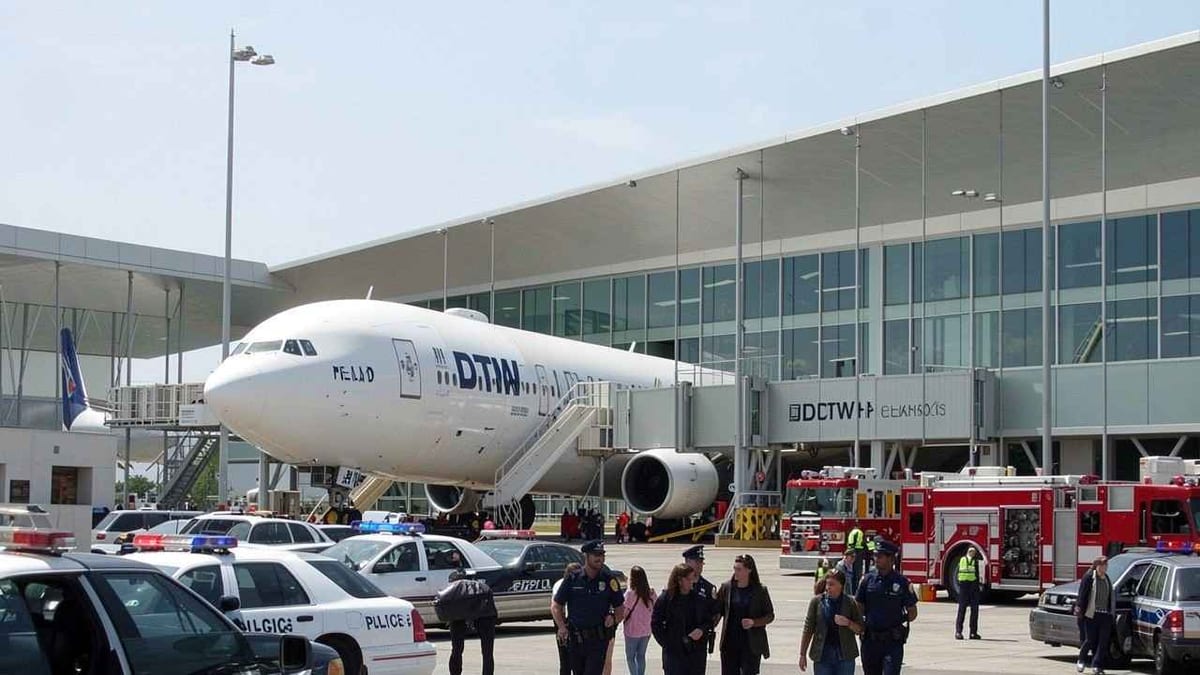
A Southwest Airlines Boeing 737-700 operating as Flight WN1539 from Northwest Florida Beaches International Airport in Panama City to Nashville International Airport diverted to Memphis International Airport on 7 August, according to publicly available flight-tracking data and media reports.
Get the latest news straight to your inbox!
Unscheduled Stop Interrupts Regional Evening Service
Flight WN1539 was scheduled to operate the early evening segment between Panama City and Nashville on 7 August, using a Boeing 737-700 configured for Southwest’s all-economy service. Flight-tracking information shows the aircraft departed Panama City as planned before altering course north-westward and heading toward Memphis instead of continuing on its filed route toward Nashville.
Data from consumer flight-tracking platforms indicates the aircraft began its climb normally and reached cruise altitude before the route deviation became apparent. The track then showed a gradual turn away from the direct line to Nashville, followed by descent into Memphis International Airport, where the jet landed without incident.
Available information suggests the diversion extended the travel time for passengers expecting a relatively short hop into Nashville. While precise delay figures varied depending on subsequent rebooking, arrival into the intended destination appeared to be pushed back significantly compared with the original schedule.
As of 10 August, there had been no detailed public breakdown of the exact onboard conditions during the diversion, but the sequence of tracking data points indicates a controlled change of course rather than an abrupt emergency descent.
Potential Factors Behind the Memphis Diversion
Airline operations specialists note that diversions on short domestic segments can stem from a mix of technical, operational, and weather-related factors. For regional routes into busy connecting airports like Nashville, these may include localized air-traffic constraints, runway or taxiway disruptions, adverse weather along the approach, or aircraft-specific maintenance considerations detected in flight.
Recent months have seen intermittent reports of traffic-management programs and radar issues affecting flows into Nashville, with some travelers describing temporary holds and reroutes around the airport. While there is no confirmed direct link between those broader operational challenges and the 7 August incident, the history of occasional constraints in the region provides context for why a carrier might choose a nearby alternate field such as Memphis.
Memphis International Airport serves as a common diversion option for flights in the central Southeast, with multiple runways, extensive ramp space, and maintenance support that can accommodate an unscheduled Southwest arrival. Publicly available information shows that by the time WN1539 reached northern Mississippi airspace, Memphis offered a practical alternate for a controlled diversion and ground assessment.
Aviation analysts point out that modern dispatch practices generally prioritize a safe, stable approach into an uncongested airfield over pressing ahead toward an airport experiencing constraints or uncertain conditions. The track of Flight WN1539 into Memphis appears consistent with that conservative approach.
Passenger Impact and Reaccommodation
For travelers booked to Nashville, the diversion translated into additional waiting time on the ground in Memphis and, in some cases, onward rebooking. Publicly available airline policy materials indicate that when a flight diverts, carriers typically work to either continue the same aircraft to its original destination once cleared, or to re-accommodate passengers on later flights, sometimes involving connections through other cities.
Southwest’s customer-facing guidance on irregular operations notes that significantly disrupted itineraries may qualify for no-fee changes within a defined window, particularly if schedule changes or diversions add substantial delay or modify routing. While individual outcomes for those on WN1539 varied depending on connection needs and seat availability, many passengers are likely to have been shifted to subsequent Nashville-bound departures that evening or early the following day.
Travelers on diverted flights often face secondary complications such as missed hotel check-ins, lost ground-transport reservations, or disrupted onward drives. Consumer advocates generally advise documenting out-of-pocket expenses and monitoring airline communications for any updated guidance on compensation or travel credits after such events.
Despite the inconvenience, diversion-related safety protocols mean cabin crew and flight deck teams are trained to keep passengers seated, informed as information becomes available, and prepared for a standard arrival at the alternate airport, even when plans change mid-flight.
Southwest’s Diversion Practices in a Busy Summer
The diversion of WN1539 occurred during a peak summer travel period in which airlines across the United States have been managing high passenger volumes alongside weather-sensitive afternoon and evening operations. Public data on Southwest’s network performance shows that, like other large domestic carriers, the airline periodically diverts flights to preserve safety margins and manage airspace congestion.
Industry research into disruption patterns indicates that short-haul domestic sectors can be especially vulnerable to ripple effects from storms, ground delays, or technical checks, because their tight scheduling leaves limited buffer time. In such an environment, an early-evening route like Panama City to Nashville may quickly be affected by upstream disruptions on the aircraft’s earlier legs, or by rapidly evolving conditions near the destination.
Southwest has not publicly provided a detailed narrative for this specific 7 August diversion, but the use of Memphis as a nearby alternate and the apparent absence of reported injuries are consistent with a precautionary operational decision. For aviation observers, the event underscores how routine diversions have become an embedded part of large airline networks, particularly in busy summer months.
For passengers planning upcoming trips through Nashville or other major regional hubs, the episode serves as a reminder to monitor live flight status tools and allow some flexibility in arrival plans during periods of heightened operational strain.
What Travelers Can Take Away From the Incident
While diversions such as that of Flight WN1539 are disruptive, safety regulators and airline operational manuals frame them as a standard risk-mitigation measure rather than an exceptional event. Aviation statistics show that most diverted flights conclude with uneventful landings at alternate airports and eventual completion of the journey.
For travelers, practical steps include enabling push notifications in airline mobile apps, checking the status of both departure and arrival airports, and preparing for the possibility of an overnight stay if connections are missed. Those booked on evening arrivals also benefit from having backup plans for late-night ground transportation, especially when flying into busy leisure and convention destinations like Nashville.
Observers note that as carriers refine their schedules and fleets, particularly on Boeing 737 variants used across the Southwest network, the balance between tight turn times and operational resilience remains a focus. Episodes such as the Panama City to Nashville diversion highlight how quickly a routine sector can turn into an unscheduled multi-airport itinerary, even when the underlying flight concludes safely.
For now, the 7 August diversion of WN1539 stands as one more data point in a summer of complex U.S. air travel, illustrating both the vulnerability of high-frequency domestic routes to disruption and the aviation system’s capacity to absorb irregular operations while maintaining safety priorities.