


More news on this day
A Southwest Airlines flight traveling from Phoenix to Dallas on August 7 diverted to Austin–Bergstrom International Airport, as storms and air traffic constraints around North Texas forced multiple aircraft to seek alternate airports across the state.
Get the latest news straight to your inbox!
Routine Phoenix–Dallas Service Becomes Unscheduled Stop in Austin
Flight tracking data and passenger accounts indicate that Southwest Airlines flight SWA1765, a Boeing 737-8H4 operating a scheduled service from Phoenix Sky Harbor International Airport to Dallas Love Field, departed as planned on August 7 before encountering weather and flow-control limitations near the Dallas area. As conditions deteriorated, the flight abandoned its approach toward North Texas and turned southeast toward Austin–Bergstrom International Airport.
The aircraft landed safely in Austin after what observers described as an otherwise routine flight until the final phase, when routing changes and holding patterns began to appear on public flight-tracking services. The diversion added distance and time to the sector, but there were no indications of any technical issue with the aircraft itself.
The Boeing 737-8H4 is one of Southwest’s workhorse variants, configured for high-density domestic routes such as Phoenix to Dallas. Diversions involving this type are uncommon relative to the total number of daily operations, yet they remain an inherent possibility when weather or traffic conditions deteriorate rapidly near the destination.
Storm Activity and Traffic Flow Limits Over North Texas
Weather systems over North Texas have a history of disrupting arrivals into both Dallas Love Field and Dallas Fort Worth International Airport, occasionally forcing aircraft to hold, delay, or divert to alternate airfields across the region. On August 7, thunderstorms and associated congestion prompted a series of routing changes affecting flights inbound from the west and southwest, including services operated by Southwest Airlines.
Public discussions by passengers and aviation watchers on social platforms pointed to storm cells moving across the Dallas area, resulting in air traffic flow restrictions that slowed or temporarily halted some arrivals. In such situations, aircraft may be placed in holding patterns while controllers and airline operations evaluate whether conditions will improve in time to complete the flight safely within crew and fuel limits.
When holding times grow and forecast improvements remain uncertain, dispatchers and flight crews will typically select an alternate airport within range that can provide fuel, ground handling, and passenger services. Austin–Bergstrom and San Antonio International Airport are frequent alternates for Dallas-bound traffic, given their runway capacity, airline presence, and relative proximity to North Texas.
Austin–Bergstrom’s Role as a Diversion Hub
Austin–Bergstrom International Airport has become a familiar diversion point in Texas when storms or capacity constraints affect Dallas or Houston. The airport’s two-runway layout and growing portfolio of domestic routes allow it to accommodate unscheduled arrivals while continuing to handle its own origin-and-destination traffic.
Official airport statistics and route maps show that Southwest maintains a significant presence at Austin, operating nonstop links to both Phoenix and Dallas among other key markets. That existing infrastructure makes Austin particularly attractive as a diversion option for a Southwest aircraft already operating within the carrier’s Texas and Southwest U.S. network.
When a diverted flight such as SWA1765 arrives, ground teams typically refuel the aircraft and coordinate with airline operations to determine onward options. Depending on crew duty limits, weather evolution around the original destination, and available airport slots, the aircraft may either continue to Dallas after a delay, reposition without passengers, or offload travelers to be rebooked on later departures.
Impact on Passengers and Operational Considerations
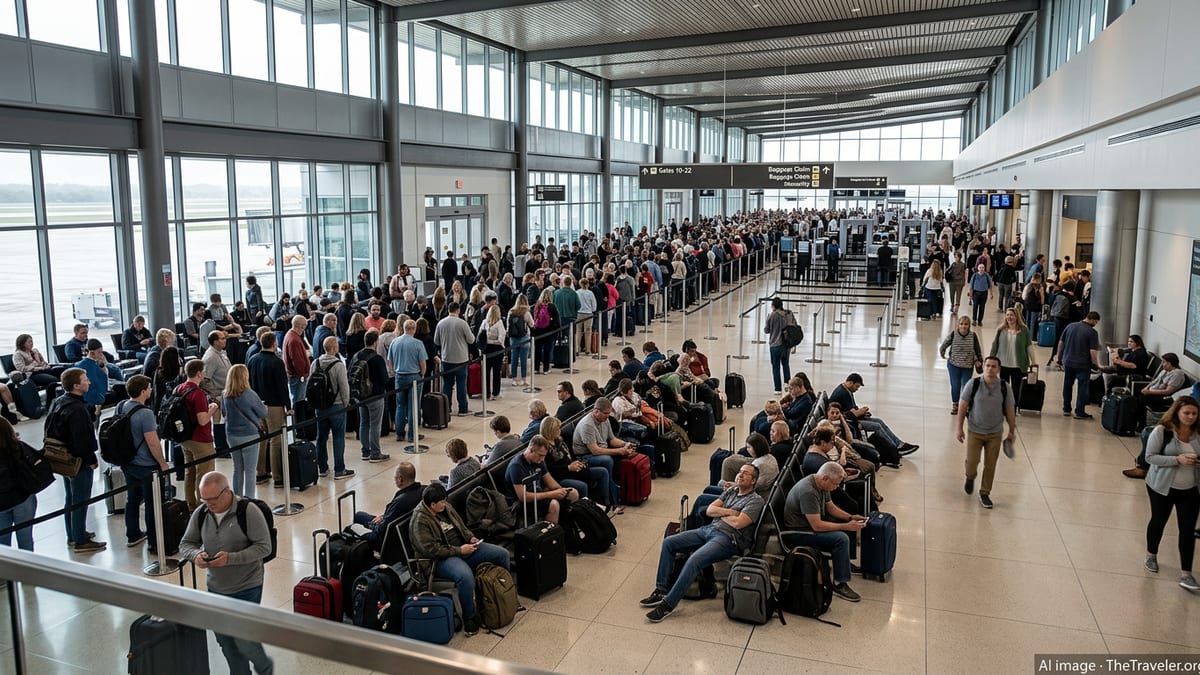
For passengers, a mid-route diversion often results in extended travel times, missed connections, and uncertainty about revised departure schedules. Individuals posting publicly about similar diversion events in recent months have described long waits on parked aircraft, changes in estimated departure times, and the logistical challenge of rebooking itineraries when storms ripple through multiple hub airports.
From an operational standpoint, airlines must manage a cascade of decisions once a diversion occurs. Crew duty-time regulations limit how long pilots and flight attendants can remain on duty, and extended delays in holding patterns or on the ground at a diversion airport can cause crews to “time out.” When that happens, the airline must locate replacement crew, which can transform a short diversion into an overnight disruption.
In the case of SWA1765’s August 7 diversion, publicly available information points to weather and air traffic constraints rather than any mechanical problem. That aligns with broader patterns across the region, where summer storm complexes frequently generate knock-on delays and cancellations throughout the day as aircraft and crews fall out of position.
Weather-Driven Diversions Increasingly Visible to the Public
Although diversions have always been a part of commercial aviation, they are now far more visible to travelers and local residents thanks to flight-tracking platforms and social media. Enthusiasts and affected passengers often follow the progress of individual flights in real time, posting screenshots of holding patterns, diversion turns, and unscheduled stops at airports like Austin.
These public data sources provide a granular view of how quickly a typical point-to-point journey, such as Phoenix to Dallas, can be reshaped by atmospheric conditions and airspace management. They also highlight how secondary airports across Texas, including Austin–Bergstrom, play a crucial safety and logistical role when capacity tightens at major hubs.
For airlines such as Southwest, the August 7 diversion of flight SWA1765 adds to a growing catalogue of weather-related operational challenges across the central United States. While disruptive for travelers, such diversions demonstrate the layered safeguards in place within commercial aviation, prioritizing safe, controlled landings at suitable alternates whenever conditions at the intended destination become too constrained.