


More news on this day
Sri Lanka has expanded its 30-day free tourist visa program to 40 countries from 25 May 2026, positioning Colombo alongside Muscat as a fast-rising gateway in a region-wide push to simplify travel and stimulate tourism across Asia-Pacific and the Gulf.
Get the latest news straight to your inbox!
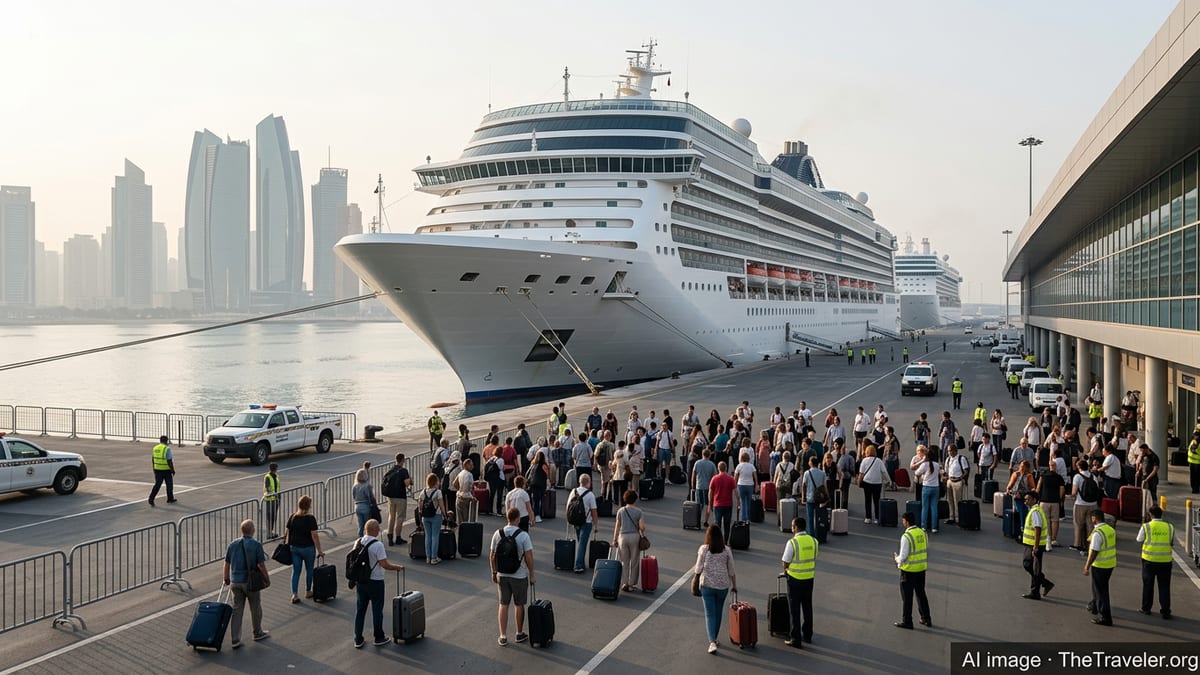
Colombo’s 30-Day Free Visa Push Targets High-Growth Markets
According to official immigration guidance updated in late May, nationals of 40 selected countries are now eligible for a free 30-day Electronic Travel Authorization when visiting Sri Lanka for tourism. The scheme allows double entry within the 30-day validity period, with the remaining days available on a second arrival. Travelers who wish to remain longer can apply and pay for an extension after entering the country.
Publicly available documents indicate that the list of eligible states is heavily weighted toward key visitor source markets in Europe, East Asia and the Pacific, together with a number of high-spending long-haul markets. The expansion builds on earlier pilot measures dating from 2024, when Sri Lanka temporarily waived visa fees for selected nationalities to help accelerate the recovery of arrivals.
Recent tourism reporting for 2025 and early 2026 shows that Sri Lanka’s visitor numbers have been gradually climbing back toward pre-pandemic levels. The broader free visa initiative is designed to reduce cost and friction at the border, encouraging longer stays and repeat visits, particularly from travelers who might otherwise choose regional competitors such as Thailand, Malaysia or Indonesia.
The decision to extend a no-fee, 30-day stay also aligns Sri Lanka more closely with other Indian Ocean destinations that have used streamlined entry rules to fuel tourism, such as the Maldives. By signaling predictable and relatively simple entry conditions, Colombo is aiming to improve its competitiveness in tour packaging and stopover itineraries built by regional and long-haul airlines.
Oman Emerges as a Parallel Hub With Flexible Entry Rules
In parallel, Oman has been widening its own visa access for tourists, creating a complementary dynamic with Sri Lanka in the broader Indian Ocean and Gulf travel market. Visitor information issued by Oman’s official tourism and foreign affairs portals highlights a short-stay visa exemption of up to 14 days for citizens of more than 100 countries, as well as an expanded use of e-visas and flexible tourist visit permits.
Separate guidance from Oman’s foreign ministry details facilities for travelers who already hold visas or residence in destinations such as the United States, Canada, the United Kingdom, Schengen states, Japan or Gulf Cooperation Council countries. These travelers can often obtain simplified unsponsored tourist visas to Oman, reinforcing Muscat’s role as an accessible stopover or twin-center destination when combined with nearby hubs.
Policy briefs and country reports describe these steps as part of Muscat’s wider diversification agenda, with tourism playing a growing role alongside hydrocarbons. The combination of visa exemptions, targeted facilitation for specific nationalities and increased airline connectivity is gradually positioning Oman as both a destination in its own right and a connector between Europe, the Gulf and South Asia.
Together, Sri Lanka’s free-visa move and Oman’s liberalization efforts suggest a broader regional shift toward softer entry regimes, as governments compete to capture higher-spending visitors and encourage multi-country itineraries across the Indian Ocean rim.
Air Connectivity Between Muscat and Colombo Underpins Growth
Strengthening air links between Sri Lanka and Oman are central to translating visa changes into real passenger flows. Flight schedule aggregators show that Muscat and Colombo are now joined by multiple weekly direct services, with an average journey time of just over four hours. The route is served by a mix of full-service and low-cost operators, allowing for a range of price points.
Coverage in Sri Lankan business media in August 2024 reported the launch of direct Muscat–Colombo flights by Omani low-cost carrier SalamAir, adding new capacity on top of existing services. Industry commentary at the time pointed to the added frequencies as a way to deepen links not only with Oman but also with SalamAir’s broader network across the Gulf, the Levant and parts of Central Asia.
These services complement long-standing connections operated by other regional airlines via hubs in the Gulf and South India, effectively integrating Sri Lanka into multi-stop networks that stretch from Europe and the Middle East to Southeast Asia and Australasia. For travelers, the combination of short flight times, competitive fares and visa flexibility on both ends of the route lowers barriers to booking combined Oman–Sri Lanka trips.
Tourism analysts note that as arrival numbers rebound, airlines tend to upgauge aircraft or add frequencies, producing a virtuous cycle of more capacity and lower unit costs. The new free-visa scheme in Sri Lanka is expected to support this by boosting forward bookings, particularly during the European winter and Gulf holiday periods when demand for Indian Ocean sun destinations is strongest.
Implications for Asia-Pacific and Gulf Tourism Strategies
The moves by Sri Lanka and Oman reflect a wider pattern in Asia-Pacific and the Gulf, where governments are using visa liberalization and aviation partnerships as tools to capture market share in a highly competitive tourism landscape. Policy trackers across the region highlight a series of recent changes, from extended visa-free stays in parts of Southeast Asia to expanded e-visa platforms in the Gulf.
For tour operators and online travel agencies, Sri Lanka’s free 30-day visa and Oman’s 14-day visa waiver for many nationalities simplify the task of packaging multi-country itineraries. A traveler flying from Europe, for example, can route through Muscat for a short city or desert stay before continuing to Sri Lanka’s beaches and cultural sites, avoiding complex visa paperwork for both countries.
Regional tourism boards are expected to use these developments in co-marketing campaigns, promoting twin-center holidays that link desert landscapes with tropical coasts, or heritage circuits that combine Gulf forts and Omani wadis with Sri Lanka’s tea country and ancient cities. Reduced visa costs may also appeal to price-sensitive segments such as younger independent travelers and emerging middle-class visitors from Asia.
At the same time, analysts observe that simpler borders can heighten competition between destinations offering similar products. Sri Lanka’s move to remove visa fees for a defined set of markets can be seen as an attempt to differentiate itself on cost and convenience, even as neighboring and peer destinations pursue their own liberalization efforts.
Balancing Accessibility With Security and Infrastructure Capacity
While easier entry rules are broadly welcomed by the travel industry, both Sri Lanka and Oman must balance openness with security and infrastructure management. Sri Lanka’s updated guidance emphasizes that all foreign nationals, including those eligible for free visas, are still required to obtain an Electronic Travel Authorization before arrival, allowing authorities to maintain advance screening procedures.
Airport capacity and service quality will be another area of focus as arrivals grow. Bandaranaike International Airport near Colombo has been handling steadily increasing traffic, and government planning documents reference ongoing expansion and modernization efforts. Muscat International Airport, which underwent a major upgrade in recent years, is similarly positioned to absorb more transit and origin-destination passengers.
Published tourism statistics show that higher visitor numbers can generate important foreign exchange receipts but can also strain local ecosystems and public services if growth is unmanaged. Industry commentators in both countries have pointed to the need for investments in accommodation, transport and digital services to ensure that new visitors drawn by easier visas have a positive experience.
As the latest visa changes bed in, regional observers will be watching how quickly airlines adjust capacity, how tour wholesalers respond with new products, and whether traveler demand materializes from the targeted markets. For now, Sri Lanka’s expanded 30-day free visa scheme and Oman’s broad visa easing stand out as significant steps toward a more seamlessly connected Asia-Pacific and Gulf travel corridor.