

More news on this day
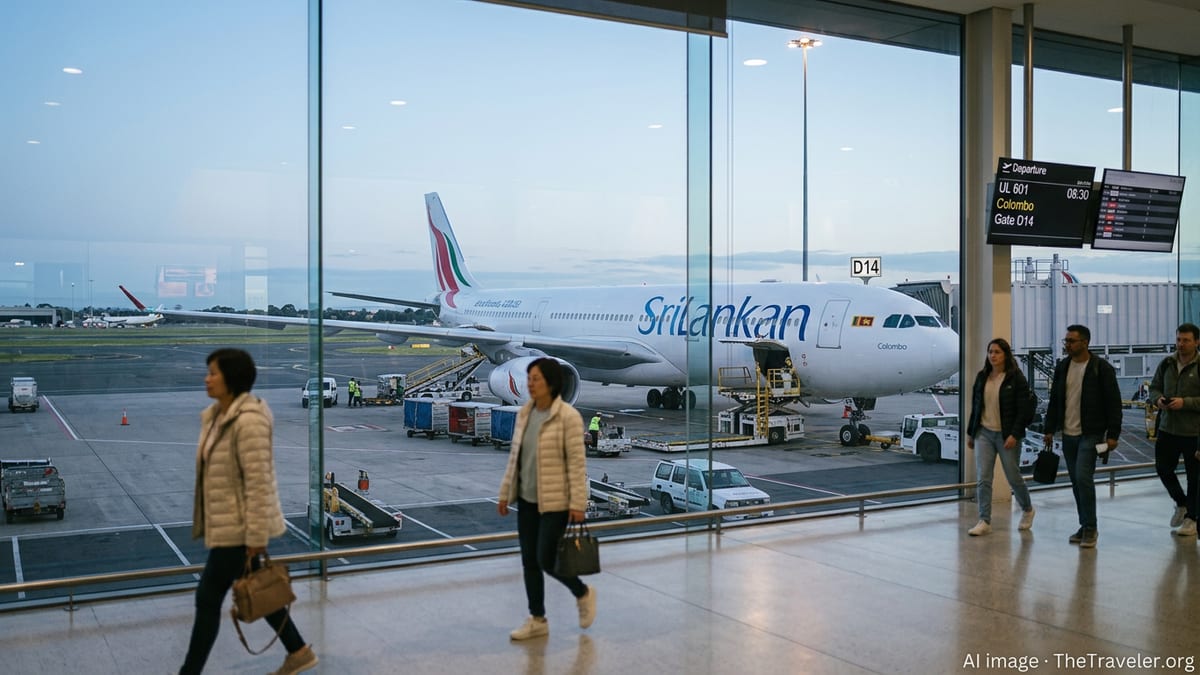
SriLankan Airlines is set to significantly expand its presence on the busy Colombo–Melbourne corridor from August 2, 2026, with new services lifting frequencies to 10 flights per week in response to strong demand from leisure travellers, the Sri Lankan diaspora and connecting passengers across the region.
Get the latest news straight to your inbox!
Major capacity increase on a key Sri Lanka–Australia corridor
According to recent coverage in Sri Lankan and aviation industry media, SriLankan Airlines will increase its Colombo Bandaranaike–Melbourne Tullamarine schedule from seven to 10 weekly flights starting August 2, 2026. Reports indicate the carrier will add three new round trips per week, building on its existing daily operation on the route.
Publicly available information shows that the additional services are planned for Tuesdays, Thursdays and Sundays, departing Colombo in the afternoon and arriving in Melbourne early the following morning. The return legs are scheduled to leave Melbourne shortly after dawn, arriving back in Colombo around midday, complementing the airline’s established overnight departure pattern.
The move marks the latest in a series of capacity increases since SriLankan first launched daily nonstop services between Colombo and Melbourne in 2017. Industry data highlights that the airline remains the sole Sri Lanka–based full-service operator on the route, positioning the carrier to capture a larger share of rapidly growing traffic between South Asia and Australia.
Reports from aviation analysts suggest that the upgrade to 10 weekly flights reflects sustained high load factors and forward bookings, particularly during peak travel periods linked to school holidays, university intakes and major cultural events within Sri Lanka’s sizable diaspora communities in Victoria and beyond.
Responding to surging demand from diaspora, tourism and students
Media coverage indicates that SriLankan’s decision is closely tied to robust two-way demand flows between Sri Lanka and Australia. Australia has emerged as one of the fastest-growing inbound tourism markets for Sri Lanka in recent years, supported by a mix of leisure travel, visits to friends and relatives, and niche interest tourism focused on culture, wildlife and wellness.
For Melbourne and the wider state of Victoria, the route serves a large Sri Lankan diaspora as well as a growing cohort of Sri Lankan students enrolled at universities and vocational institutions. Additional frequencies are expected to provide greater flexibility for short breaks and family visits, while offering more choice around exam calendars and semester start dates for students flying in and out of Colombo.
Travel trade reporting points to strong demand in both directions despite broader economic pressures and a competitive regional aviation market. Industry observers note that Sri Lanka’s tourism recovery, combined with Australia’s resilient outbound travel appetite, has helped underpin year-round traffic on the corridor, supporting the case for more capacity rather than purely seasonal boosts.
Analysts also highlight that the extra services may offer pricing and inventory benefits, as a denser schedule typically allows an airline to smooth demand across more flights. This can translate to more options in both economy and premium cabins for travellers booking during high-demand windows such as the southern summer and major Sri Lankan festive periods.
Colombo’s hub role strengthened amid growing regional competition
The expansion to 10 weekly flights is expected to further consolidate Colombo’s role as a South Asian hub for travel between Australia, the Indian subcontinent and the Middle East. SriLankan Airlines serves an extensive Indian network, and publicly available schedules suggest that the adjusted timings have been designed to improve onward connectivity for passengers traveling between Melbourne and key Indian cities via Colombo.
Industry data shows that SriLankan has steadily positioned its home base at Bandaranaike International Airport as a one-stop alternative to larger regional hubs such as Singapore, Kuala Lumpur and Doha, particularly for price-sensitive travellers and those seeking shorter total journey times on certain city pairs. The uplift in Melbourne capacity aligns with this strategy by feeding additional traffic into the airline’s South Asian and Middle Eastern network.
The timing also coincides with an increasingly competitive landscape on Australia–South Asia routes. Low-cost and full-service carriers across the region have been expanding long-haul operations from Melbourne, while new entrants are preparing to launch services between Melbourne and Colombo. Against this backdrop, SriLankan’s additional flights are viewed by aviation commentators as a proactive step to protect market share and reinforce its first-mover advantage on the route.
By adding frequencies rather than simply deploying larger aircraft, the airline is also enhancing schedule choice, which is a key differentiator for connecting passengers. Shorter layovers in Colombo and more evenly spaced departures across the week can make one-stop itineraries via Sri Lanka more attractive compared with alternative routings through other Asian hubs.
Boost for Victoria’s aviation connectivity and tourism linkages
For Melbourne, the increased SriLankan Airlines capacity represents an additional lift in long-haul seats into Victoria at a time when the state is actively pursuing tourism and international education growth. Local travel industry reporting notes that the extra Colombo flights will complement wider Asia–Pacific expansion at Melbourne Airport, where several carriers are adding services to meet strong post-pandemic travel demand.
Tourism operators in Sri Lanka are expected to benefit from improved access to high-yield Australian visitors, who typically stay longer and spend more per trip than many regional markets. Travel sector analysis suggests that better connectivity also supports specialist segments such as surf tourism, wildlife watching and heritage travel, all of which rely on dependable, year-round air links.
The added flights may further encourage multi-destination itineraries, with passengers combining Sri Lanka with other South Asian or Middle Eastern stops using Colombo as a gateway. This aligns with SriLankan Airlines’ broader strategy of promoting the island as both a standalone holiday destination and a convenient hub for wider regional exploration.
On the Australian side, the bolstered schedule provides more direct options for travellers heading to Sri Lanka for business, tourism, family events or religious pilgrimages. Travel consultants quoted in local coverage have pointed to growing interest in Sri Lanka as an alternative to more mature Asian beach destinations, with improved air access often cited as a decisive factor for first-time visitors.
Looking ahead to August 2026 and beyond
As the August 2, 2026 start date approaches, booking channels already indicate availability aligned with the expanded timetable, signalling that the new flights are firmly embedded in forward schedules. Aviation analysts will be watching load factors and fare trends closely to gauge how quickly the additional capacity is absorbed by the market.
If demand remains strong, some industry observers suggest there may be scope for further refinements, including seasonal adjustments or upgauging certain rotations, especially during peak travel months. For now, the move to 10 weekly services marks a clear statement of intent from SriLankan Airlines regarding the strategic importance of Melbourne within its long-haul network.
The expansion also frames Colombo’s position within a broader reshaping of Indo-Pacific air connectivity, as airlines race to secure slots and frequencies on high-potential routes linking South Asia, Southeast Asia and Australia. In that context, the enhanced Colombo–Melbourne schedule is likely to play a pivotal role in how SriLankan Airlines competes for both point-to-point and connecting traffic in the coming years.
For travellers, the most immediate impact will be more choice: additional departure days, more convenient connection windows and an extra layer of resilience if disruptions affect individual flights. For the airline and the two cities it connects, the August 2026 upgrade underscores a deepening relationship built on tourism, education, migration and trade along one of the region’s fastest-growing aviation corridors.