

More news on this day
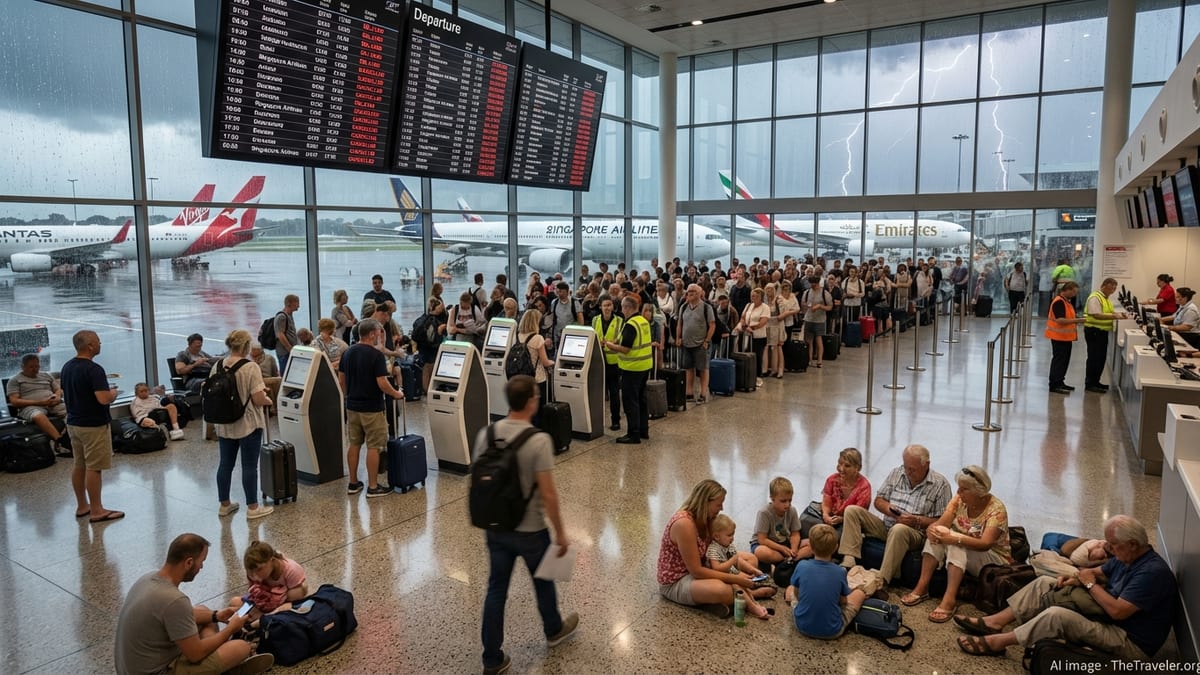
Severe storms sweeping eastern Australia have thrown air travel into disarray, with 601 flights delayed and 65 cancelled at Sydney, Melbourne and Brisbane on Friday, stranding thousands of passengers and disrupting major international connections across the Asia Pacific and Middle East.
Major Hubs Brought to a Standstill
The disruptions hit Australia’s three busiest gateways simultaneously on February 27, as intense rainfall and thunderstorms slowed operations at Sydney Kingsford Smith, Melbourne Tullamarine and Brisbane Airport. Ground delays, extended separation between aircraft and temporary runway closures led to mounting backlogs throughout the day.
Airport operations teams imposed flow restrictions as visibility dropped and storm cells passed directly over approach and departure paths. Turnaround times lengthened as ramp staff worked in driving rain and lightning hold restrictions periodically halted baggage and refuelling work.
By late afternoon, departure boards at all three airports showed long banks of delayed flights, with queues snaking through check in halls and customer service desks. Travellers reported waits of several hours to rebook missed connections or secure overnight accommodation.
International Networks Ripple From Abu Dhabi to Manila
The impact extended far beyond Australia’s borders as global carriers adjusted schedules and aircraft rotations. Qantas, Air Canada, Emirates, United Airlines and Qatar Airways were among the worst affected, along with key Asian and Pacific operators serving the east coast triad.
Long haul services linking Sydney and Melbourne with Abu Dhabi, Dubai and Doha faced rolling delays as aircraft awaited departure slots and revised routings around storm systems. Connections through Auckland were also disrupted, with some trans Tasman departures held on the ground while crews and aircraft repositioned from Australia’s east coast.
In Southeast Asia, flights to and from Manila and other regional hubs saw schedule changes as carriers sought to preserve onward connections to Europe and North America. Airline operations centres spent much of the day re sequencing aircraft and crew rosters to minimise missed curfews at both Australian and overseas airports.
Domestic Travellers Bear the Brunt
Within Australia, passengers on high frequency trunk routes between Sydney, Melbourne and Brisbane endured some of the longest delays. Narrow body jets operating shuttle style services quickly fell behind schedule as each late arrival cascaded into the next departure.
Regional links into New South Wales and Queensland were also heavily affected, with some services cancelled outright where weather at both origin and destination failed to meet safety thresholds. Travellers bound for smaller centres faced the prospect of overnight stays in major cities as remaining seats on later flights quickly sold out.
Check in and security areas grew crowded as airlines issued rolling delay updates. Staff encouraged passengers to remain in terminal buildings rather than attempt to leave and re enter, warning that further thunderstorms were likely into the evening peak.
Airlines Struggle to Support Stranded Passengers
Airlines activated disruption response plans, deploying additional ground staff and opening extra service counters where space allowed. Qantas and its partners, along with international carriers such as Emirates, United and Qatar Airways, offered rebooking onto the next available services and prioritised passengers with imminent onward connections.
However, the simultaneous impact at three major hubs limited options. Many flights were already heavily booked heading into the late summer weekend, and spare seats on alternative services were scarce. Some travellers reported being offered next day departures or reroutes via secondary cities to reach long haul destinations.
Airport hotels near Sydney, Melbourne and Brisbane quickly filled as evening curfews approached and more flights were cancelled. Travellers unable to secure nearby accommodation turned to out of town properties, ride hailing services and relatives for last minute arrangements while monitoring airline apps for fresh updates.
Authorities Urge Passengers to Expect Ongoing Disruption
Meteorologists warned that the slow moving storm system could continue to influence conditions across eastern Australia into the weekend, raising the risk of further delays. Aviation authorities and airport operators advised passengers to allow extra time for travel to the airport, check flight status frequently and be prepared for schedule changes at short notice.
Consumer agencies reminded affected travellers to review fare rules and airline policies on delays and cancellations, which determine entitlements to refunds, credits or alternative transport. They also noted that severe weather events are typically classified as outside an airline’s control, limiting eligibility for additional compensation in many cases.
As airlines and airports worked late into Friday night to clear backlogs and reposition aircraft, operations teams cautioned that knock on effects could linger into Saturday morning’s peak. Travellers scheduled to depart in the coming days were urged to keep plans flexible and stay closely informed as the situation evolves.