


More news on this day
Air travel across the United States faced another bruising day as 855 flights were cancelled and 7,773 delayed, with widespread disruption reported in New York, California, Florida, Texas, Virginia, Pennsylvania, North Carolina, Massachusetts, Michigan and Ohio, affecting major carriers including American, Southwest, United, Delta and JetBlue.
Get the latest news straight to your inbox!
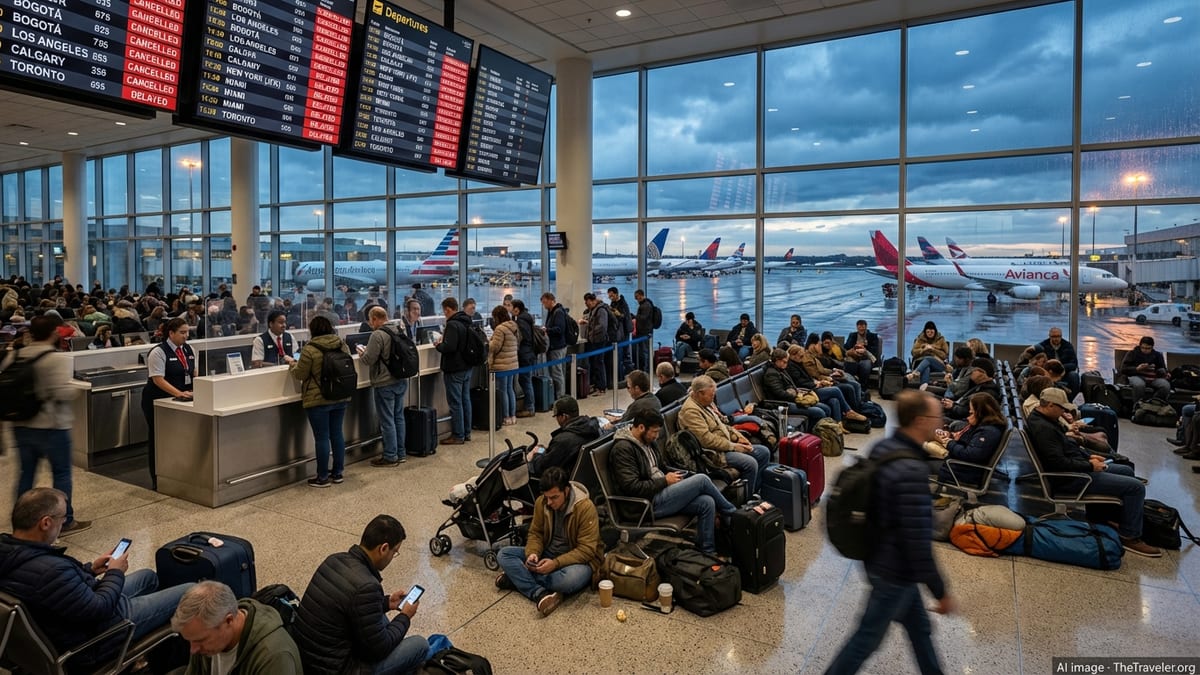
Nationwide Disruptions Hit Major Hubs and Regional Gateways
Publicly available aviation data and media coverage indicate that the latest wave of disruption is concentrated at some of the country’s busiest airports, including New York area gateways, Los Angeles and other California hubs, as well as large connecting centers in Florida and Texas. The impact is also being felt at important regional and secondary airports that funnel traffic into these systems, creating a web of missed connections and rolling delays.
Reports show that states such as New York, California, Florida and Texas are absorbing a large share of the 855 cancellations, reflecting the dense schedules and heavy reliance on hub operations in those markets. Airports in Virginia, Pennsylvania, North Carolina, Massachusetts, Michigan and Ohio are seeing significant knock-on effects, with delays accumulating as disrupted aircraft and crews struggle to get back in position.
Aviation trackers and travel-industry analyses describe the situation as another example of how quickly conditions can deteriorate once the national network comes under strain. Even when only a handful of large hubs experience acute problems, the interconnected nature of airline schedules ensures that regional airports can feel the effects within hours.
In several cities, airport dashboards and local media are highlighting long lines at check in, rebooking counters and security, with passengers advised to arrive early and monitor their flight status on airline apps. Many travelers whose flights are still scheduled to operate are reporting gate changes and departure times that shift repeatedly throughout the day.
Weather, Congested Skies and Tight Schedules Create a Volatile Mix
Detailed breakdowns of recent nationwide disruption released by flight-tracking and travel-compensation services point to a familiar pattern of cascading problems. Storm systems across multiple regions, pockets of low visibility and strong winds, and en route traffic management initiatives have all contributed to capacity reductions that ripple through the network.
Industry guides explaining how the Federal Aviation Administration manages traffic note that when storms stretch from states like Texas up toward the Great Lakes, both departure and arrival flows can be restricted simultaneously along key corridors. That can force airlines to slow their schedules, hold aircraft on the ground and reroute flights through already busy airspace, all of which increases the likelihood of missed slots and late arrivals at downstream airports.
Analysts emphasize that tight scheduling and fuller planes leave airlines with less slack to absorb disruptions. Once rotations begin to run late, aircraft and crew are often out of position for subsequent departures, causing delays in states that are far from the original weather system. The current wave of 7,773 delays appears to follow this pattern, with significant congestion even at airports not directly affected by severe storms.
Travel experts also point to the cumulative impact of repeated weather and operational events over recent months. When airlines face several large disruptions in a short period, recovery windows narrow and minor issues that might otherwise be manageable can tip into broader instability.
American, Southwest, United, Delta and JetBlue Under Pressure
The disruption is touching nearly every major US carrier, with American Airlines, Southwest Airlines, United Airlines, Delta Air Lines and JetBlue Airways among those seeing elevated cancellation and delay counts. Data dashboards maintained by passenger-rights and aviation analytics platforms show these airlines accounting for a substantial share of today’s 855 cancellations.
Published coverage notes that network carriers with large domestic hubs, such as American and United, are particularly exposed when key connecting airports encounter capacity reductions or ground stops. A single weather or air-traffic event at a core hub can affect dozens of onward flights to states such as Michigan, Ohio, North Carolina and Florida, resulting in widespread missed connections.
Low cost and point to point operators like Southwest are not immune. Their high aircraft utilization and rapid turnarounds can magnify the effect of short ground holds and minor technical issues, leading to long strings of late departures. JetBlue, with a concentration of operations in the Northeast and Florida, is often sensitive to congestion in New York and along the Eastern seaboard.
Airline operations teams rely on aircraft swaps, crew reassignments and schedule trimming to stabilize the system, but those measures can translate directly into cancellations for some routes. Travelers on thinner or off peak services in states like Virginia, Pennsylvania or Ohio may find their flights among the first to be cut when airlines prioritize keeping core trunk routes moving.
Travelers Face Missed Connections, Overnight Stays and Rebooking Challenges
The sheer scale of 7,773 delayed flights has left many passengers facing multi hour waits, missed connections and unexpected overnight stays. Social media posts and local broadcast coverage from airports in New York, Florida, Texas and North Carolina describe crowded gate areas, long customer service queues and limited same day rebooking options on popular routes.
Because US regulations do not require airlines to pay monetary compensation for most delays, passengers are often focused on securing alternate itineraries and, where applicable, hotel and meal support when disruptions are within an airline’s control. Consumer advocacy sites explain that travelers are generally entitled to a refund when a flight is cancelled and they choose not to travel, but assistance policies for those who decide to continue their trip can vary by carrier and by cause of disruption.
For international and long haul travelers passing through major hubs in New York, California and Florida, the latest cancellations are creating additional complications. Missed onward flights to Europe, Latin America and Asia may require complete rebookings, visa checks and new seat assignments, all while capacity remains tight due to strong seasonal demand.
Some travel specialists are advising passengers whose journeys are not time sensitive to consider voluntary rebooking to later dates when large systemic disruptions emerge. Others recommend building longer connection times into itineraries that pass through weather prone hubs during peak storm seasons to reduce the risk of misconnecting.
What Passengers Can Do On a Disrupted Travel Day
With 855 cancellations and thousands of delays reported across such a wide geographic area, aviation analysts suggest that the most effective response for travelers is proactive planning. Monitoring flight status early, even before leaving for the airport, can help passengers spot emerging problems and contact airlines before call centers and airport counters become overwhelmed.
Travel guidance from passenger-rights organizations recommends using airline apps and websites as primary tools for same day rebooking, since these platforms often display alternative routings before they appear at airport kiosks. Holding backup routing ideas for critical trips, such as considering departures from alternate airports in nearby states, can also improve the chances of finding workable options.
Experts further advise keeping essential items, medications and a change of clothes in carry on baggage in case checked luggage becomes separated during unplanned overnights. For travelers flying from or to heavily affected states like New York, Florida or Texas, securing hotel options quickly can be important when local availability tightens.
While the latest figures underline the fragility of the US air travel system during periods of intense weather and operational stress, they also highlight patterns that travelers can watch for. Early morning departures, routes that avoid multiple tight connections and itineraries that offer flexibility on travel dates remain among the most resilient options when nationwide cancellation and delay numbers begin to climb.