


More news on this day
Travel across the eastern United States and parts of Canada descended into fresh turmoil on Tuesday as major hubs in Atlanta, New York, Boston, Newark, Orlando and Toronto reported at least 169 flight cancellations and more than 680 delays, disrupting operations for Delta Air Lines, United, JetBlue, Air Canada, American Airlines and several international carriers.
Get the latest news straight to your inbox!
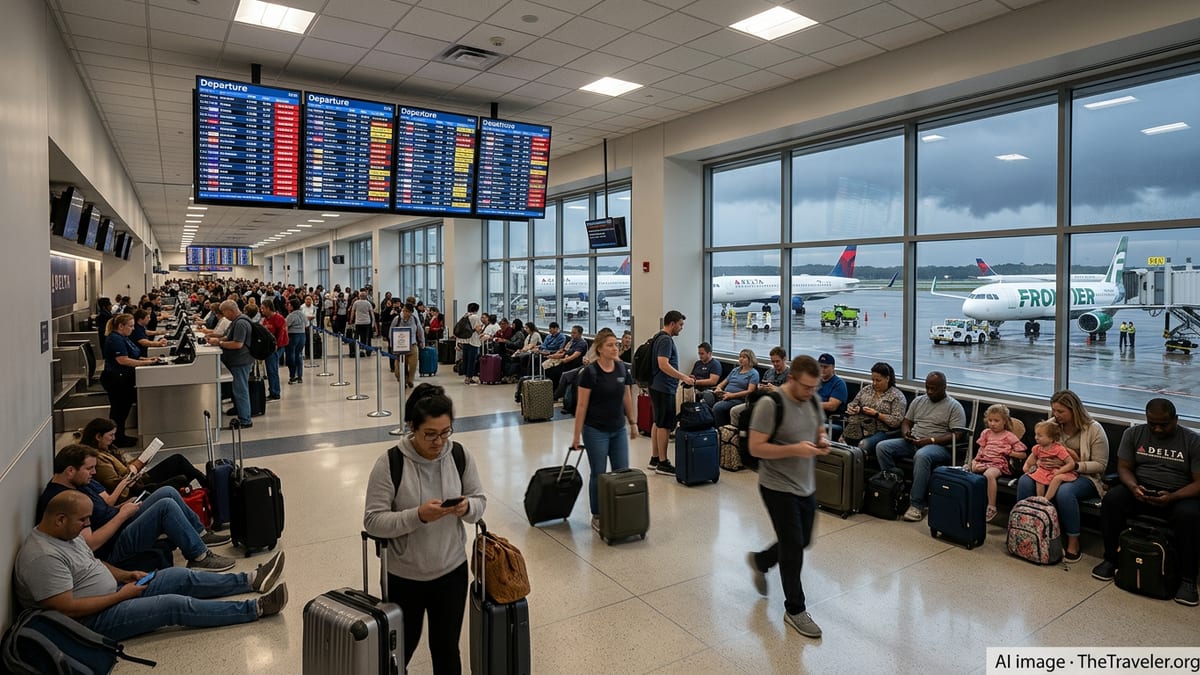
Storms, Congestion and Technology Combine to Disrupt Networks
Publicly available tracking data for June 23, 2026, show a sharp spike in disruptions centered on Atlanta, New York’s John F. Kennedy, Boston Logan, Newark Liberty, Orlando International and Toronto Pearson. Aviation analytics platforms indicate that a mix of fast-moving thunderstorms, tight airspace constraints and knock-on effects from earlier delays contributed to the day’s high cancellation and delay totals.
Industry reporting points to scattered storm cells repeatedly sweeping along the Eastern Seaboard and into the Great Lakes region, triggering ground stops and flow-control measures at multiple hubs. These restrictions slowed departures and arrivals, forcing airlines to reroute aircraft, swap crews and recalibrate tightly timed schedules.
Operational bulletins issued in recent weeks highlight how even short-lived weather events can quickly tip already busy hubs into gridlock. When aircraft and crews are stranded out of position early in the day, subsequent flights can be delayed or scrubbed entirely, a pattern that appeared to play out again across the network on Tuesday.
Analysts note that heavy reliance on hub-and-spoke systems magnifies these effects. When several hubs on the same side of the continent are affected simultaneously, as in this latest episode, disruption radiates quickly to secondary airports and regional routes.
Major Hubs Buckle Under Pressure
Atlanta, the world’s busiest hub by passenger volume, once again emerged as a focal point of the turmoil. Data from flight-status services show the airport handling hundreds of movements on June 23, with a significant share subject to delay or cancellation as storms and congestion slowed departures and forced holding patterns for arrivals.
At New York’s John F. Kennedy International Airport and nearby Newark Liberty, flight boards filled with delayed and canceled services spanning domestic routes and long-haul international operations. These airports are among the most delay-prone in the United States even under normal conditions, and the combination of weather disruptions and dense traffic frequently pushes operations past their limits.
Boston Logan and Orlando International, both important leisure and business gateways, also reported elevated disruption. In Orlando, mid-afternoon and evening departures were particularly affected, with some aircraft unable to depart on time because connecting inbound flights and crews arrived late from other constrained hubs.
Toronto Pearson, Canada’s largest airport, faced its own set of complications as delays in U.S. hubs rippled across cross-border schedules. Published coverage indicates that some transborder and transatlantic flights were forced into extended holds or schedule changes, affecting travelers on both sides of the border.
Delta, United, JetBlue, Air Canada and American Hit Hard
The disruption struck hardest at airlines with major hubs in the affected cities. Delta Air Lines, which relies heavily on Atlanta, New York and Boston, experienced a wave of delayed departures and arrivals as aircraft and crews cycled through weather-impacted airspace. Some short-haul services between East Coast cities, including shuttle-style links, operated significantly behind schedule, according to live status feeds.
United Airlines, anchored at Newark and with a large presence at other East Coast airports, also saw network-wide ripple effects. Delays to early bank departures in Newark and other hubs can cascade into midday and evening operations, and public tracking data for June 23 show precisely that pattern as turnaround times lengthened.
JetBlue, which concentrates much of its network at JFK, Boston and Orlando, faced pressure on popular leisure and visiting-friends-and-relatives routes, particularly to Florida and Caribbean destinations. Published analyses of the airline’s historical performance underscore its sensitivity to weather events at these hubs, with today’s figures fitting that longer-term pattern.
Air Canada and American Airlines likewise contended with operational strain. Air Canada’s use of Toronto Pearson and cross-border links to U.S. hubs exposed it to knock-on delays from American airspace restrictions, while American’s presence at multiple East Coast airports meant its schedule was vulnerable wherever thunderstorms flared or congestion tightened.
International Carriers and Long-Haul Flights Also Affected
While the brunt of the disruption was felt on domestic and short-haul cross-border routes, long-haul international operations did not escape unscathed. Flight-status boards at JFK, Newark and Toronto showed schedule changes on services operated by European and Asian carriers, reflecting late-arriving aircraft, crew duty-time limits and constrained departure slots.
Operational experts note that international flights are particularly sensitive to extensive ground delays, as crews are subject to strict duty-time regulations and long-haul rotations leave little slack in the system. When arrivals are pushed back by weather or congestion, outbound segments may be rescheduled or, in some cases, canceled entirely.
According to published airline and airport data, some transatlantic departures from the New York area on June 23 were held at the gate or delayed on taxiways as traffic volumes peaked during the evening departure rush. In Toronto, several overseas flights adapted by adjusting departure times to avoid the most constrained traffic periods.
These changes have a compounding effect on global connectivity. Missed connections at gateway hubs can strand travelers who depend on tight layovers to reach Asia, Europe or South America, creating additional demand for rebooking and overnight accommodation at a time when airport resources are already stretched.
Passengers Face Missed Connections, Crowded Terminals and Limited Options
For travelers, the operational statistics translated into missed connections, extended waits at crowded terminals and complex rebooking challenges. Passenger accounts shared on social platforms and consumer forums describe long customer-service queues and difficulty securing alternative itineraries once the disruption became widespread.
Industry guidance for days like June 23 consistently emphasizes proactive planning. Travelers are encouraged to monitor their flight status frequently, download airline mobile applications and consider earlier departures or longer connection times when storms or air-traffic constraints are forecast for key hubs.
Consumer advocates also highlight the importance of understanding each airline’s published policies on rebooking, meal vouchers and hotel accommodations. Rules vary by carrier and by cause of disruption, with weather-related delays and cancellations generally offering fewer entitlements than issues tied to mechanical or staffing problems.
With the summer travel season ramping up, analysts warn that similar episodes of concentrated disruption are likely to recur. The combination of record passenger demand, tight labor markets and increasingly volatile weather patterns leaves little room for error at already congested hubs, meaning that even a few dozen storm cells or system glitches can once again trigger a day of widespread travel mayhem across North America.