


More news on this day
Travelers moving through Indianapolis International Airport on June 18 faced a bruising day of disruption, as regional carrier Republic Airways, Southwest Airlines and Delta Air Lines were associated with dozens of delayed departures and at least three cancellations amid severe weather and wider operational strain rippling across the national network.
Get the latest news straight to your inbox!
Weather Turmoil Meets a Fragile Flight Network
Publicly available weather alerts show that central Indiana spent Thursday under a volatile storm pattern, with the National Weather Service issuing a tornado watch that covered Indianapolis and much of the surrounding region into the night. The system brought the threat of damaging winds, large hail and intense rainfall, conditions that often force air traffic managers to slow or temporarily halt operations for safety.
The storm line pushing through Indiana did not arrive in isolation. Severe weather over the last several days has been tracking across the Midwest and into the Northeast, periodically triggering ground delays and congestion at major hubs. When large airports are forced to meter arrivals and departures, the impact can cascade hundreds of miles away, affecting flights that otherwise appear to originate under relatively clearer skies.
Against this backdrop, Indianapolis International registered 55 delayed flights and three outright cancellations tied to Republic, Southwest and Delta services over the course of the day, according to aggregated flight-tracking data reviewed in real time. While some of those disruptions were directly connected to local thunderstorms, many were linked to aircraft and crews arriving late from other troubled parts of the country.
Aviation analysts note that this pattern highlights how vulnerable the modern hub-and-spoke system remains when multiple regions face simultaneous stress. Even as individual airports work to keep runways open, the knock-on effects of earlier delays elsewhere can quickly wipe out schedule resilience for the remainder of the day.
Republic, Southwest and Delta Shoulder the Brunt
The disruption at Indianapolis on Thursday was concentrated among three familiar names for Midwestern travelers. Republic Airways, a major regional operator that flies under brands such as American Eagle, Delta Connection and United Express and is headquartered at Indianapolis International, saw a significant portion of its schedule depart behind plan. Many of those flights were feeding passengers into larger hubs already taxed by storms and congestion.
Southwest Airlines, which operates point-to-point routes rather than a traditional hub system, also recorded notable delays at Indianapolis. In recent years, the carrier has faced intense scrutiny whenever irregular operations escalate, prompting many travelers to track performance closely on days of widespread storms. On Thursday, its Indianapolis departures were slowed by a mix of late-arriving aircraft and traffic-management programs stemming from weather in other regions.
Delta Air Lines, typically one of the stronger performers in federal on-time statistics in recent years, was not immune either. A number of its flights connected Indianapolis passengers through large eastern and Midwestern hubs that were coping with weather-related flow restrictions. Once those hubs begin holding or rerouting inbound traffic, knock-on impacts tend to filter down to spoke airports like Indianapolis, where travelers see the result as a delayed departure, shorter connection window or, in some cases, an outright cancellation.
Industry data indicate that while airlines can often recover from isolated thunderstorms near a single city, they struggle when severe weather interacts with already tight schedules and high summer demand. With load factors elevated on many routes by June, rebooking options for stranded passengers become more limited and recovery times can lengthen.
Northeast Logjams Drive Cascading Disruptions
The intense pressure on Indianapolis International unfolded as the broader U.S. system managed a much larger wave of disruption, particularly affecting major Northeastern and Midwestern airports. According to nationwide flight-tracking summaries compiled on June 18, carriers across the country were contending with thousands of delays and hundreds of cancellations, with American Airlines and several large regional partners among those recording the highest raw numbers.
In the Northeast, busy facilities such as New York’s LaGuardia and John F. Kennedy airports, along with Boston Logan, have periodically faced ground delays and holding patterns in recent days when storms and low visibility moved through. When air traffic managers issue these restrictions, flights are spaced out more widely or temporarily paused, slowing the throughput of arrivals and departures and forcing airlines to reshuffle aircraft rotations.
Chicago has also experienced weather-related slowdowns this week, with reports from the region describing torrential rain, flooding concerns and air traffic programs at O’Hare International that pushed some operations late into the night. Because many routes from Indianapolis feed into or overfly these busy hubs, conditions there played a direct role in the knock-on disruptions felt by travelers in Indiana.
Aviation observers often describe this dynamic as a “cascading” effect: a late-morning ground delay at a major hub can ripple outward through the afternoon and evening, touching smaller airports far from the original weather cell. By the time those ripples reach passengers at Indianapolis International, they appear as boarding-time pushes, gate changes and missed connections, even if the local radar looks relatively calm.
Passengers Confront Long Lines and Limited Options
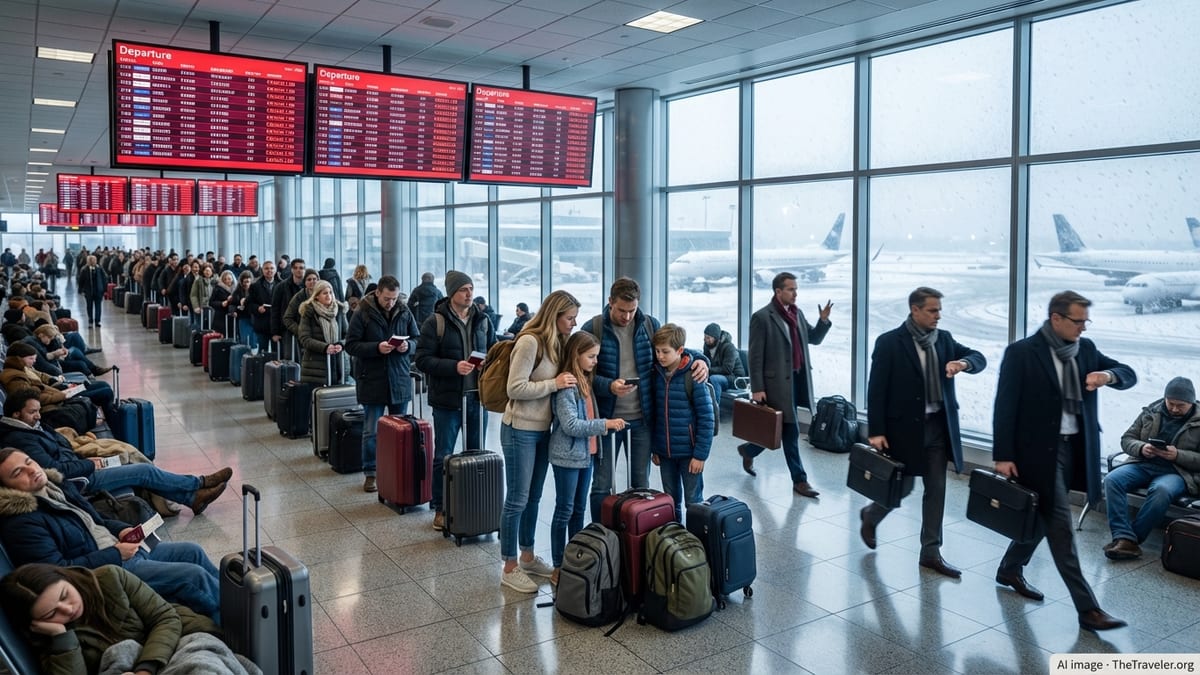
For travelers on the ground in Indianapolis, Thursday’s numbers translated into full gate areas, longer customer-service lines and a scramble for alternative itineraries. With three flights canceled outright in addition to the dozens of late departures, many passengers faced the unwelcome choice of overnight stays, rerouting through distant hubs or accepting significant schedule changes.
Published advisories from travel experts emphasize that in such scenarios, passengers should monitor their flight status frequently, as changes can occur hours before a posted departure time. Same-day schedule shifts are common when airlines attempt to reposition aircraft and crews around weather systems and peak traffic times, especially during the busy summer season.
Consumer advocates also point out that travelers affected by cancellations or lengthy delays should review airline policies on rebooking, meal vouchers and hotel assistance. While federal rules in the United States continue to evolve, carriers maintain customer-service commitments that, in some circumstances, can provide additional support when disruptions are within the airline’s control.
At Indianapolis International, where Republic’s regional operation plays a central role and carriers like Southwest and Delta handle large volumes of domestic traffic, the concentration of issues among a few operators meant that customer-service desks for those airlines were heavily burdened. This made digital tools and mobile rebooking options especially important for passengers trying to secure scarce seats on remaining flights.
What Comes Next for Indianapolis Travelers
Looking ahead to the rest of the week, forecasts suggest that stormy conditions across parts of the Midwest and Northeast may continue to challenge airline operations, even as the most intense cells move on from Indiana. When carriers are forced to absorb days of heavy disruption, it can take multiple schedule cycles to fully realign aircraft, crews and maintenance windows.
Travel analysts recommend that passengers flying from Indianapolis in the near term build additional buffer time into their journeys, particularly when connecting through weather-prone hubs. Early-morning departures often retain better on-time performance because they utilize aircraft that overnighted at the airport rather than those flying in from already stressed parts of the network.
For Indianapolis International Airport itself, the events of June 18 highlight the complex role the facility plays within the broader U.S. aviation system. As a growing Midwestern gateway that hosts a headquarters operation for Republic Airways and key routes for Southwest, Delta and other major carriers, its local performance is tightly bound to national conditions that stretch far beyond Indiana’s state line.
With summer travel demand building and climate patterns contributing to frequent severe-weather outbreaks, airport and airline planners face a difficult balancing act between maximizing capacity and preserving enough slack in the system to absorb shocks. For travelers passing through Indianapolis, that reality means that even a routine-seeming itinerary can be vulnerable when the national network comes under strain.