


More news on this day
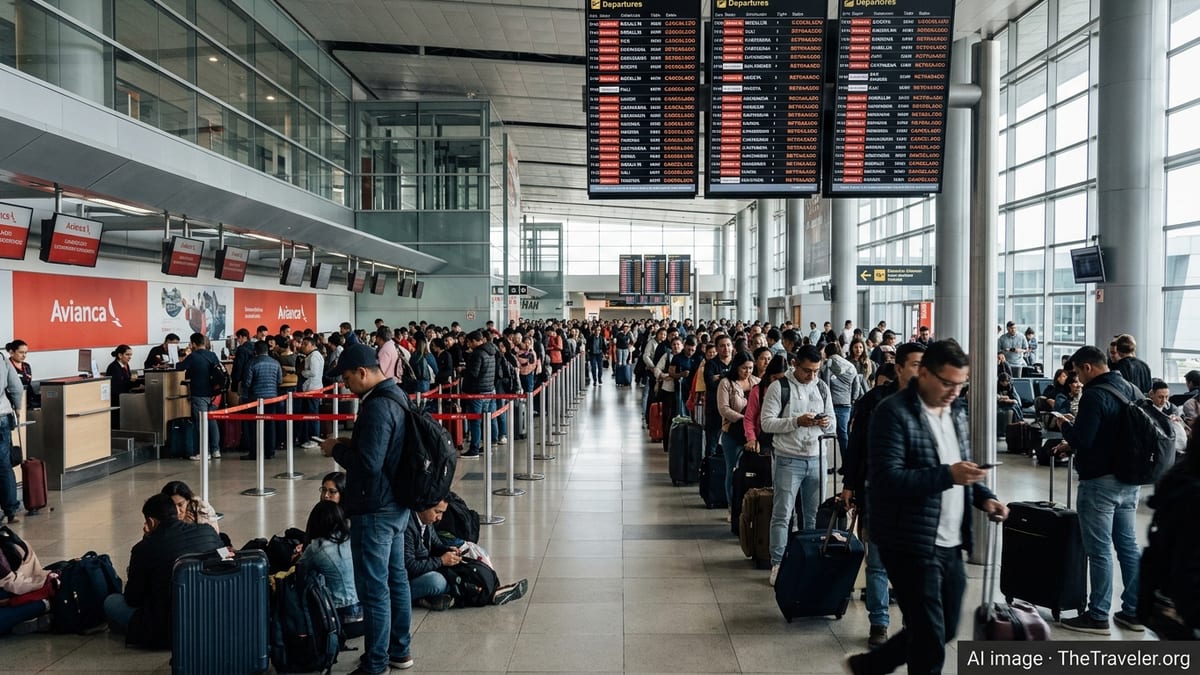
Passengers traveling through Bogotá’s El Dorado International Airport on June 18 faced a wave of cancellations and delays as Avianca and LATAM Airlines temporarily suspended five flights and reported extensive schedule disruptions across major routes linking Colombia with the United States, Brazil, Ecuador, Spain, Panama, and other destinations.
Get the latest news straight to your inbox!
Wave of Cancellations Concentrated at El Dorado Hub
El Dorado International Airport in Bogotá functions as the primary hub for both Avianca and LATAM’s Colombian operations, meaning any disruption at the airport can quickly ripple across regional and long haul networks. On June 18, publicly available tracking data and local media coverage pointed to at least five Avianca and LATAM departures being suspended, alongside a wider pattern of delayed operations on key international corridors.
The affected flights included services scheduled to connect Bogotá with major entry points in North America and Europe, as well as regional links into Brazil, Ecuador, and Panama. While exact flight numbers varied across data providers, monitoring boards through the day showed a cluster of cancellations in the early morning and late evening departure banks, the periods when many long haul connections are timed to feed through El Dorado.
The suspensions came on a day when the airport was already managing high passenger volumes at the outset of the Northern Hemisphere summer travel period. As a result, even a relatively small number of outright cancellations compounded congestion, with missed connections and aircraft out of position feeding into knock on delays along several routes.
Key Routes to the US, Brazil, Ecuador, Spain, and Panama Affected
El Dorado is a major gateway between South America and the United States, with Avianca and LATAM operating non stop services to cities such as Miami, New York, Orlando, Washington, and other hubs. Delays and suspensions on June 18 affected this transcontinental traffic, with passengers reporting extended waits and rebookings on services heading northbound from Bogotá.
Southbound and regional connectivity also felt the strain. Brazil and Ecuador, which rely heavily on Bogotá for one stop access to Colombia and beyond, saw disruptions as some flights were withdrawn from the schedule and others departed significantly behind time. Panama, home to one of Latin America’s most important connecting hubs, experienced knock on disruption from delayed departures out of Bogotá that normally feed into onward connections across Central America and the Caribbean.
Long haul links to Europe, particularly Spain, were similarly sensitive to the day’s irregular operations. Flights between Bogotá and Spanish gateways such as Madrid and Barcelona are among the busiest intercontinental routes from Colombia. When departures from El Dorado are pushed back or cancelled, passengers often face limited same day alternatives, magnifying the impact for both leisure and business travelers.
Operational and Weather Factors Behind the Disruption
Published information on June 18 suggested a mix of operational and weather related factors behind the wave of cancellations and delays. Bogotá’s high altitude and often variable weather patterns have long made El Dorado a challenging airport for maintaining on time performance, particularly during periods of low visibility or heavy rain.
On days when conditions deteriorate, arriving flights can face holding patterns or diversions, which in turn delay aircraft turnaround times for outbound legs. Because Avianca and LATAM schedule tight connection windows for many itineraries through Bogotá, even moderate delays can require crews to reshuffle aircraft assignments or consolidate flights to manage capacity.
Industry commentary has also noted broader pressures on airline operations in the region in 2025 and 2026, including aircraft availability, maintenance planning, and high demand on certain trunk routes. While there was no immediate indication that a single structural issue was responsible for the June 18 disruptions, the pattern of clustered cancellations and rolling delays fits a wider context of stretched networks and limited slack in aircraft and crew rosters.
Knock On Impacts for Passengers and Regional Connectivity
The immediate impact for travelers was felt in missed connections, rebooked itineraries, and extended stays at El Dorado as passengers waited for later departures. Because Bogotá functions as a central hub, a suspended flight on one leg can easily strand travelers headed to or from secondary cities in Colombia, the United States, Brazil, or neighboring countries.
Reports from travelers and public advisories highlighted particularly acute challenges for those connecting between long haul services and shorter regional hops, where alternative flights can be limited. Some customers faced overnight delays when same day options were no longer available, while others were rerouted through alternative hubs in the region, adding travel time and complexity to their journeys.
Airlines in such situations typically prioritize rebooking affected passengers on the next available services and may adjust aircraft assignments to protect long haul departures. However, during peak travel periods, spare capacity can be scarce. The June 18 disruptions therefore served as a reminder of how quickly congestion at a single major hub such as El Dorado can affect wider connectivity across the Americas and transatlantic markets.
What Travelers Through Bogotá Should Expect in the Near Term
Following the June 18 disruptions, travel industry observers indicated that schedules at El Dorado were expected to stabilize as weather improved and aircraft rotations normalized. Nonetheless, passengers connecting via Bogotá in the coming days were encouraged, through publicly available guidance, to closely monitor flight status tools, allow additional buffer time for tight connections, and remain prepared for possible gate or schedule changes.
For routes linking Bogotá with major gateways in the United States, Brazil, Ecuador, Spain, and Panama, even small residual delays can persist as airlines work through aircraft positioning and rescheduled crews. Travelers with complex itineraries relying on short connection times may see increased advisories about the risks of missed connections at peak hours.
El Dorado’s central role for Avianca and LATAM means that operational resilience at the airport remains critical for maintaining reliable links between North and South America and to Europe. While the temporary suspension of five flights on June 18 represents a modest share of daily movements, the cascading effect across dozens of routes underscores how sensitive modern hub and spoke networks are to even brief periods of irregular operations.