

More news on this day
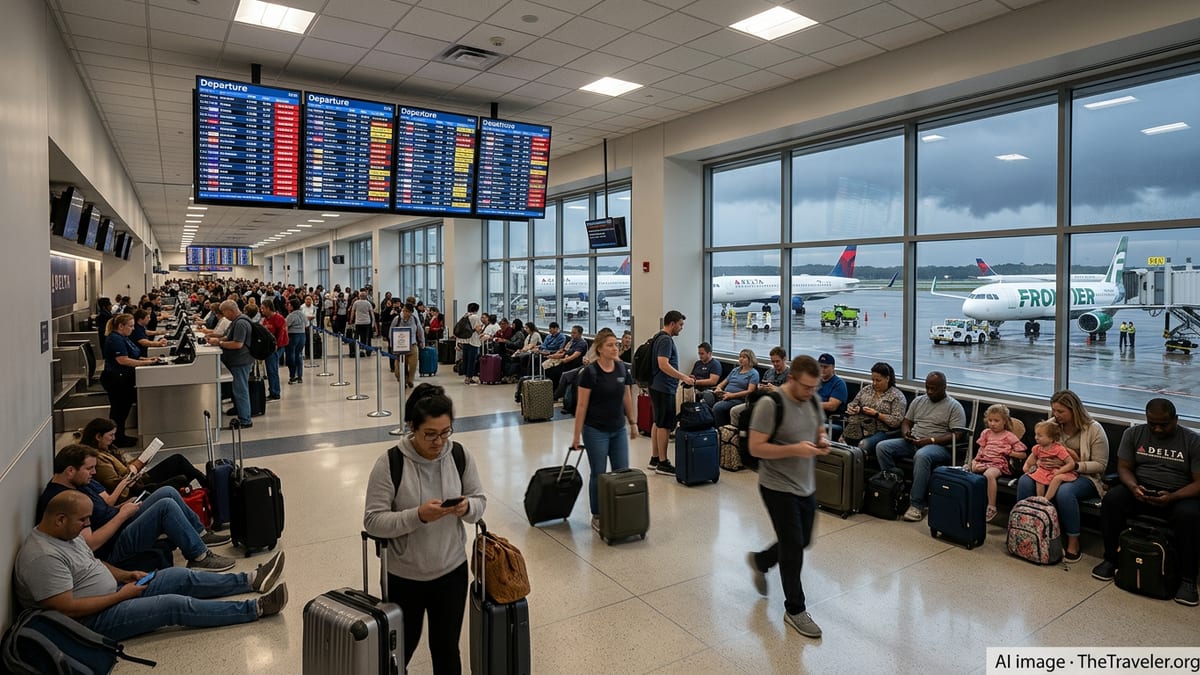
Hundreds of passengers were left stranded or severely delayed at Hartsfield-Jackson Atlanta International Airport as a wave of 254 flight delays and 12 cancellations rippled through major carriers including Delta, Frontier, Southwest, American and United, disrupting routes across the United States, Mexico, Canada, France and Germany.
Get the latest news straight to your inbox!
Operational Crunch At The World’s Busiest Hub
Atlanta Hartsfield-Jackson, consistently ranked among the world’s busiest airports by passenger volume, experienced another test of its resilience as airlines struggled to keep tightly banked schedules on track. The latest disruption saw large numbers of departures and arrivals pushed back, forcing missed connections and overnight stays for many travelers with onward journeys across North America and Europe.
Publicly available tracking data for the day showed a concentration of disruption among the largest tenant carriers at Atlanta, led by Delta Air Lines alongside Frontier, Southwest, American Airlines and United Airlines. While the raw total of 254 delayed flights and 12 cancellations represents only a fraction of the airport’s daily movements, the knock-on effect was magnified by Atlanta’s role as a central hub feeding connecting traffic to dozens of domestic and international destinations.
Hartsfield-Jackson’s interconnected bank structure means even modest schedule slippage in one period can cascade into subsequent waves. Flights that arrived late from feeder cities in the United States and Canada compressed turnaround times for aircraft due back out to Mexico and Europe, forcing crews to work to the edge of duty-time limits and leaving little margin when weather or ground constraints emerged.
Industry data and historic traffic reports for Atlanta highlight how vulnerable the hub model can be when a single day’s operations fall badly out of sync. With millions of travelers passing through each month, even a limited number of cancellations in a single hub bank can translate into hundreds of missed connections and rebookings systemwide.
Weather, Congestion And Tight Crewing Drive Delays
Reports from aviation trackers and regional media indicated that a combination of convective weather in the Southeast, airspace flow programs and ground congestion contributed to the latest disruption. Thunderstorm cells were reported along key arrival and departure corridors into Atlanta, prompting air traffic flow restrictions and reducing the number of aircraft able to land or depart per hour.
When arrival rates drop, aircraft are often held on the ground at origin airports to avoid excessive airborne holding around the hub, which in turn leads to rolling departure delays. Once aircraft and crews are out of position, recovery can stretch late into the evening, particularly for carriers with dense schedules such as Delta and Southwest. Observers noted that some flights left the gate only to hold for extended periods before takeoff, while others were held at their origin cities until arrival slots opened in Atlanta.
Publicly available information from airline schedule and performance databases suggests that staffing and crew-positioning constraints remain a complicating factor for U.S. carriers. Even as airlines have rebuilt their networks since the pandemic, they continue to navigate pilot and cabin crew availability that can turn a weather-related delay on one leg into an outright cancellation later in the day because crews have reached regulated duty limits.
Travel data from previous peak travel months illustrates that such weather-driven events at Atlanta are not isolated. Department of Transportation consumer reports and airport traffic summaries show that in past summer periods, long tarmac delays and extended ground holds at the hub have followed similar patterns when thunderstorms or other capacity constraints coincided with heavy holiday schedules.
Routes To Mexico, Canada And Europe Hit By Knock-On Effects
The disruptions in Atlanta had an outsized impact on international routes, particularly flights connecting the United States to leisure and business destinations in Mexico, Canada, France and Germany. Because many of these services depend on inbound traffic from smaller U.S. cities funneling through Atlanta, delays on domestic feeder legs translated into misconnected passengers and lightly loaded departures that then risked missing curfews or slot times overseas.
Flight status boards and tracking tools showed late departures on services to Canadian and Mexican gateways, with some passengers facing tight, uncertain connections in Atlanta after delayed departures from smaller regional airports. Travelers heading to popular resort areas and major Canadian hubs encountered long queues at customer service counters as they sought alternatives when their original itineraries fell apart.
Transatlantic operations were also affected. Services from Atlanta to major European hubs in France and Germany rely on carefully timed departures to align with morning arrival banks and onward connections in Europe. When those flights depart significantly behind schedule, they can miss European slot windows and create onward disruption for passengers connecting to secondary cities across the continent.
Reports from recent weeks have already pointed to strains on transatlantic reliability from U.S. hubs, with operational data showing that delays at departure often propagate through the schedule for days. The latest issues in Atlanta add another layer of complexity for passengers planning tight outbound or inbound connections between North America and Europe.
Travelers Face Long Lines, Missed Connections And Limited Options
For travelers inside the terminal, the numbers translated into long lines at check in, security and rebooking counters. Social media posts and traveler forums captured images and descriptions of crowded concourses, full gate areas and customer service desks handling backlogs of passengers seeking hotel vouchers, meal assistance or new itineraries after cancellations and misconnected flights.
Passengers on major carriers such as Delta, American, United, Southwest and Frontier reported waits stretching for hours to speak with an agent in person, prompting many to turn to airline mobile apps and call centers for faster rebooking. In some instances, travelers described multiple rolling delays on a single flight, with boarding times repeatedly pushed back before an eventual cancellation late in the evening.
Those attempting to reach smaller regional airports in the United States or connect onward to Mexico and Canada often found that later same day options had already sold out as aircraft filled with stranded passengers from earlier flights. With aircraft utilization high during peak season, airlines had limited spare capacity to add extra sections, leaving some travelers in Atlanta overnight or rerouted through alternate hubs such as Dallas, Houston, Chicago or New York.
Experts note that when a hub airport experiences even a moderate level of disruption, it can take several days for operations to fully normalize. Aircraft and crews may remain out of position, and passengers rebooked onto later flights can crowd schedules that were already near capacity, reducing flexibility to absorb any further weather or technical issues.
What Airlines Advise For Upcoming Departures
Public guidance from airlines and airport channels in recent months has stressed the importance of preparation when traveling through major hubs like Atlanta during periods of unsettled weather. Travelers are strongly encouraged to monitor flight status frequently, make use of mobile apps for rebooking, and build longer connection windows into their itineraries when connecting to international services or to smaller regional airports.
Industry publications and consumer advocates recommend that passengers departing from or connecting through Atlanta consider traveling with carry on baggage whenever practical to increase flexibility in the event of a missed connection or last minute rebooking. Carry on only travelers can usually be shifted more easily onto alternative flights without the added complication of baggage transfers between carriers or across tight connection times.
Air travel analysts also note that early morning departures are often less affected by cumulative delays than afternoon and evening flights, particularly on days when thunderstorms are forecast to build later in the day. Booking earlier flights out of Atlanta and its feeder cities can reduce the risk of being caught in the worst of the disruption if weather or air traffic constraints intensify as the day progresses.
With Atlanta Hartsfield-Jackson continuing to serve as a critical link between domestic U.S. markets, Mexico, Canada and key European hubs, any significant operational strain at the airport is likely to be quickly felt by travelers across multiple regions. The latest cluster of 254 delays and 12 cancellations underscores how swiftly issues at a single hub can reshape travel plans far beyond the borders of Georgia.