


More news on this day
Geopolitical tensions, airspace restrictions and higher travel costs are colliding in 2026 to unsettle the Middle East’s once-surging tourism revival, yet new research from the World Travel & Tourism Council (WTTC) still points to a powerful medium-term recovery driven by Saudi Arabia and Gulf investment.
Get the latest news straight to your inbox!
From post-pandemic boom to geopolitical shock
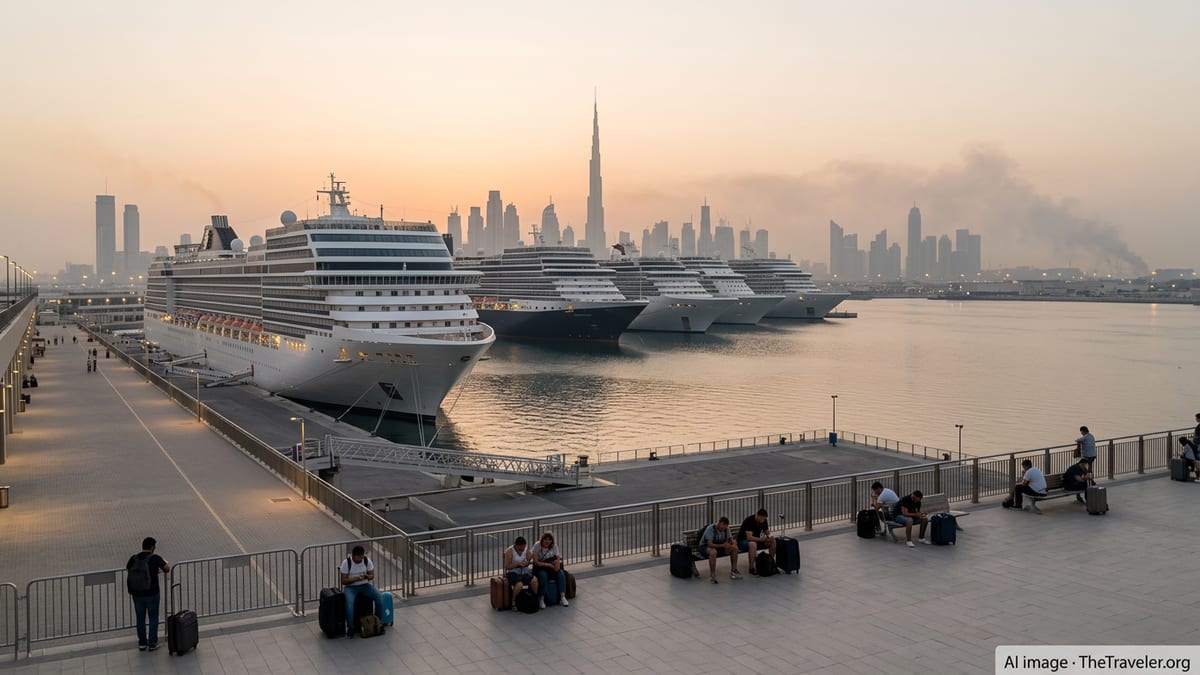
After leading the world in tourism’s post-pandemic rebound, the Middle East is entering 2026 on far shakier ground. Regional security incidents in and around the Red Sea and the Gulf, renewed threats to shipping lanes and warnings for airlines to avoid parts of regional airspace are reshaping travel flows and raising operating costs for carriers and cruise lines.
Travel advisories from several governments in mid-2026 highlight an elevated risk environment, particularly around Saudi Arabia and the broader Red Sea corridor, while the European Union Aviation Safety Agency has advised operators under its oversight to steer clear of airspace over parts of the Gulf through late July 2026. These measures have contributed to route diversions and longer flight times that industry analysts link to higher ticket prices and capacity challenges.
At the same time, tourism-linked businesses in some markets that had benefited from the region’s earlier surge are reporting softer demand as travelers weigh security headlines against alternative destinations in Europe and Asia. Industry commentary suggests that conference organizers and cruise operators are among the most exposed segments, given their reliance on long-term planning and complex logistics.
WTTC data signal resilience beneath the volatility
Despite the near-term turbulence, WTTC economic impact research continues to paint a picture of underlying strength for Middle East travel and tourism. The council’s latest regional assessment indicates that the sector’s contribution to Middle East gross domestic product is on track to remain well above pre-pandemic levels in 2026, with spending by both international and domestic travelers still growing in several Gulf states.
Previous WTTC analysis for 2025 projected the Middle East’s travel and tourism industry to generate more than 10 percent of regional GDP and to support millions of jobs, with expectations that the sector would keep expanding at a pace faster than the global average over the coming decade. That longer-range view has not been fundamentally revised, according to the publicly available research, even as the organization acknowledges mounting headwinds from conflict-related uncertainty and higher fuel costs.
In a recent regional briefing, WTTC highlighted that Saudi Arabia remains the largest travel and tourism economy in the Middle East by contribution to GDP, accounting for almost half of the sector’s regional output and registering growth in 2025 that outpaced both the global industry and the wider Middle East average. The United Arab Emirates and Qatar also feature prominently in the council’s data, supported by strong aviation networks and investment in events, hospitality and cruise infrastructure.
Saudi Arabia’s tourism drive buffers regional weakness
Saudi Arabia’s push to transform itself into a global tourism hub under its Vision 2030 agenda is emerging as a central buffer against the broader regional slowdown. Economic reports and official planning documents indicate tens of billions of dollars in committed investment for mega-projects on the Red Sea coast, mountain resorts in regions such as Aseer, and large-scale entertainment and cultural initiatives around Riyadh and other cities.
New policy steps in 2026 underscore this ambition. In July, authorities introduced a trial “package visa” product that links tourist visas to pre-booked itineraries, aiming to simplify travel planning and support tour operators. Around the same time, a one-year multiple-entry visa for Umrah pilgrims was announced, a move expected to increase repeat religious visitation and lengthen stays as visitors combine pilgrimages with heritage and leisure trips elsewhere in the kingdom.
Combined with ongoing airport expansions, new airline routes and aggressive destination marketing campaigns, these measures are intended to keep Saudi Arabia’s arrivals growth on a strong trajectory even as some neighboring markets confront cancellations and itinerary changes. Tourism economists note that such large-scale, multi-year investment can give the regional industry a floor under demand, particularly when driven by domestic and regional visitors less sensitive to headlines than long-haul travelers.
Security, connectivity and cost pressures reshape travel patterns
The Middle East’s 2026 tourism shock is not only about security perceptions but also about the practicalities of getting around the region. Restrictions on airspace use in parts of the Gulf and Red Sea region have forced some airlines to re-route flights, extending journey times and increasing fuel burn at a time when carriers are already grappling with higher operating costs and aircraft availability constraints.
Cruise itineraries in the Red Sea and eastern Mediterranean have also been affected, with shipping and tourism reports describing modifications to routes and, in some cases, the substitution of alternative ports. These adjustments can depress spending in smaller coastal economies that had banked on a steady stream of cruise passengers and crew.
In parallel, the war in and around Iran and the continuing impact of the Gaza conflict on Israel’s tourism sector have contributed to a fragmented regional picture. While some destinations see a drop in visitor numbers and hotel occupancy, others, particularly in the Gulf, appear to be capturing diverted demand from travelers and event organizers who still want to be in the wider region but prefer locations perceived as more insulated from direct conflict.
Powerful medium-term recovery still forecast
Looking beyond 2026, WTTC forecasts continue to outline a robust recovery path for Middle East travel and tourism. The organization’s global projections suggest that by the mid-2030s, the sector’s output in the region could rise substantially from current levels, supported by continued infrastructure spending, regulatory reforms and the expansion of low-cost and full-service carriers.
Saudi Arabia, the United Arab Emirates and Qatar are expected to remain the primary engines of that growth, while other markets such as Egypt and Jordan may benefit from a rebound in cultural and religious tourism once security risks recede and transport connectivity normalizes. Industry observers also point to structural factors in the region’s favor, including its location between Europe, Asia and Africa, its role as an aviation crossroads, and the scale of public and private investment committed to tourism.
For now, however, travel businesses are navigating a more volatile landscape than at any point since the immediate aftermath of the pandemic. Booking patterns have shortened, insurance and security considerations feature more prominently in trip planning, and governments are under pressure to balance safety messaging with efforts to preserve hard-won tourism gains. How effectively the region manages this 2026 shock may help determine whether WTTC’s powerful recovery scenario becomes reality over the next decade.