


More news on this day
Severe thunderstorms over Detroit on June 14 triggered widespread flight disruptions at Detroit Metropolitan Wayne County Airport, with hundreds of delays rippling across routes to New York City, Cincinnati, Philadelphia, Chicago, Washington D.C. and other major U.S. destinations.
Get the latest news straight to your inbox!
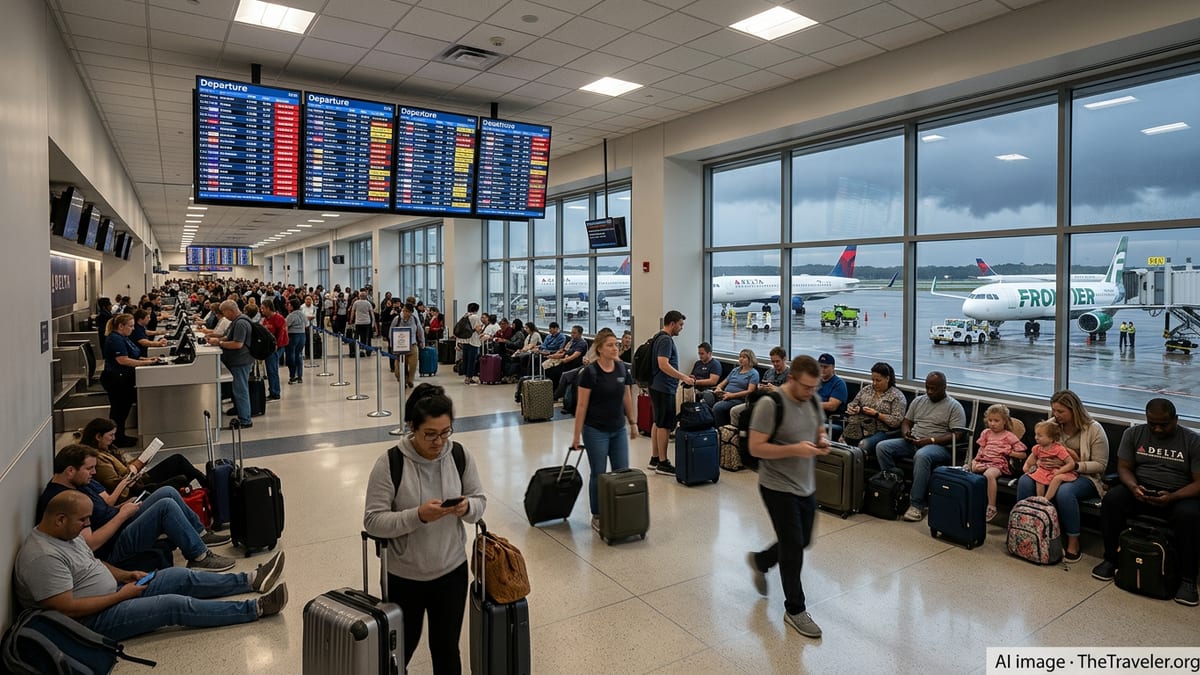
Weather-Driven Ground Stop Hits Detroit Operations
Publicly available information from federal aviation monitors shows that a ground stop was implemented at Detroit Metro Airport on Sunday afternoon as thunderstorms moved across southeast Michigan. The pause in departures and arrivals quickly constrained runway capacity and forced airlines to hold or reroute aircraft across the region.
Operational data and live tracking feeds indicate that by late afternoon at least 347 flights connected to Detroit experienced delays of varying length. The disruptions were most evident on busy corridor routes linking Detroit with New York-area airports, Chicago, Philadelphia, Cincinnati and Washington D.C., where even short interruptions tend to cascade through already dense schedules.
While Detroit regularly serves as a weather diversion option for other Midwest airports, the intensity and timing of the storms meant that many aircraft and crews were left out of position. This created knock-on effects for later departures, including evening flights that rely on aircraft rotating in from earlier Detroit turns.
Airlines adjusted arrival rates, reassigned gates and, in some cases, suspended boarding to prevent long on-board waits. However, once a ground stop is in place, the recovery process is typically measured in hours rather than minutes, especially at a major connecting hub.
Delta and Regional Partners Among Hardest Hit
Detroit serves as a primary hub for Delta Air Lines, and its regional partners Endeavor Air, PSA Airlines and Republic Airways operate a significant share of short-haul services under major-carrier brands. Schedule data and airport departure boards show that many of the day’s delayed flights were operated by these regional affiliates on behalf of larger network airlines.
Endeavor Air, which runs Delta Connection flights with regional jets, saw disruptions across multiple Detroit departures to Midwestern and East Coast cities. Historical performance reports from the U.S. Department of Transportation describe Endeavor and Republic Airways as generally strong on-time performers, but both are susceptible to concentrated disruption when hub airports like Detroit, New York or Washington experience severe weather.
PSA Airlines, a regional carrier that flies under the American Eagle brand and frequently serves airports such as Philadelphia and Washington National, also appeared in delay tallies as itineraries interconnected with Detroit. When weather slows arrivals into one hub, aircraft and crews can miss subsequent departures from another, which is a typical pattern in the U.S. hub-and-spoke system.
Delta’s mainline operation faced challenges not only on Detroit-originating flights but also on inbound aircraft whose crews were nearing duty-time limits. Publicly accessible flight logs for the broader network in recent days show individual instances of diversions and extended taxi times, underscoring how quickly operational buffers can evaporate once thunderstorms and congestion collide.
Key Routes to East Coast and Midwest Cities Affected
Travelers headed from Detroit to New York City, Chicago, Cincinnati, Philadelphia and Washington D.C. encountered some of the most visible knock-on impacts. These routes are among the busiest in the region, supporting a mix of business travelers, leisure passengers and those making onward international connections.
New York-bound flights to LaGuardia and other area airports were subject to rolling delays as air traffic flow programs attempted to meter arrivals into constrained airspace. Even modest schedule shifts at Detroit can lead to missed connections for passengers continuing to long-haul services from New York, amplifying the inconvenience.
Flights between Detroit and Chicago, Cincinnati and Philadelphia, many of them operated by regional partners, also saw holding patterns and revised departure times. Because these sectors are relatively short, they are commonly slotted tightly throughout the day, leaving limited margin to absorb weather-related slowdowns without causing further schedule slippage.
Service between Detroit and Washington D.C. was similarly affected, with public flight-tracking platforms showing clusters of delayed departures and arrivals. Given Washington’s own congestion and recurrent summer weather challenges, delays in both regions can easily overlap, increasing the likelihood of late arrivals at both ends.
Passenger Experience: Long Lines, Rebookings and Missed Connections
As the delay count climbed, passengers at Detroit and downline airports reported longer check-in and security queues, crowded gate areas and extended waits for updated departure times. Many travelers with tight connections in hubs such as New York and Chicago needed to be rebooked on later flights or rerouted through alternative cities.
Re-accommodating travelers becomes especially complex on afternoons and evenings with widespread storms, because operations across multiple carriers are often constrained at the same time. Once flights are delayed or aircraft reach crew duty limits, open seats on later services become scarce, increasing the likelihood that some passengers will need to overnight and continue their journeys the following day.
Airlines typically encourage affected passengers to use mobile apps or airport kiosks to change itineraries or confirm new seat assignments, a practice that can help reduce pressure on customer-service counters during irregular operations. However, when delays are extensive and options limited, in-person assistance may still be necessary for travelers with complex international or multi-city bookings.
Additional strain is often felt in baggage handling and customer communication, particularly when arriving passengers miss their intended onward flights. Public information from previous disruption episodes suggests that bags may continue to travel on original routings unless re-tagged, creating a lag between a traveler’s rerouted itinerary and the movement of their checked luggage.
Broader Context: Summer Storms and System Resilience
Transportation Department statistics from recent years show that weather consistently ranks as a leading cause of flight delays nationwide, particularly during the late spring and summer months when thunderstorms are more frequent. The Detroit region, situated at a crossroads of Midwest and Great Lakes weather systems, is no exception.
Major carriers and their regional partners have invested in more robust scheduling tools and recovery playbooks designed to restore operations quickly after a ground stop. Industry performance data indicates that airlines such as Delta, Endeavor, PSA and Republic generally maintain solid on-time records in normal conditions, but that sudden, localized storms can still force widespread holding and rerouting.
Analysts point out that the hub-and-spoke structure of U.S. air travel can magnify the impact of disruptions that begin in one city. A series of delays affecting just a few hundred flights at a single hub can ultimately touch thousands of itineraries across the country as aircraft rotate through the network and crew schedules tighten.
As the summer travel season builds, passengers flying through weather-prone hubs like Detroit are often advised, in publicly available travel guidance, to allow extra connection time, monitor flight status closely and keep essential items in carry-on bags. Sunday's storm-related disruptions at Detroit offer another illustration of how quickly conditions can change, and how a single afternoon of severe weather can ripple across the U.S. aviation system.