


More news on this day
Several governments have tightened travel warnings for a prominent South American country in recent weeks, citing a volatile security environment, crime concerns and political instability that could affect international visitors.
Get the latest news straight to your inbox!
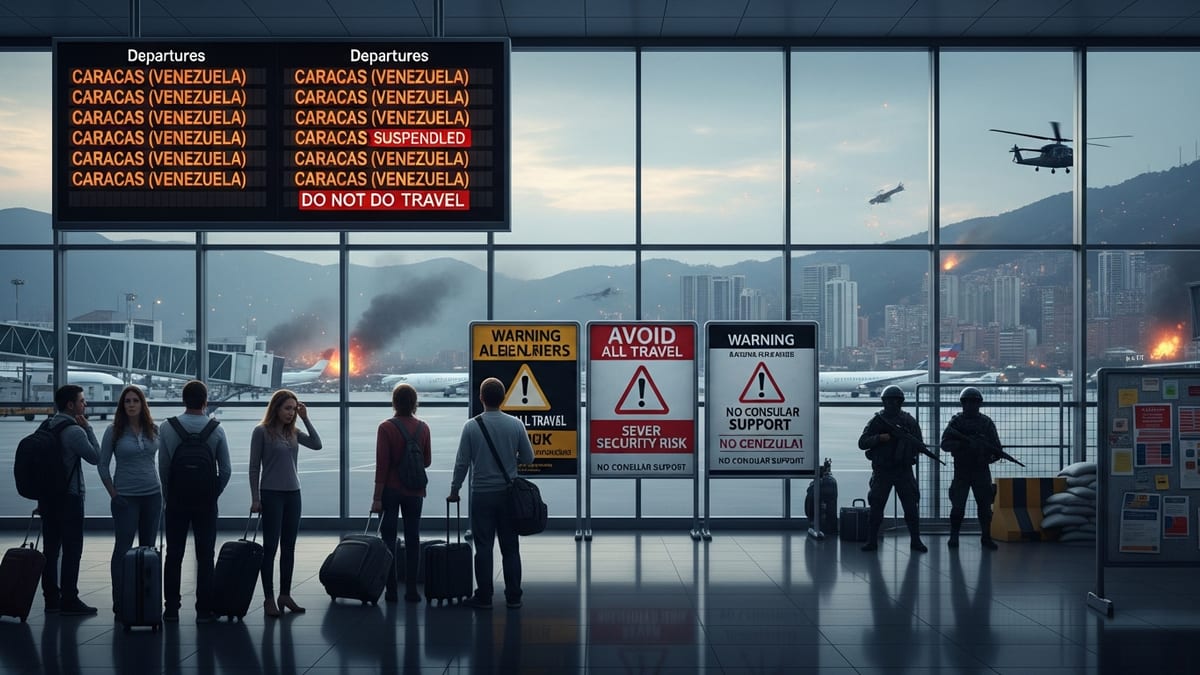
Advisory Level Raised Amid Ongoing Instability
The United States continues to advise against travel to Venezuela for its citizens, maintaining one of its highest warning levels for the country while updating guidance in March 2026 to reflect changes in consular operations and air security assessments. Publicly available information highlights long-standing concerns about crime, shortages and institutional fragility, which analysts say have been compounded by recent geopolitical tensions.
Travel guidance from European and other governments echoes many of these concerns. Official advisories describe an unpredictable political and security situation, with the potential for sudden demonstrations, localised unrest and disruptions to basic services in some areas. Travellers are encouraged to monitor local developments closely and be prepared to change plans at short notice.
Separate aviation security assessments referenced in US regulatory notices also point to continuing reviews of airport and airspace safety linked to Venezuela. These reviews focus on potential risks to civil aviation and have helped reinforce the perception among many travel planners that the operating environment around the country remains challenging.
While some regional carriers and tour operators continue limited operations connected with Venezuela, industry observers note that the elevated advisory level and complex entry conditions have significantly reduced mainstream leisure traffic compared with pre-crisis years.
International Partners Tighten Their Own Guidance
Other governments have moved in parallel to harden their stance on travel to Venezuela. Updated Canadian travel advice in early 2026 cited a heightened security situation and reaffirmed earlier decisions to suspend embassy operations in Caracas, leaving limited on-the-ground consular support for Canadian nationals. Publicly available guidance urges travellers to avoid non-essential trips, particularly outside major urban centres.
United Kingdom advisories, which remain in effect through mid-2026, similarly describe an uncertain security outlook and encourage travellers who nevertheless choose to visit to maintain a high level of personal security awareness. The guidance warns that conditions can deteriorate rapidly, especially around political events, and that transport and commercial services may be disrupted with little advance notice.
Regional analysis from security institutes and think tanks in Latin America links these foreign advisories to broader concerns over organised crime networks, cross-border tensions and the impact of years of economic stress. Reports indicate that while some neighbourhoods and tourist areas may appear relatively calm, overall risk levels remain significantly higher than in most neighbouring destinations that compete for international visitors.
For travel companies, this combination of national advisories has created a patchwork of restrictions and recommendations that complicate itinerary planning and insurance coverage decisions. Many operators selling South America now prominently flag Venezuela-related limitations in their booking conditions and marketing materials.
Impact on Regional Travel Patterns
The sustained warning level for Venezuela is reshaping travel flows across northern South America. Airlines and cruise lines have gradually reoriented capacity toward nearby countries that promote themselves as more stable alternatives, such as Colombia’s Caribbean coast, parts of Brazil and select island destinations in the southern Caribbean.
Tourism economists note that the absence of large-scale leisure travel to Venezuela has implications for regional connectivity. Routes that once linked Caribbean hubs with Venezuelan cities have been reduced or replaced, occasionally forcing travellers to make longer detours or rely on multi-stop itineraries. This has increased travel times and costs for business passengers and for Venezuelan nationals seeking to visit relatives abroad.
Neighboring states are also adjusting their own security postures. Publicly available reporting indicates that Colombia, for example, has reinforced security along parts of its border with Venezuela following the United States military intervention there earlier in 2026 and the prospect of renewed refugee movements. These measures, while directed primarily at cross-border flows, can indirectly affect road and air travel near frontier regions.
Despite these shifts, regional tourism boards stress that most of South America remains open to visitors, with popular circuits in countries such as Peru, Chile, Argentina and Brazil continuing to operate normally. Industry specialists advise travellers to distinguish between country-specific restrictions and broader regional conditions when evaluating their options.
Practical Considerations for Prospective Travellers
For travellers who still consider visiting Venezuela, current advisories place a strong emphasis on preparation and contingency planning. Guidance from multiple governments points to the importance of comprehensive travel insurance, detailed knowledge of entry and exit requirements and a realistic understanding of the limitations on consular assistance inside the country.
Travel risk consultants recommend that visitors, where travel is unavoidable, arrange secure transfers in advance, maintain low profiles in public places and avoid carrying large amounts of cash or valuables. They also highlight the need to review airline policies carefully, as last-minute schedule changes or cancellations remain more common in destinations subject to elevated risk assessments.
Observers note that digital connectivity and access to independent news sources may be limited or disrupted at times in Venezuela, suggesting that travellers should not rely solely on social media for situational awareness. Instead, they are encouraged to combine local information with official travel advisories from their home governments, which are updated as conditions evolve.
Given the persistence of high alert levels and the lack of clear timelines for a significant improvement in the security environment, many travel professionals suggest that leisure visitors consider alternative South American destinations in the near term. The updated warnings signal that, for now, Venezuela remains a complex and high-risk choice compared with other countries in the region.