


More news on this day
Passengers traveling through Jacksonville International Airport on June 14 are encountering a patchwork of cancellations and rolling delays, with Delta Air Lines and several regional partners affecting at least seven departures and arrivals serving major hubs across the United States.
Get the latest news straight to your inbox!
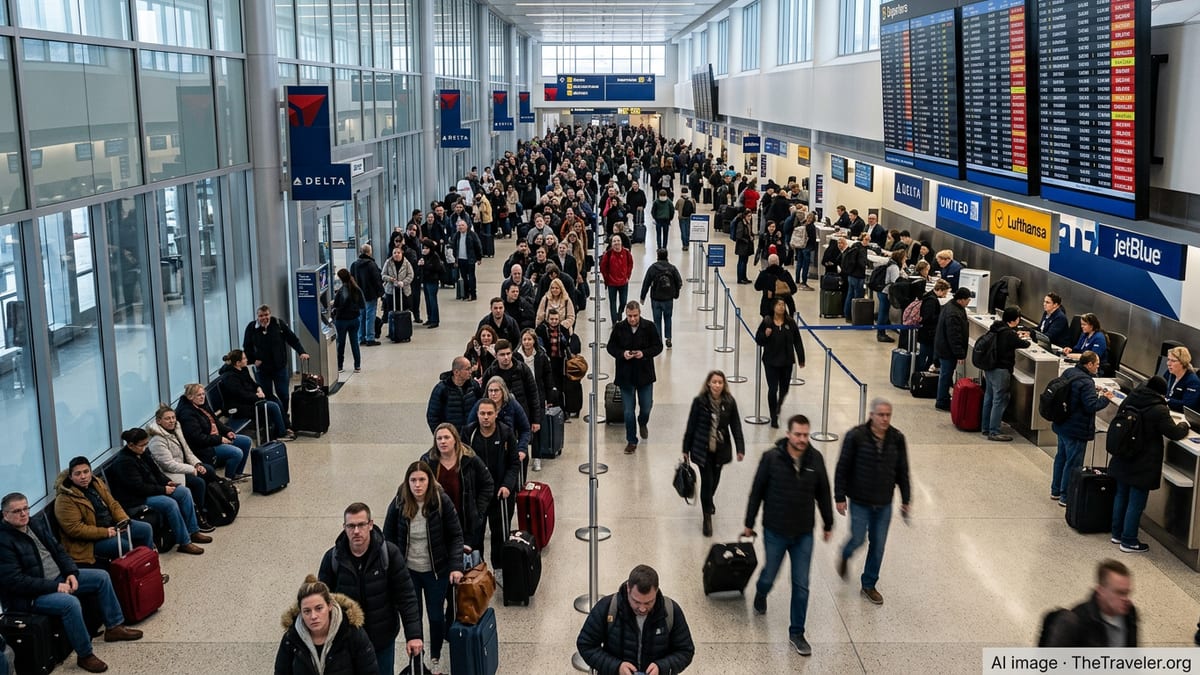
Cluster of Disruptions Hits Key Domestic Routes
Publicly available airport information and flight-tracking data for June 14 indicate that a series of schedule disruptions is affecting Jacksonville International Airport, involving Delta Air Lines and regional affiliates including Endeavor Air, Republic, and PSA, among others. At least seven flights linked to these carriers have been canceled or substantially delayed, interrupting service to highly trafficked cities such as Dallas, Nashville, Newark, Houston, and Philadelphia.
The pattern shows scattered cancellations across the day rather than a single, concentrated ground stop. Some flights are removed from the schedule outright, while others are pushed back by an hour or more, creating knock-on effects for passengers with tight connections at hub airports. Travelers heading to and from Jacksonville report longer waits near departure gates as airlines attempt to re-time flights and rebook affected customers.
Connections through large hubs have been particularly vulnerable. Flights that normally funnel Jacksonville passengers into major networks in Dallas, Houston, and the New York and Philadelphia areas have seen shifting departure and arrival times, adding uncertainty for those continuing onward to other domestic and international destinations.
The impact is also visible in the arrival stream into Jacksonville. Several inbound flights from major cities are showing revised arrival times, contributing to congestion in evening bank periods and heightening the risk that returning aircraft and crews may not be in place for later departures.
Delta and Regional Partners Share the Load
Delta mainline operations and its regional connection partners appear prominently in the disruption pattern. Endeavor Air, Republic, and PSA all operate regional jets under major airline brands, meaning a single aircraft or crew issue can cascade across multiple routes serving Jacksonville and other midsize airports.
Industry data shows that regional operators have historically accounted for a sizable share of delays and cancellations in the United States, reflecting the complexity of thinly spread fleets and crews. When schedules are tight, a late inbound aircraft or an out-of-position crew can quickly force airlines to consolidate or cancel individual flights.
On June 14, several Jacksonville flights operated by regional carriers on behalf of major airlines have either gone off the board or shifted by significant margins. That includes services linking Jacksonville to central hubs where regional aircraft typically feed passengers into larger domestic and international networks. Once a rotation breaks, it can take multiple legs to restore normal timing.
While the number of disrupted flights at Jacksonville is modest compared with nationwide totals, the concentration among certain carriers and routes magnifies the effect on travelers who depend on specific hub connections. Passengers booked on regional jets to large hubs are finding fewer immediate alternatives when their original flight is removed from the schedule.
Weather, Operations, and Staffing Shape the Day
As of June 14, there is no single clear-cut cause publicly identified for the Jacksonville disruptions. Recent nationwide patterns for Delta and regional operators have often involved a mix of factors, including localized storms, lingering operational challenges, and tight crew availability, any of which can push carriers to trim schedules at short notice.
During peak summer travel periods, many airlines operate near full capacity on popular routes, leaving little slack in aircraft or crew resources. When punctuality falters or weather systems slow traffic into major hubs such as Dallas, Houston, and the New York area, carriers can choose to delay or cancel select flights to reset their operations and avoid further cascading delays.
Operational data and recent airline performance reports suggest that regional flights are especially sensitive to such pressures. Smaller jets often make more legs per day than larger aircraft, amplifying the impact of any early disruption. By the time those flights reach an airport like Jacksonville, an issue that began hundreds of miles away can result in a last-minute cancellation or extended delay.
Travelers flying through Jacksonville on June 14 are therefore experiencing the local results of much broader system dynamics. Even without a headline weather event over northeast Florida, operational adjustments elsewhere in the network can manifest as gaps and time shifts on the day’s departure and arrival boards.
Major Hubs From Dallas to Newark Feel Ripple Effects
The list of affected destinations from Jacksonville underscores how quickly disruptions can ripple through the national system. Flights tied to hubs in Dallas, Nashville, Newark, Houston, and Philadelphia play an outsized role in connecting northeast Florida with the rest of the country, particularly for business travelers and those heading to secondary markets.
Delays into these cities can lead to missed onward connections and extended overnight stays, especially when late-evening banks are involved. A late arrival into a hub like Dallas or Houston can leave passengers with limited rebooking options if subsequent departures are already near capacity or if crews are approaching their duty limits.
Connections into the busy Northeast corridor are similarly vulnerable. Newark and Philadelphia are both key gateways for domestic and transatlantic traffic. Even modest delays on Jacksonville legs into these airports can force re-accommodation onto later flights or alternate routings, which in turn raises load factors and pressure on already busy corridors.
Travelers outbound from these hubs to Jacksonville may also feel the pinch. When an earlier segment encounters a significant delay, the corresponding return flight can shift or be canceled, reducing same-day options and extending recovery timelines for the overall schedule.
What Travelers Can Expect and How to Navigate Disruptions
Public information from airlines and airports indicates that carriers are actively updating schedules throughout the day as conditions evolve. Travelers bound to or from Jacksonville are being encouraged through airline channels to monitor their itineraries closely and make use of mobile apps or online tools to check whether their flight is on time, delayed, or canceled.
Same-day rebooking is possible in many cases, but options may be limited during busy June travel weekends. When multiple flights on the same route are affected, later services can quickly fill to capacity. Some passengers may be rerouted via alternate hubs or placed on partner airlines when those agreements are available and seats remain.
For those already at Jacksonville International Airport, the day’s irregular operations mean longer lines at customer-service counters and busier gate areas as departure times shift. Passengers with tightly timed connections through Dallas, Houston, Newark, Philadelphia, or other major hubs may face particular challenges and should build extra time into their plans where possible.
As summer continues, the situation at Jacksonville on June 14 serves as another reminder of how interconnected airline networks have become. A relatively small cluster of cancellations and delays tied to Delta and its regional partners can send ripples across multiple states, leaving travelers from Florida to Texas and the Northeast recalibrating their schedules in real time.