


More news on this day
A powerful band of storms and cascading operational issues have triggered 3,816 flight disruptions across the United States, with Southwest Airlines and Delta Air Lines bearing the brunt of delays and cancellations at key hubs in Chicago, Atlanta, and Boston, according to real time tracking data and multiple aviation reports.
Get the latest news straight to your inbox!
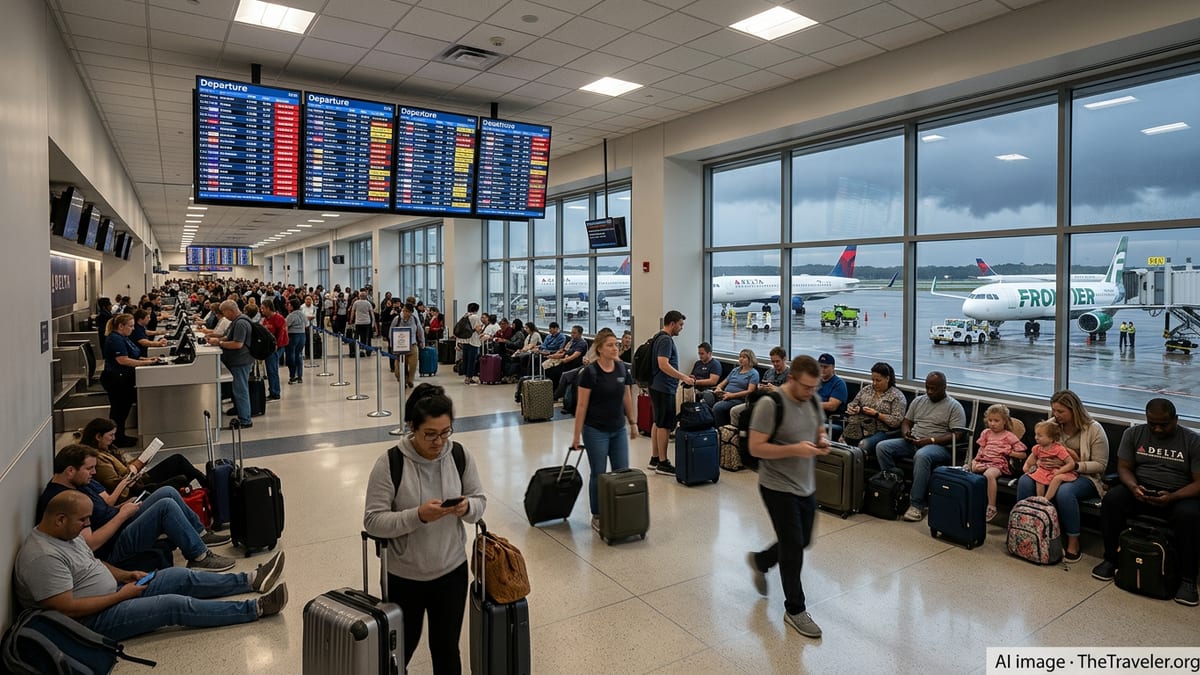
Weather Turbulence Slams Core U.S. Aviation Hubs
The latest wave of disruption has been driven primarily by intense thunderstorms sweeping through the Midwest and Southeast, disrupting tightly timed schedules at Chicago Midway, Hartsfield Jackson Atlanta, and Boston Logan. Publicly available tracking dashboards show hundreds of flights arriving late or not operating at all, creating a chain reaction across the domestic network as aircraft and crews fall out of position.
Chicago and Atlanta, in particular, play an outsized role in the national aviation system. When operations slow at these airports, impacts quickly ripple outward to secondary cities that depend on connecting traffic. Recent disruption patterns seen at Dallas Love Field in late April, where storms in Chicago and Atlanta fueled 180 local delays and cancellations, have effectively repeated at a larger scale, this time simultaneously involving Chicago, Atlanta, and Boston.
Boston Logan has faced its own congestion crunch, with a growing concentration of routes operated by Delta alongside other major carriers. When weather systems sweep through New England at the same time as storms hit the Midwest and Southeast, recovery windows narrow sharply, reducing the flexibility airlines usually rely on to reassign aircraft and crews.
Southwest and Delta Among Hardest Hit Carriers
Southwest Airlines and Delta Air Lines are among the carriers most exposed to disruptions centered on this particular trio of hubs. Southwest operates a large focus city operation at Chicago Midway and connects that base with Atlanta and Boston on high frequency domestic routes. When storms or air traffic control constraints hit Midway, the effects move rapidly along these corridor routes, magnifying the number of delayed flights over the course of a single day.
Delta’s position as the dominant carrier in Atlanta means that any slowdown at Hartsfield Jackson can quickly translate into hundreds of affected flights. Real time status boards for key Delta routes such as Boston to Atlanta show repeated delays, even when most previous days ran close to schedule, underscoring how fast a weather system can overturn otherwise stable on time performance.
Operational data and recent case studies from airports such as Dallas Love Field indicate that network wide disruptions accumulate when storms affect multiple hubs that feed each other. With both Southwest and Delta heavily represented in Chicago, Atlanta, and Boston, a single day of intense thunderstorms can easily generate thousands of individual schedule changes across the United States, from minor delays to outright cancellations.
Knock On Effects for Travelers Across the United States
The 3,816 flight disruptions tied to this latest episode are not confined to the three headline airports. Each delayed departure from Chicago, Atlanta, or Boston often translates into a late arriving aircraft at a secondary destination, which can then depart late again on a subsequent leg. This rolling effect can continue for several rotations before airlines are able to reset schedules overnight.
Reports from passenger advocacy platforms and social media communities describe long lines at customer service desks, missed connections on once routine domestic routes, and extended layovers as travelers struggle to rebook around bottlenecked hubs. Even flights that ultimately operate close to on time can be subject to last minute gate changes or boarding holds while crews and aircraft reposition.
For leisure travelers at the start of the peak summer vacation period, these disruptions mean lost time at destinations and unexpected expenses for meals or overnight stays. Business travelers, who often depend on same day returns via connecting hubs, face particular uncertainty when delays compound across multiple segments in a single itinerary.
Structural Vulnerabilities Exposed in Airline Networks
This episode has highlighted how structurally vulnerable U.S. airline networks remain when several large hubs are hit by weather on the same day. Both Southwest and Delta have worked in recent years to refine their scheduling strategies, with Southwest refocusing on high density operations at airports such as Chicago Midway and Delta continuing to rely heavily on Atlanta as its primary connecting complex.
Analysts point out that while these concentrated hub strategies improve efficiency and aircraft utilization under normal conditions, they also raise the stakes when disruptions occur. With so much of each airline’s traffic funneled through a small number of airports, events affecting those hubs can trigger an outsized share of nationwide delays.
The latest turbulence also follows a broader pattern that has seen multiple operational meltdowns at individual airports this year, including a recent breakdown at Charlotte Douglas that produced nearly 200 delays and a dozen cancellations in a single day. The current Chicago Atlanta Boston tri hub shock continues that trend, but at far higher volume.
What Travelers Can Expect in the Coming Days
While the most intense weather systems are expected to move through relatively quickly, recovery from a day featuring more than 3,800 disrupted flights is rarely immediate. Aircraft and crew rotations often remain out of sync for at least another 24 to 48 hours, meaning that some residual delays and isolated cancellations are likely to persist even after skies clear.
Publicly available guidance from travel assistance services recommends that passengers flying on Southwest or Delta through Chicago, Atlanta, or Boston monitor their flight status frequently on the day of travel and build in additional connection time where possible. Same day standby options and rebooking tools within airline apps can provide more flexibility than waiting in physical queues at crowded customer service counters.
With the core summer holiday period now underway, this disruption serves as an early stress test for airline and airport readiness across the United States. Travelers heading through major hubs over the next several weeks may increasingly factor operational resilience, not just ticket price and schedule, into their choice of routes and carriers.