


More news on this day
Air travel across the United States has been thrown into fresh turmoil as severe weather and knock on operational problems triggered a combined 3,816 flight disruptions for Southwest Airlines and Delta Air Lines across Chicago, Atlanta and Boston, according to real time tracking data and industry reports.
Get the latest news straight to your inbox!
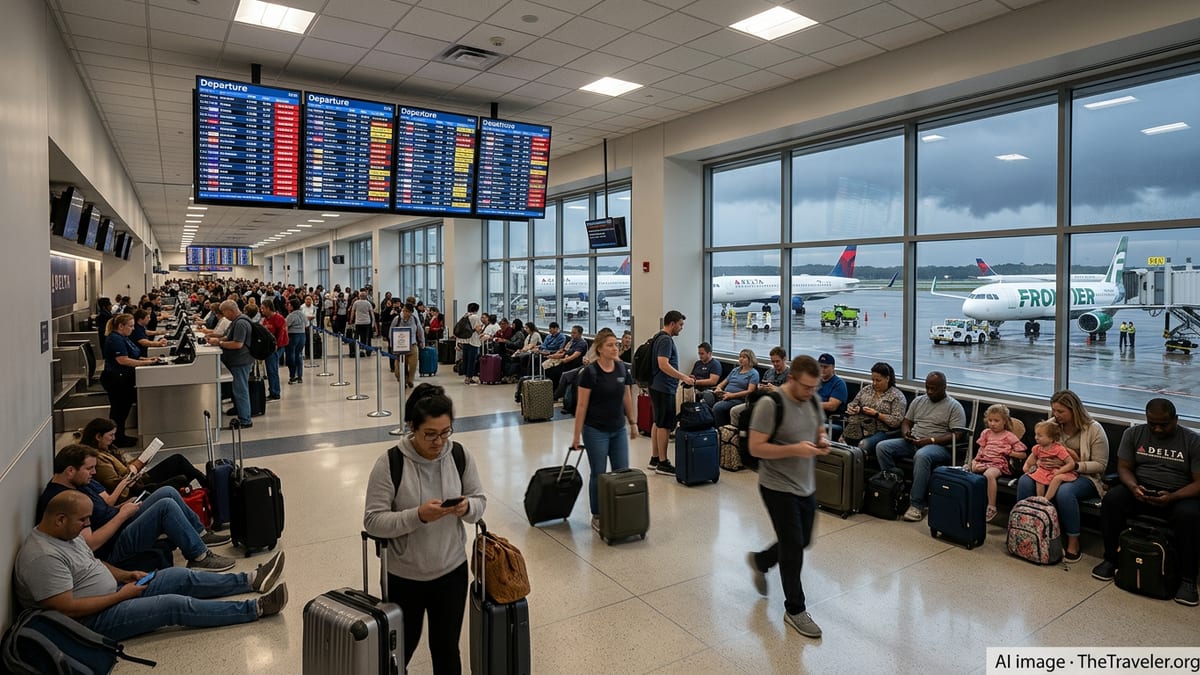
Weather Systems Hit Key Hubs Simultaneously
Published coverage indicates that a series of fast moving storm systems over the Midwest and Southeast collided with low cloud and fog along the Northeast corridor, striking precisely where Southwest and Delta operate some of their most heavily used routes. Chicago and Atlanta, both critical connecting hubs, saw ground stops and flow control measures that quickly rippled into Boston, where arrival rates were restricted and departure queues lengthened.
Publicly available flight tracking summaries show waves of delays building through the day as thunderstorms repeatedly forced temporary suspensions of arrivals at Chicago O Hare and diversions in the Atlanta airspace. Even when airports technically remained open, reduced runway capacity and lightning alerts around ramp areas forced airlines to slow or halt boarding and baggage operations, pushing individual flights well behind schedule.
Because both Southwest and Delta rely on high aircraft utilization and tight turn times, this type of weather pattern tends to create outsized disruption. Aircraft and crews arriving late into Chicago, Atlanta or Boston often could not be turned quickly enough for their next legs, generating rolling delays that affected travelers far beyond the immediate storm zones.
Industry analysts note that this latest episode fits into a broader pattern of weather linked gridlock that has periodically seized the United States aviation system in recent months, particularly when convective storms build directly over hub airports instead of outlying routes.
Southwest Bears the Brunt in Chicago and Network Cities
Southwest, which concentrates a large share of its Midwest schedule at Chicago Midway, absorbed a heavy share of the day s disruption tally. Aviation tracking dashboards cited in recent reporting show hundreds of Southwest delays and cancellations as Midway departures fell behind schedule and knock on effects spread into Dallas Love Field and other secondary hubs.
Reports on recent Dallas Love Field disruption describe how storms in Chicago and Atlanta earlier in the spring left Southwest with dozens of aircraft and crews stuck out of position, a scenario that appears to be repeating as the carrier juggles a packed summer timetable. The same dynamic is now visible on routes linking Chicago to Atlanta and into Florida and the Mountain West, where crews timed out and aircraft cycles were trimmed back to stabilize the operation.
Travelers connecting through Chicago reported long queues at customer service counters as displaced passengers sought rebooking options, while many others turned to airline apps to secure alternative routings before reaching the airport. Consumer advocacy organizations continue to advise Southwest customers to monitor their flight status closely on days when storms are forecast near Chicago, even if their own departure airports appear sunny and calm.
Southwest has previously emphasized that it prioritizes safety driven cancellations and proactive schedule thinning when severe weather threatens multiple hubs, an approach that can produce sharp one day spikes in disruption but may help the airline recover more quickly once conditions improve.
Delta Disruptions Stack Up in Atlanta and Boston
Delta Air Lines also faced extensive operational stress as storms intersected with its primary hub at Hartsfield Jackson Atlanta International Airport and its growing presence at Boston Logan International Airport. Data summarized in recent analyses of Delta s network performance show the carrier accounting for several hundred delays and dozens of cancellations on heavily traveled days when Atlanta and Boston both encounter weather constraints.
Earlier in the spring, passenger rights platforms documented a single day in late May when Delta disrupted about 300 flights across its system, with Atlanta and Boston at the center of the problems. Those figures are now being eclipsed as the latest wave of storms has combined with already tight summer schedules to push more flights into late departure categories, particularly on shuttle style routes between Boston, Atlanta and Chicago.
Operational logs for individual flights on the Boston to Atlanta corridor show a mix of schedule holds, diversions and cancellations over recent days, reflecting both direct weather effects and crew availability issues. While many services ultimately operated with relatively modest delays, a critical number were canceled outright, forcing passengers into overnight stays or long detours through secondary hubs.
Delta has been adjusting departure banks, trimming some frequencies and upgauging select flights from Chicago and Boston into Atlanta to consolidate demand. Public guidance from consumer advisors encourages passengers on Delta to build longer connection buffers at Atlanta on days when storms are forecast anywhere along the East Coast or in the Midwest, since late arriving feeder flights are a frequent trigger for missed connections.
Impact on Travelers Across the United States
The combined 3,816 disruptions across Southwest and Delta have translated into widespread inconvenience for travelers, with missed cruises, lost hotel nights and rebooked business meetings among the most commonly reported outcomes. In practical terms, that disruption count represents thousands of hours of delayed travel time and a large number of passengers sleeping in terminals or scrambling to secure last minute hotel rooms near major airports.
Social media feeds and travel forums have described long lines at rebooking counters in Chicago, Atlanta and Boston, with some passengers reporting waits exceeding two hours during peak disruption periods. Others have turned to same day tickets on competing airlines when available, particularly on busy trunk routes such as Chicago to New York or Boston to Washington, to avoid being stranded overnight.
Travel advisors stress that airline obligations vary depending on the underlying cause of a cancellation. When thunderstorms or other adverse weather conditions are the primary driver, cash compensation is generally not offered in the United States regulatory framework. However, passengers may still be entitled to meal vouchers, hotel accommodation or complimentary rebooking in some circumstances, and these policies differ by carrier.
In the latest wave of chaos, consumer rights organizations have reiterated their advice that travelers retain receipts for food, lodging and ground transportation and follow up with airlines after their trips to request goodwill reimbursements or mileage credits, particularly in cases where disruptions extended well beyond the initial weather window.
How Passengers Can Navigate Continued Volatility
With summer travel volumes building and long range forecasts pointing to recurring storm activity over the central and eastern United States, industry observers expect further bouts of severe disruption in the weeks ahead. Both Southwest and Delta have indicated in public statements in recent months that they are investing in better crew planning tools and schedule resilience, but analysts caution that no amount of internal optimization can fully offset the impact of powerful thunderstorms over major hubs.
Travel specialists recommend that passengers flying through Chicago, Atlanta or Boston during storm prone periods consider booking the first departures of the day, when aircraft and crews are more likely to be in the right place from overnight positioning. Direct flights are also generally more resilient, since they remove the risk of missed connections if a first leg is delayed.
Experienced travelers increasingly rely on real time flight tracking applications and airline mobile apps to spot developing problems. When a delay reaches a threshold that threatens onward plans, same day changes through digital channels often secure alternatives faster than standing in line at airport counters, particularly during large scale disruption events like the one now unfolding.
For now, the latest figures underscore how quickly a combination of severe storms and tight scheduling can paralyze parts of the United States air travel network. With 3,816 disruptions across just two major carriers and three primary hubs, the episode serves as a reminder that even routine summer weather can have outsized consequences in a system already operating close to capacity.