


More news on this day
Air travelers across the United States are facing another day of frustration as a new wave of storms and air-traffic constraints has triggered at least 74 flight cancellations and more than 900 delays, with disruptions concentrated in Florida, Illinois, Michigan, Tennessee, North Carolina and Maryland and affecting major carriers such as American Airlines, Southwest, United and regional operator SkyWest.
Get the latest news straight to your inbox!
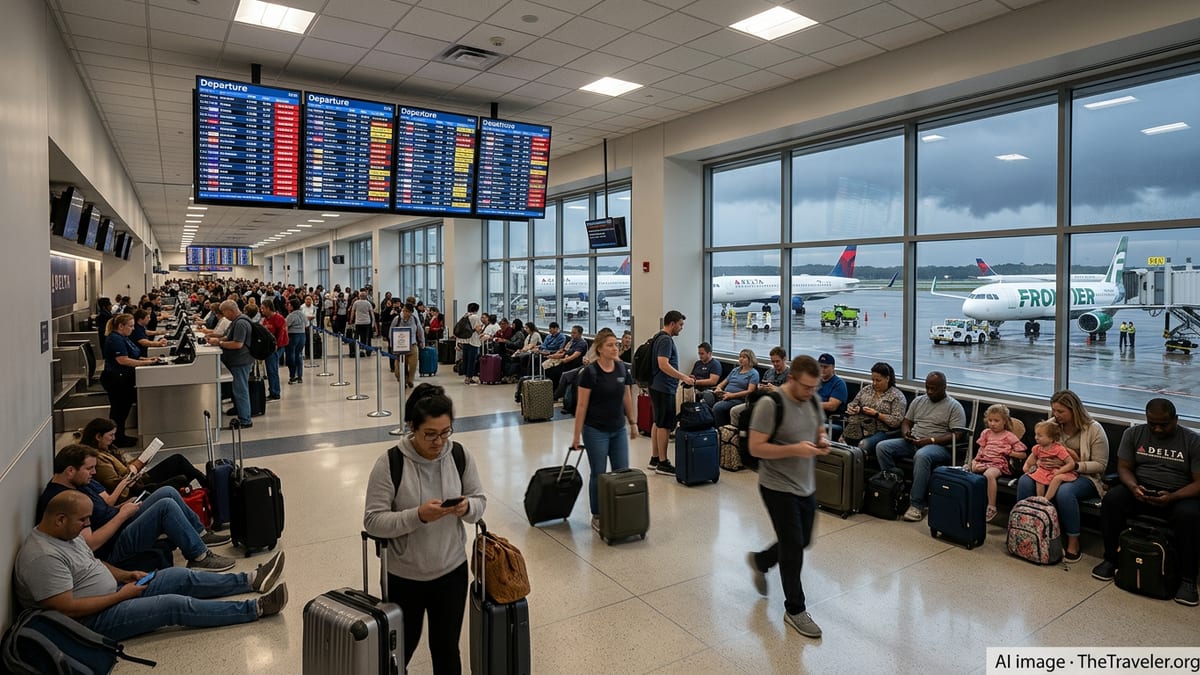
Storm System and Congested Skies Put Pressure on Key Hubs
Publicly available tracking data show that a broad weather system moving across the Southeast and up through the Great Lakes is intersecting with some of the country’s busiest air corridors. The result is a sharp spike in delays at airports in Florida, Illinois, Michigan, Tennessee, North Carolina and Maryland, where thunderstorms and low clouds are forcing pilots and air-traffic controllers to slow departures and arrivals.
Major hubs in these states, including Chicago O’Hare and Midway, Detroit, Nashville, Raleigh-Durham and Baltimore/Washington, have been singled out by real-time aviation dashboards as experiencing elevated levels of disruption. Even when local conditions briefly improve, restrictions in adjacent sectors of the national airspace system continue to affect how many flights can safely take off and land each hour.
Because many of these airports serve as connecting hubs, each grounded or delayed aircraft can trigger knock-on issues down the line. A storm cell over central Florida, for example, can affect departures to Chicago or Detroit, which in turn reduces the availability of aircraft and crews for later flights into Maryland or North Carolina.
The Federal Aviation Administration’s traffic management updates indicate that flow-control measures, including ground delays and reduced arrival rates, are in place at various times for several of these airports. Those constraints are designed to keep the system safe but inevitably lengthen travel times and increase the likelihood of missed connections.
American, Southwest, United and SkyWest Bear the Brunt
Flight-status feeds tracking U.S. operations today show the familiar pattern of a handful of large players absorbing much of the turbulence. American Airlines, Southwest Airlines and United Airlines, along with regional operator SkyWest, are among the most affected carriers, reflecting their dense schedules into the hardest-hit hubs and their dependence on tight aircraft and crew rotations.
American, with significant networks in Charlotte, Miami and Chicago, is coping with disruptions that span both leisure-heavy routes to Florida and business-focused flights through Midwest and East Coast hubs. The combination of storms and already-packed schedules has meant that relatively small timetable changes early in the day have grown into extensive late-evening delays on certain routes.
Southwest’s point-to-point model, heavily exposed to Florida and Midwestern cities, is also feeling pressure. A sequence of rolling thunderstorms has complicated turnarounds at airports such as Nashville and Chicago Midway, where any pause on the ramp can quickly spill across multiple flights when aircraft are scheduled for quick turns.
United and its regional partners, including SkyWest, are contending with similar challenges as they balance operations at Chicago O’Hare, Washington-area airports and key Midwestern and East Coast destinations. When regional jets are held on the ground or diverted, entire banks of connecting flights risk unravelling, leaving customers with fewer rebooking options late in the day.
Passengers Confront a Familiar but Intensifying Disruption Pattern
For travelers, the numbers behind today’s disruptions translate into crowded terminals, long customer-service lines and mounting anxiety over missed events and connections. Social media posts and traveler forums are filled with reports of passengers sleeping in airports or spending hours in rebooking queues as the 74 cancellations and more than 900 delays ripple through the system.
The timing of the disruptions is amplifying the strain. Many affected routes link major business centers with popular leisure destinations in Florida and along the East Coast. When flights run late early in the morning, the effect on middle-of-the-day and evening departures can be severe, particularly for travelers starting their journeys at smaller regional airports that depend on a single connection.
Even for flights that are not canceled outright, extended tarmac holds and gate waits have become common as airlines wait for weather windows or air-traffic slots to open. While such delays may prevent full cancellations, they also mean that crews can bump up against duty-time limits, creating fresh staffing headaches later in the schedule.
Observers note that while the U.S. aviation system has grown more resilient since the mass disruptions of recent years, the increasing frequency of severe weather events, combined with record-high travel demand, leaves little margin for error when storms sweep through multiple hubs at once.
Why a Few Dozen Cancellations Can Snarl an Entire Network
A headline figure of 74 canceled flights might seem modest in a country that sees thousands of daily departures. However, airline operations specialists point out that each cancellation represents an aircraft and crew that will not be in position for later segments, and that the majority of today’s disruptions are compounded by nearly a thousand delays that further erode schedule reliability.
Once a flight is significantly delayed, the aircraft may arrive too late to operate its next scheduled leg, especially when crews are close to mandatory rest thresholds. In many cases, airlines choose between canceling a later trip, operating it hours behind schedule, or reassigning equipment in a way that disrupts still more flights.
Regional jets operated by carriers such as SkyWest are particularly vulnerable to this domino effect. These aircraft often fly several short legs in a single day, connecting smaller markets to major hubs. When thunderstorms close departure routes or force aircraft to hold, the entire chain of flights can slip, leaving passengers in multiple cities affected by a weather event hundreds of miles away.
As storms sweep from Florida up through Tennessee, the Carolinas, the Midwest and into the Mid-Atlantic, air-traffic managers must constantly adjust routing to avoid congested corridors and hazardous cells. The resulting zigzags and speed reductions can stretch flight times and reduce the number of operations airports can safely accommodate in a given hour.
What Travelers Can Do as Disruptions Continue
With weather-driven disruptions affecting multiple states and airlines, travel advisers suggest that passengers build additional flexibility into their plans. Same-day schedule changes, alternate routes through less congested hubs and earlier departures can help reduce the risk of being stranded when storms flare up in the afternoon and evening.
Experts also recommend that travelers monitor their flight status frequently through airline apps and sign up for notifications. Because delays can escalate quickly once traffic-management programs are in place, early awareness can give passengers more options to reroute or adjust connections before seats on alternative flights disappear.
Consumer-rights information from the U.S. Department of Transportation emphasizes that passengers are generally entitled to a refund if their flight is canceled and they choose not to travel, even when the cause is weather. However, cash compensation for delays is not mandated in the United States, which means most remedies come in the form of rebooking, meal vouchers or hotel accommodations when airlines choose to provide them.
With the current storm system still moving and summer travel demand running high, operational data suggest that further disruptions are possible across the week. Travelers heading through Florida, Illinois, Michigan, Tennessee, North Carolina, Maryland and other affected regions are being urged by airlines and airport advisories to check their flight status repeatedly and allow extra time at the airport as carriers work to rebalance their networks.