

More news on this day
Severe disruption at Lima’s Jorge Chávez International Airport has triggered a wave of cancellations and delays affecting 21 flights, leaving hundreds of LATAM and Iberia passengers stranded as Peru’s main international hub struggles to restore normal operations.
Get the latest news straight to your inbox!
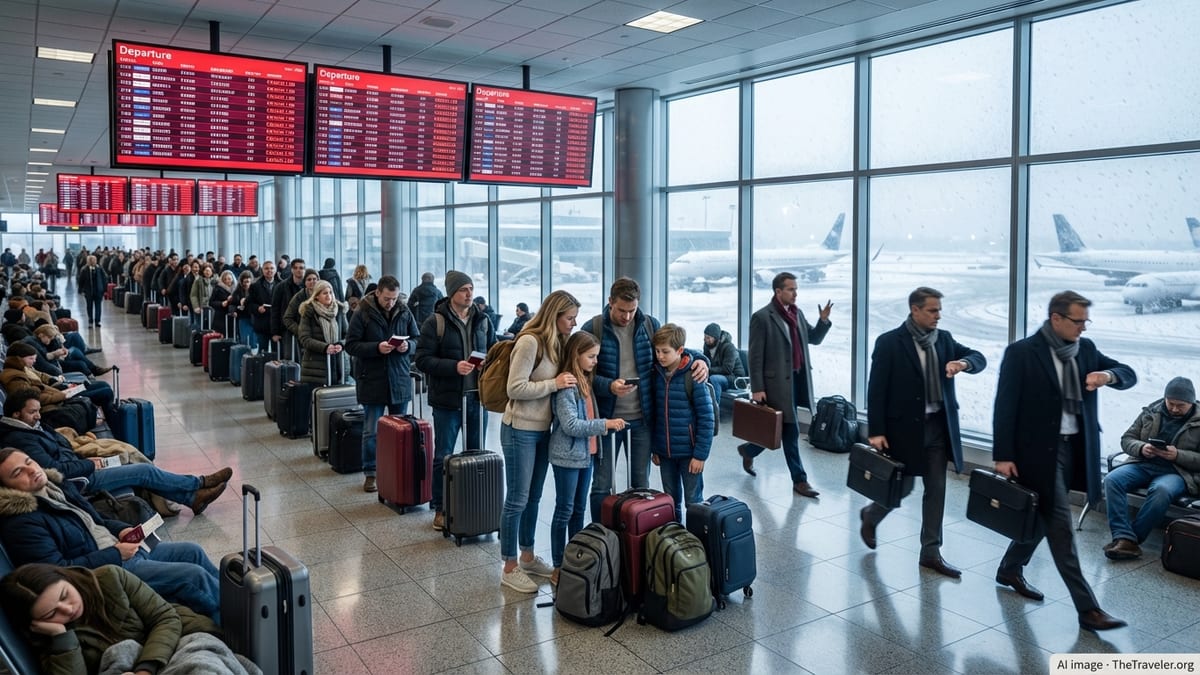
Systems Failure Sparks Widespread Flight Disruptions
According to publicly available flight tracking data and airport status boards, a sudden breakdown in airport operations at Jorge Chávez International in Lima led to a cluster of 21 affected flights within a few hours, impacting departures and arrivals on some of the busiest South American and transatlantic routes. The disruption has been concentrated in the long-haul and regional networks of LATAM and Iberia, both of which use Lima as a key connection point.
Reports indicate that the incident began with a technical failure affecting ground handling and dispatch processes, which rapidly cascaded into missed slots, crew duty-time limits and aircraft rotation problems. As flights backed up on the ground and in the schedule system, airlines began cancelling selected services and rerouting aircraft to protect later departures.
Live data from airline and airport channels show that LATAM services linking Lima with cities such as Santiago, São Paulo and regional Peruvian destinations have been particularly affected, with multiple flights delayed for several hours or taken out of the schedule entirely. Iberia’s long-haul connection between Madrid and Lima has also experienced irregular operations, with at least one sector forced into extended delay and passenger rebooking.
Operational bulletins shared by travel intermediaries describe the event as an exceptional breakdown in airport flow rather than a weather-related closure, adding to the complexity of recovery efforts as crews, aircraft and passengers are spread across multiple hubs.
Passengers Face Long Queues, Missed Connections and Limited Information
Travelers connecting through Lima have reported via public forums and social media that they encountered long queues at check in and transfer desks, together with repeated schedule changes on airport displays and airline apps. Many LATAM and Iberia passengers scheduled to connect onward to regional cities in Peru, Chile, Brazil and Europe were left uncertain whether they would reach their final destinations on the same day.
Published coverage from regional media and aviation monitoring sites indicates that several flights were held at the gate for extended periods before being formally cancelled, as operations teams attempted to re-sequence departures around the outage. This left some travelers on board aircraft for longer than expected while decisions were made, adding to frustration for those already dealing with tight connection windows.
With hotel capacity around the airport under pressure, passengers on late-night services that were cancelled or heavily delayed have been offered a mix of overnight accommodation, meal vouchers and later rebooking, depending on fare type and local regulations. Publicly available airline advisories urge affected customers to use digital channels to manage their trips rather than waiting in lines at the airport where possible.
Travelers arriving into Lima on Iberia’s Madrid route faced their own challenges, as some onward domestic and regional connections on LATAM had already departed or been cancelled by the time they reached the terminal. Rebooking onto alternative itineraries through São Paulo, Bogotá or Santiago has been reported, although limited spare capacity in the busy June travel period has constrained options.
LATAM and Iberia Networks Hit at a Critical Regional Hub
The disruption underscores the central role of Jorge Chávez International as a regional hub for South American and transatlantic traffic. LATAM uses Lima as a key connecting point between southern cone cities, Brazil and the Andean region, while Iberia operates one of its main Latin America gateways on the Madrid to Lima corridor. When irregular operations affect a hub, the consequences quickly ripple across multiple countries and time zones.
Network maps published by the airlines and airport operators show that both carriers rely heavily on tight connection banks at Lima to feed long-haul services. When a wave of departures is interrupted, aircraft rotations are thrown off balance and crews can reach their regulated duty limits, forcing airlines to cancel or downgrade subsequent flights.
According to aviation schedule data and prior operational updates from the airport, Lima has been managing a period of transition as it integrates new facilities and adjusts terminal flows. While there is no indication that recent infrastructure changes directly caused the latest breakdown, the combination of high passenger volumes, complex transfer patterns and evolving procedures can heighten the impact of any systems failure.
Industry analysts cited in regional business media suggest that this kind of concentrated disruption can take a full operating day or more to unwind, even after the root problem is resolved, because aircraft and crews need time to be repositioned to their planned routes.
Advice for Affected and Prospective Travelers
Travel information services are advising passengers booked to travel through Lima in the coming 24 to 48 hours to monitor their flight status frequently and to expect possible residual delays as airlines work through the backlog. LATAM and Iberia customers are being encouraged, through publicly accessible notices, to check in online, verify departure terminals and gates shortly before leaving for the airport, and allow extra time for security and connection procedures.
For those whose flights are cancelled, consumer advocates recommend reviewing fare conditions and regional air passenger regulations to understand what assistance may be available, including meals, communication support, accommodation and rebooking. In many cases, airlines are waiving change fees for travelers willing to shift to alternative dates or routings, which can help ease pressure on the most congested connection banks.
Travelers with critical onward plans such as cruises, tours or important business meetings are being advised by tour operators to build in additional buffer time or, where feasible, to route through alternative hubs in the region until schedules at Jorge Chávez stabilize. However, with June demand already strong across South America, last minute changes can be difficult and may involve higher fares or longer itineraries.
Airline and airport websites continue to post rolling updates, and third party flight tracking platforms are providing near real time status information. Passengers are urged to rely on these official channels for the most current data rather than outdated screenshots or posts shared on social networks.
Broader Implications for Regional Air Travel Reliability
The Lima disruption highlights the vulnerability of tightly scheduled hub operations in Latin America, where a single point of failure can ripple quickly across multiple carriers and countries. As more airlines concentrate flights into a few major hubs to maximize connections, the operational resilience of these airports has become a critical factor in overall network reliability.
Recent months have seen other episodes of significant disruption at regional gateways, driven by weather, air traffic control capacity, infrastructure upgrades and systems failures. Industry observers note that while most events are resolved within hours, their frequency and impact have increased as travel demand outpaces infrastructure investments.
Travel analysts writing in regional outlets argue that airlines and airports in South America may need to accelerate investment in backup systems, staff training and contingency planning to reduce the scale of future breakdowns. Enhancements could include more robust IT redundancy, clearer passenger communication protocols and greater flexibility in crew and fleet deployment when schedules unravel.
For travelers, the events in Lima serve as a reminder of the importance of flexible planning, travel insurance that covers missed connections and additional costs, and the value of keeping contact information and booking details up to date with airlines. While the latest breakdown at Jorge Chávez International is expected to be resolved, its impact will linger for several days in the form of disrupted itineraries and reconfigured networks across the region.