


More news on this day
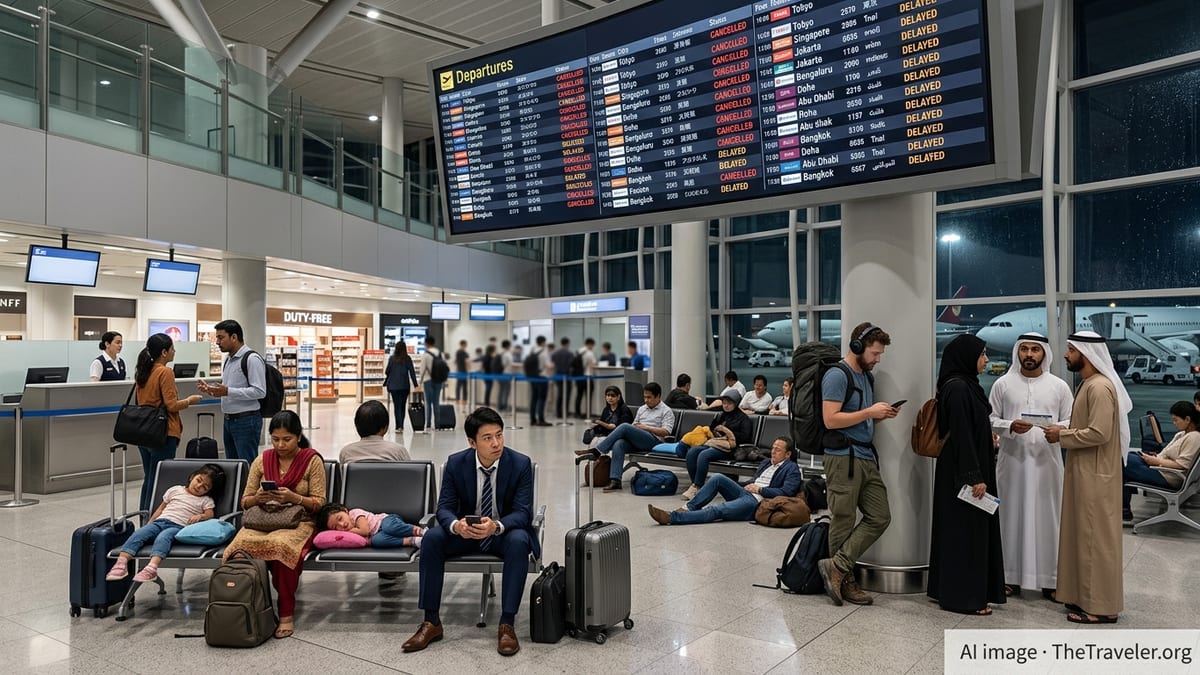
Thousands of passengers were left sleeping on terminal floors and seats at Nairobi’s Jomo Kenyatta International Airport after an aviation workers’ strike severely disrupted flights for a second consecutive day at Kenya’s main international gateway.
Get the latest news straight to your inbox!
Go-slow at Kenya’s busiest airport halts normal operations
Flight schedules at Jomo Kenyatta International Airport (JKIA) in Nairobi remained in disarray on Monday, August 31, 2026, as a go-slow by aviation workers continued into its second day. Publicly available information shows that staff attached to the Kenya Airports Authority and the Kenya Civil Aviation Authority began reducing services on Sunday, August 30, leading to widespread delays and cancellations on both domestic and international routes.
News reports indicate that hundreds of passengers spent the night inside the terminal after aircraft departures were pushed back repeatedly or grounded altogether. Images shared by local and international outlets show crowds queuing at check-in counters, resting on luggage trolleys and lining terminal corridors as they waited for updates on their flights.
Coverage from multiple outlets describes the action as a slow-down rather than a full walkout, with critical safety functions reportedly maintained while non-essential processes were scaled back. Even so, the disruption has been extensive, affecting airlines across the board and forcing carriers to improvise with last-minute rescheduling and diversions.
Kenya’s main international hub typically serves as a key transit point for travelers connecting between Africa, Europe, the Middle East and Asia, meaning the ripple effects have stretched well beyond Kenya’s borders. Regional media report that passengers bound for Nairobi have been stranded at foreign airports as airlines attempt to match reduced capacity at JKIA with inbound demand.
Union-led dispute over pay, conditions and stalled bargaining
The industrial action is being driven by members of the Kenya Aviation Workers Union (KAWU), who have long raised concerns about pay, staffing levels and working conditions across the country’s major airports. According to recent coverage and previously published strike notices, union representatives have argued that commitments under collective bargaining arrangements have not been fully implemented, and that staff shortages have contributed to mounting pressure on frontline teams.
Latest reports indicate that the current go-slow follows earlier warnings issued this year about the potential for work stoppages if negotiations did not progress. The dispute also builds on a pattern of unrest in Kenya’s aviation sector, including a strike in February 2026 linked to disagreements over a collective bargaining agreement and repeated tensions surrounding airport management and investment plans.
Media summaries of the union’s position highlight demands for improved remuneration, payment of outstanding overtime and clearer guarantees on job security. Workers have also raised concerns about the pace of reforms and alleged underinvestment in critical infrastructure, arguing that staff are being asked to shoulder heavier workloads without commensurate support.
Published commentary suggests that talks between the union and airport authorities are ongoing, but there has been no immediate indication of a breakthrough. Coverage notes that previous disputes have sometimes ended with short-term return-to-work formulas while longer-term issues remain unresolved, leaving open the possibility of renewed action.
Passengers face long queues, missed connections and hotel shuttles
For travelers, the most visible impact has been prolonged waits and uncertainty. Reports from JKIA describe passengers queueing for hours at security checkpoints, check-in counters and boarding gates, often without clear departure times. Many flights have been delayed by several hours, while others have been canceled outright or rerouted to alternative airports.
Various international outlets and local news platforms describe scenes of families sleeping on benches, business travelers working from crowded waiting areas and tourists attempting to rebook complex multi-leg itineraries. Some airlines have begun processing hotel transfers and meal vouchers for those stranded overnight, but published accounts indicate that capacity has not always matched the scale of demand, leaving some passengers to remain in the terminal.
Travel advisories circulating online urge passengers to verify their flight status directly with airlines before heading to the airport, reflecting guidance shared publicly by the Kenya Airports Authority. Carriers serving Nairobi have updated schedules and announcements on their websites and social media feeds as they adjust operations to the reduced pace of ground handling and air traffic control services.
Travelers connecting through Nairobi to safari destinations, coastal resorts or onward international flights have been particularly affected, with some news reports noting missed tours and rearranged hotel bookings. Industry observers say the disruption is likely to generate knock-on costs for tour operators, travel agencies and insurers in the coming days.
Regional aviation and economic stakes for Kenya
JKIA is widely cited as one of Africa’s busiest and most strategically important airports, handling millions of passengers and hundreds of thousands of tonnes of cargo annually. Analysts frequently describe it as a vital hub for East and Central Africa, supporting passenger travel, horticultural exports and broader trade flows through its cargo facilities.
Past assessments of Kenya’s aviation sector have estimated that air transport, tourism and related services contribute a significant share of national GDP and support hundreds of thousands of jobs. With that context, even short periods of disruption at JKIA can have material economic consequences, from time-sensitive flower and vegetable exports to conference tourism and business travel.
Commentary in regional aviation publications notes that repeated industrial unrest at the country’s main gateway raises concerns among investors and airlines about long-term operational stability. While workers’ groups frame the strike as a necessary response to unmet commitments on labor rights and working conditions, business groups and travel operators highlight the broader economic risks when key infrastructure is repeatedly disrupted.
Observers also point to the timing of the action at the tail end of the Northern Hemisphere summer season, a period that typically sees higher volumes of tourists traveling to Kenya’s national parks and coastal destinations. Any extended slowdown, they argue, could dent revenue projections for airlines, hotels and tour operators already grappling with cost pressures.
What travelers should know as disruption continues
As of Monday afternoon in Nairobi, publicly available reporting indicates that the go-slow remained in effect with negotiations still under way. Flight operations had not fully ground to a halt, but delays of several hours were being reported on numerous routes, alongside a rolling pattern of cancellations.
Travel information platforms and airport advisories are urging passengers with imminent departures or arrivals at JKIA to monitor airline channels closely and to allow extra time for check-in and security procedures. Some carriers have introduced flexible rebooking policies for affected passengers, although the extent of these measures varies by airline.
Industry analysts note that once an airport experiences more than a day of significant disruption, recovery often takes additional time even after staff return to normal duties. Aircraft and crews can be out of position, and backlogs at both departure and arrival points can take several more days to clear.
For now, travelers planning itineraries through Nairobi in the coming days are being advised, via publicly accessible advisories and media reports, to prepare for possible changes to their plans. The situation at JKIA is expected to remain a key focus for regional aviation stakeholders until a clearer resolution to the labor dispute emerges.
Associated Press: Workers' strike at Kenya's main international airport leaves passengers stranded
DW: Kenya passengers stranded amid airport staff strike
Kenyans.co.ke: Aviation strike leaves hundreds stranded overnight at JKIA
The Standard: Hundreds remain stranded as aviation workers' strike enters day two
Tuko: Kenya Airports Authority issues passenger advisory after disruptions at JKIA