

More news on this day
With new rail projects advancing, festival calendars filling up and updated border rules bedding in across Europe, summer 2026 is shaping into a busy season for travelers heading to the United Kingdom.
Get the latest news straight to your inbox!
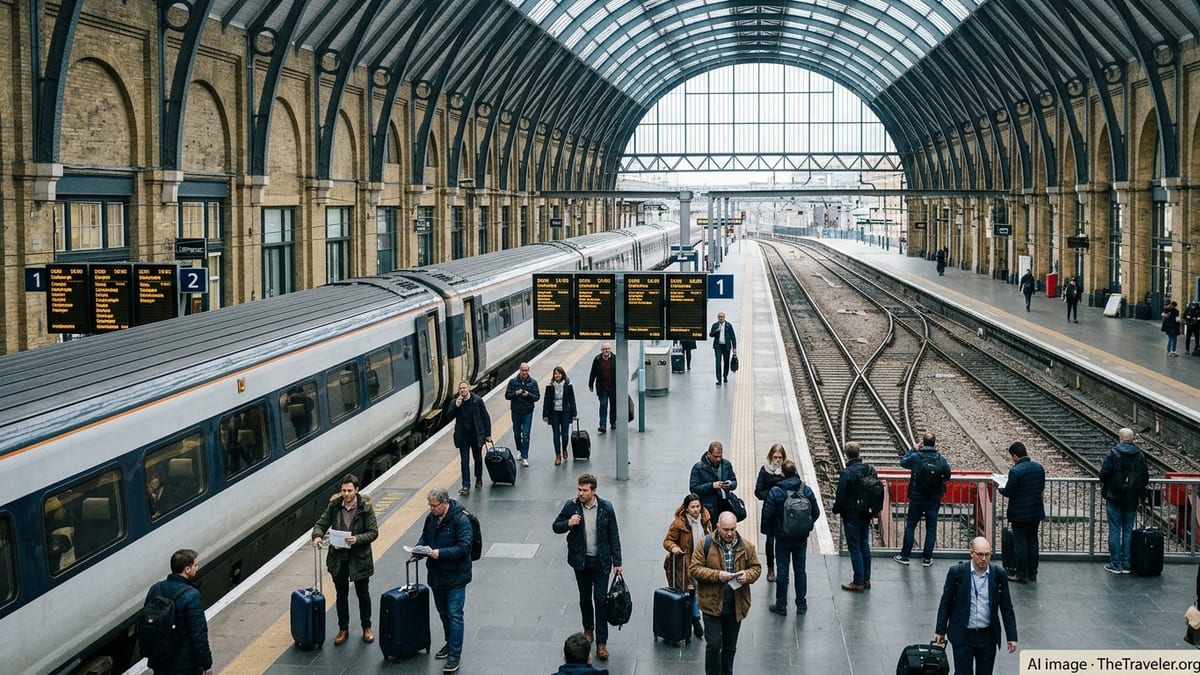
City Highlights and Coastal Escapes for Summer 2026
Major UK cities are preparing for a brisk summer season as visitor numbers continue to recover and large cultural events return to full scale. London is expected to remain the primary entry point and base for international travelers, with publicly available tourism data showing hotel capacity tightening in central districts during peak July and August weekends. Travelers looking to balance budgets are being advised in consumer coverage to consider East London and outer boroughs, which are better connected following the full integration of the Elizabeth line into the transport network.
Edinburgh remains a standout for summer, particularly for visitors arriving in late July and August. The city’s festival period has grown into one of the world’s largest ticketed cultural gatherings, with the 2025 edition of the Edinburgh Festival Fringe hosting thousands of shows and millions of tickets sold across hundreds of venues. Reports indicate that similar or higher demand is expected for 2026, which is prompting recommendations to secure accommodation several months in advance, especially in Old Town and New Town areas.
Beyond the main capitals, northern England and the Scottish coast are attracting renewed attention from domestic and overseas visitors. Coverage of Blackpool’s seafront investment and the wider Lancashire coastline notes a mix of traditional beach holidays with new music events such as the Lytham Festival, scheduled again for early July 2026. Farther north, the Hebridean islands continue to appeal to travelers seeking quieter landscapes, with the Hebridean Celtic Festival planned for mid July 2026 in Stornoway and nearby Lewis and Harris.
In Wales and southwest England, resort towns along Cardigan Bay, Pembrokeshire and Cornwall are preparing for another crowded driving season. Motoring organizations have previously highlighted heavy congestion on key holiday routes such as the M5 toward Devon and Cornwall and the M25 orbital around London, and travel commentary suggests similar patterns are likely in 2026, particularly on school holiday Saturdays. Visitors heading for coastal cottages and campsites are being urged to factor potential holdups into itinerary planning.
Festivals, Culture and Major Events Across Britain
Summer 2026 is set to be dominated by a dense calendar of festivals and concerts, many of which were announced well in advance following strong ticket sales in 2024 and 2025. Music press reports show that large coastal and city festivals in Liverpool, Manchester and London are positioned as key draws for younger travelers, while long running events such as Glyndebourne’s opera season and country house concerts in southern England continue to attract international visitors seeking more formal cultural experiences.
Scotland will again play a central role in the cultural season. The Edinburgh Festival Fringe, which in 2025 ran for 25 days and hosted almost 4,000 shows across more than 300 venues, is expected to bring comparable crowds in August 2026. Tourism bodies stress that the impact is not confined to the capital, with nearby destinations in Fife, the Borders and the Highlands marketing themselves as quieter bases within reach of festival day trips. Smaller events, from folk music gatherings in the Highlands to local games and agricultural shows, form part of a broader push to spread visitor spending more evenly.
In northern England, Manchester and surrounding towns are extending their events offer, combining music festivals with LGBTQIA+ pride celebrations, food markets and sporting fixtures. Published listings for June 2026 highlight major park based music events in Manchester that are among the largest metropolitan festivals in the UK, drawing tens of thousands of attendees over a single weekend. Cities such as Leeds, Sheffield and Newcastle are also using gallery openings, regenerated waterfronts and street food markets to position themselves as cultural short break options in their own right.
Meanwhile, large scale tours by established pop groups and rock acts are scheduled to fill stadiums and arenas from late spring through early autumn. Entertainment industry sources highlight that a number of multi night runs in London, Birmingham, Glasgow and other cities are already on sale or close to selling out, underlining broader expectations that 2026 will be a high demand year for live events. Travelers planning to combine city sightseeing with concerts are being encouraged to lock in dates early and check accommodation availability before purchasing show tickets.
Border Rules, Visas and Travel Formalities for 2026
Alongside destination planning, visitors are facing a changing regulatory environment across European borders in 2026. While the UK operates its own immigration system, travel advisories point out that new European Union border technology is affecting British and other non EU travelers moving between the UK and the Schengen area. The EU’s Entry/Exit System, which began phasing in from October 2025, is scheduled to be fully operational at all Schengen external borders by April 2026, introducing biometric checks and automated recording of entries and exits.
For most international visitors whose itineraries combine the UK with nearby European countries, this means allowing more time at ferry ports, Channel crossings and airports serving continental routes. Consumer guidance notes that the new system is intended to enforce the long standing 90 days in any 180 day stay limit for non EU nationals in the Schengen zone, and that overstaying can attract fines or future entry bans. While the separate ETIAS travel authorisation for visa exempt visitors to the EU is not expected to be mandatory until at least 2027, travelers are being advised to monitor official updates through late 2026.
On the UK side, publicly available immigration briefings indicate that almost all foreign visitors, including many EU nationals, are being brought into the Electronic Travel Authorisation framework, with roll out continuing through 2025 and 2026. The system does not replace a visa where one is required but serves as a pre travel permission linked to a passport and checked by airlines and carriers before boarding. Prospective visitors are encouraged to verify whether they need an ETA, a visa or both well ahead of departure, and to ensure that passports meet validity requirements set by UK authorities and any transit countries.
Travel industry toolkits and government communication packs further highlight the importance of accurate documentation at UK ports and airports as passenger numbers grow. Carriers are expected to continue emphasising online check in, digital boarding passes and advance completion of required forms to reduce congestion at terminals. Travel planners suggest that, especially during school holidays and weekends in July and August, arriving earlier than in previous years for international departures may be prudent.
Trains, Flights and Getting Around Britain
Within the UK, transport capacity and reliability remain central questions for summer 2026 travel. Official project updates show that construction activity on the HS2 high speed rail scheme remains concentrated on the London to Birmingham section, with more than 30,000 workers involved across hundreds of active sites. While passenger services are still several years away, associated works and other national rail upgrades are influencing timetables and occasional disruption on existing routes, particularly in the Midlands and northwest England.
National Rail’s latest outline of major improvement works details a series of planned closures and engineering projects scheduled into and beyond 2026, including track renewals and station expansions in key hubs such as Oxford and along parts of the West Coast Main Line. Travel advice from rail operators and independent commentators stresses that weekend services can be particularly affected, with replacement buses sometimes required. Summer travelers are encouraged to check journey planners close to the date of travel and consider flexible routing, especially when connecting to airports or time sensitive events.
At the same time, government rail statistics show that passenger numbers have broadly returned toward pre pandemic levels, contributing to crowding on popular leisure routes to coastal resorts and national parks. Studies of rail fares up to 2025 note that price increases have outpaced general inflation in some years, and analysts expect further upward pressure in 2026. Advance booking and use of railcards remain key tools for managing costs, while long distance coach services continue to market themselves as a cheaper, if slower, alternative for budget conscious visitors.
In the air, published fare tracking by UK media and travel analysts indicates that summer flights to and from major UK airports have seen strong price growth since 2022, driven by higher operating costs and persistent demand. Reports anticipate continued peak pricing on popular transatlantic and short haul European routes in 2026, particularly on Friday and Sunday departures. Travelers are being urged to compare regional airports, adjust travel days where possible and monitor baggage policies, which have become an important driver of final ticket cost.
Regional Food Scenes and What to Eat in Summer 2026
Food continues to be a major part of the UK travel experience, with regional tourism campaigns placing growing emphasis on local produce and independent dining. In London, Manchester, Glasgow and Bristol, recently updated restaurant guides highlight a widening range of mid priced options that fuse British ingredients with global cuisines, from West African and South Asian influences to new wave Middle Eastern and Latin American concepts. Market halls and food courts, some in converted industrial sites, are particularly visible in coverage of city breaks aimed at younger visitors.
Across England’s south coast and the Scottish and Welsh shorelines, seafood is a focal point of 2026 summer menus. Coastal towns from Brighton to Whitby and St Ives are promoting fresh catch dishes and modernised takes on fish and chips alongside traditional seaside fare. In Scotland’s islands and Highlands, travel writing points to growing interest in shellfish, smoked fish and venison, often paired with small scale distillery tours and tastings that showcase whisky and emerging craft spirits.
The UK’s pub and brewery culture remains central to many itineraries, though it is evolving. Industry reports describe continued growth in craft breweries and taprooms in former industrial areas of cities such as Leeds, Birmingham and Liverpool, alongside long established cask ale pubs in rural villages. Visitors are encouraged to sample low alcohol and alcohol free options, which have expanded significantly in recent years, as well as classic regional favourites like bitters, stouts and ciders.
Street food and festivals form another pillar of Britain’s culinary attraction in 2026. Many of the largest music and cultural events feature curated food villages with traders offering everything from regional pies to vegan dishes and international snacks, reflecting the country’s diverse communities. Urban street food markets, often operating in the evenings and at weekends, provide a flexible way for travelers to experience multiple dishes in one stop, and are increasingly used by local tourism boards as a showcase for emerging chefs and producers.