


More news on this day
Bengaluru’s Kempegowda International Airport has begun technical trials of a fully contactless international travel system, using digital identity wallets and India’s DigiYatra platform to create an end to end biometric journey for passengers.
Get the latest news straight to your inbox!
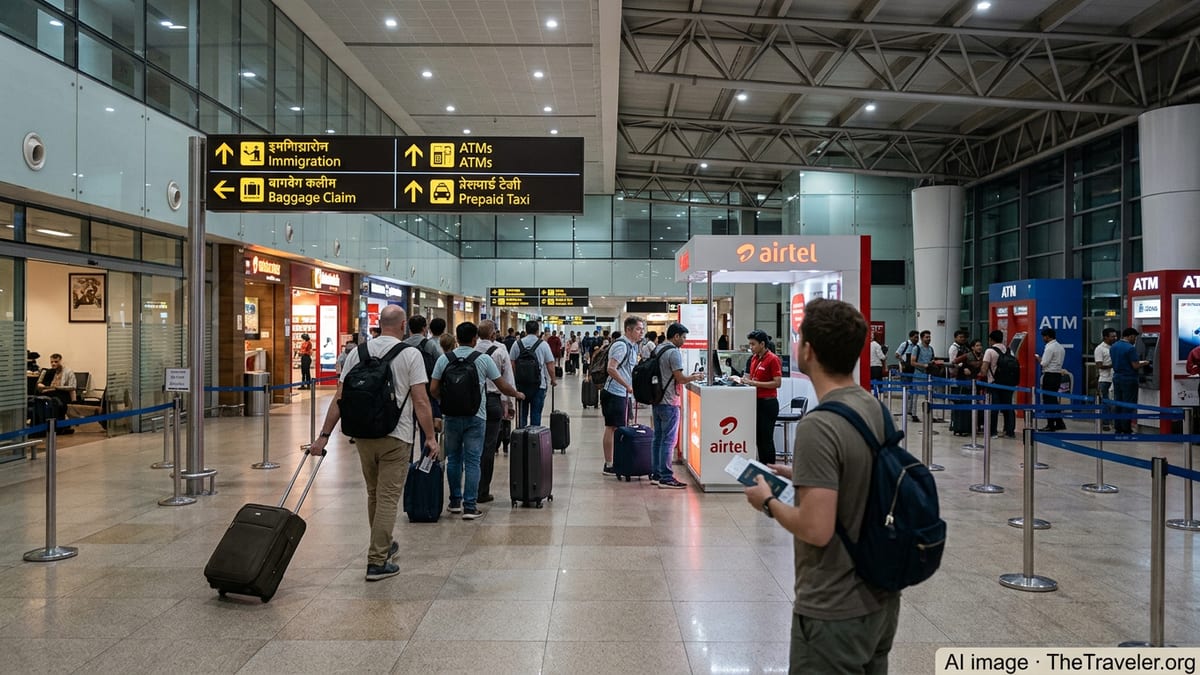
A New Milestone for India’s Digital Aviation Push
Publicly available information shows that Bangalore International Airport Limited, which operates Kempegowda International Airport, has partnered with IndiGo, the DigiYatra Foundation and the International Air Transport Association to test a contactless international travel corridor. Recent coverage indicates that the pilot has focused on select routes, including a Bengaluru to Doha service, to prove that biometric and digital identity solutions can support cross border passenger flows.
The trials build on Bengaluru’s early adoption of DigiYatra for domestic flights, where facial recognition is already used at entry gates, security checkpoints and boarding. For international operations, the airport is now layering that domestic experience with global standards developed under IATA’s One ID framework, aiming to show that a passenger can move from booking to boarding using a single secure digital identity.
According to published coverage on the proof of concept, the system allows passengers to share identity data remotely during booking and check in, complete biometric enrollment ahead of travel, and then pass through airport touchpoints using only face verification. The project positions Bengaluru as a test bed in Asia Pacific for contactless international travel, alongside other recent IATA trials in markets such as New Zealand and Hong Kong.
Sector analysts note that the initiative aligns with India’s wider aviation and digital policy, which has promoted paperless, tech driven services from airport entry to immigration. The Bengaluru trial is being watched closely by other Indian hubs that already use DigiYatra domestically and are evaluating how to extend the concept to international passengers.
How the Contactless International Journey Works
Reports indicate that the current trial weaves together three main elements: the DigiYatra biometric platform, digital identity wallets compatible with international standards, and app to app integration that allows secure data exchange across stakeholders. A passenger who opts in can store verified identity credentials in an airline or third party wallet, link those details to their booking, and consent to share them with the airport and border agencies for a specific journey.
At the airport, this data is used to verify the traveller’s identity through facial recognition cameras at check in kiosks, bag drop, security screening, immigration counters and boarding gates. Instead of repeatedly showing a passport and boarding pass, the passenger presents their face to a camera, which matches against the encrypted profile created earlier in the process. The system is designed so that different digital identity providers, including DigiYatra and independent wallets, can interoperate in a single itinerary.
Information released about the IATA proof of concept highlights that it relies on widely accepted technical standards, including specifications from ISO, OpenID and the World Wide Web Consortium for digital identities. This is intended to make cross border use more practical, so that a traveller might eventually use the same digital credentials on journeys that connect Indian, Gulf and other Asia Pacific airports participating in similar programmes.
For now, the Bengaluru trial remains limited to controlled cohorts and specific flights, with traditional document checks continuing in parallel. The objective is to test reliability, security and passenger acceptance before any large scale rollout is considered. Stakeholders are also using the pilot phase to refine consent flows, data deletion policies and fallback procedures when biometric verification is not successful.
Potential Benefits for Passengers and Operations
Domestic experience with DigiYatra has already shown that facial recognition based processing can reduce wait times at airport entry and security, especially during peak periods. Publicly available usage data from previous years suggests that Bengaluru has been among the most active airports for DigiYatra adoption, with a steadily rising share of domestic passengers choosing the service for faster processing.
By extending similar concepts to international travel, Kempegowda International Airport is aiming to replicate those efficiency gains at more complex touchpoints such as immigration and outbound document checks. A successful contactless flow could shorten queues, smooth out congestion at the international terminal and allow staff to focus on exceptions and higher risk cases rather than routine identity verification.
For airlines, seamless digital identity could support tighter connection windows and more predictable boarding timelines, which in turn helps on time performance. The pilot with IndiGo is being viewed within the industry as a test of how low cost carriers might integrate advanced identity solutions without compromising their cost sensitive operating models.
Operationally, the use of shared digital standards means that airports and airlines may be able to plug into common infrastructures rather than building separate proprietary systems. This could reduce duplication of hardware across counters and gates and make it easier to scale the model to additional routes and carriers if the trials are deemed successful.
Privacy, Consent and Regulatory Questions
The rapid advance of facial recognition and biometric processing at Indian airports has prompted ongoing debate about privacy and data protection. Commentaries in the Indian press and on aviation forums point out that while DigiYatra is positioned as a voluntary, convenience driven service, questions remain around how long biometric templates are stored, what safeguards are in place against misuse, and how clearly consent is communicated to passengers.
For international deployments, these concerns become even more complex, as data may move across jurisdictions with different legal regimes. The Bengaluru contactless travel trials therefore intersect with discussions about India’s new digital personal data protection framework, as well as requirements imposed by destination countries, which may have their own rules for handling biometric information.
Published coverage of the IATA proof of concept stresses that self sovereign identity principles are central to the design, giving travellers more control over when and how their data is shared. In practice, that means credentials are stored in secure digital wallets under the passenger’s control, and consent is requested at each step where information must be passed to another party, such as an airline or border authority.
Advocacy groups and technology observers are likely to scrutinise how these principles are implemented in the Bengaluru pilot, including whether there are clear opt out options, transparent retention timelines, and straightforward ways for passengers to request deletion of their data after travel. The outcome of this scrutiny may influence how quickly other Indian airports move toward similar systems for international journeys.
What Comes Next for India’s Contactless Travel Ambitions
The Bengaluru trials arrive as India is gradually introducing more digital elements across the international travel chain, from e immigration gates at select airports to the phasing out of paper arrival forms for foreign visitors on certain routes. Industry watchers see Kempegowda International Airport’s initiative as a natural extension of this trajectory and as a signal that India aims to be at the forefront of biometric based travel experiences in the region.
If technical tests continue to show high reliability and strong passenger uptake, observers expect a phased expansion of contactless international processing at Bengaluru, potentially covering more airlines, destinations and types of passengers beyond the initial trial groups. Such a move would likely be coordinated with national regulators and industry bodies to ensure interoperability with other Indian and foreign hubs.
Other airports in the country that have rolled out DigiYatra for domestic flights, including major metros and several smaller cities, are monitoring developments closely. Publicly available policy documents suggest that authorities are working toward a more unified digital travel framework that could combine domestic biometric programmes, fast track immigration schemes and international digital identity initiatives into a single ecosystem.
For travellers, the current stage means that contactless international journeys out of Bengaluru are still experimental and limited in scope, though they point to a near future in which faces instead of paper documents may define the experience of flying abroad from India’s tech capital.