


More news on this day
Tourists planning rail-based itineraries across Switzerland’s mountains, lakes and historic cities are increasingly turning to the Swiss Travel Pass, an all-in-one ticket that combines long-distance trains, local transport and cultural admissions into a single product valid across the national network.
Get the latest news straight to your inbox!
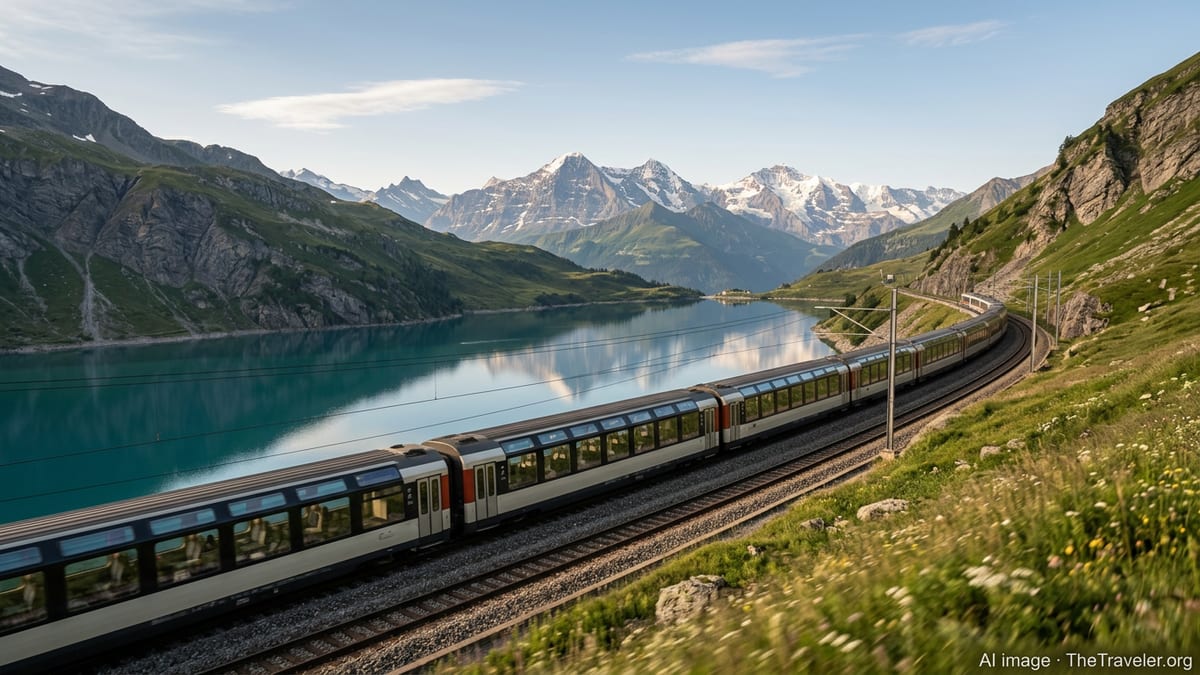
All-in-One Access Across the Swiss Rail Network
Publicly available information from Switzerland’s national rail operator and tourism bodies describes the Swiss Travel Pass as a comprehensive ticket designed for visitors from abroad who want to move freely across the country without buying separate fares for each leg. The pass is valid on the dense network of intercity, regional and scenic trains, as well as most buses and scheduled boats, effectively covering the core of Switzerland’s public transport system in one purchase.
The product is offered for a set number of consecutive travel days, typically ranging from three to fifteen days, in either first or second class. Once activated, holders can board most trains by simply showing the digital or printed pass, with no need to calculate distances or zones. Reports indicate that the pass can be bought up to several months before travel, which allows international visitors to lock in rail arrangements as they plan multi-country European itineraries.
Tourism guidance stresses that the Swiss Travel Pass is reserved for non-residents of Switzerland and Liechtenstein, positioning it squarely as an inbound tourism product rather than a commuter option. This focus has helped establish the pass as a staple of international trip planning, particularly among travelers who wish to combine major hubs such as Zurich, Geneva and Basel with resort towns in regions like the Bernese Oberland, Lake Lucerne and the Valais.
Museum Entry and City Transport Extend the Value
A distinctive feature that separates the Swiss Travel Pass from many rail-only products in Europe is its integration with cultural attractions. According to current product descriptions, the pass includes complimentary admission to more than 500 museums and cultural institutions across the country, via cooperation with the Swiss Museum Pass program. This allows visitors to step off a train and enter participating museums without additional ticket purchases, encouraging spontaneous stops in both large cities and smaller towns.
Examples frequently highlighted in tourism materials include major institutions in Zurich, Geneva, Basel and Lucerne, where travelers can combine art collections, science museums and history exhibits with lake cruises and short rail hops. Attractions such as the Swiss Museum of Transport in Lucerne acknowledge the Swiss Travel Pass as a valid reduction or entry instrument, illustrating how the ticket functions as both a transport and sightseeing tool.
The pass also extends to local public transport in dozens of Swiss cities, covering trams, buses and in some cases urban boats. This means a traveler arriving in cities such as Zurich or Bern on an intercity train can continue straight onto a tram or trolleybus network without buying a separate urban ticket. For visitors staying in multiple regions over a week or more, the combined savings on museum admissions and city transit can be significant, adding to the appeal beyond the long-distance rail journeys.
Iconic Scenic Routes and Mountain Connections
Switzerland’s reputation as a rail destination rests heavily on its panoramic routes, and the Swiss Travel Pass is structured to provide access to many of these celebrated lines. Information from official validity maps shows that the pass covers key stretches of world-renowned routes such as the Glacier Express, Bernina Express and GoldenPass corridor, although seat reservations and supplements may apply on certain branded panoramic trains.
For many travelers, the pass functions as a gateway to classic itineraries linking cities to alpine resorts. Routes from Zurich to Lucerne and onward over the Brünig line toward Interlaken, or from Geneva along Lake Geneva toward Montreux and the GoldenPass line into central Switzerland, can all be undertaken with the same pass. The ability to hop on and off regional services along these routes encourages slower travel, with stops in lakeside villages, wine regions and smaller mountain communities.
Mountain railways and cable cars occupy a special category. Publicly available conditions state that the Swiss Travel Pass typically grants either full coverage or substantial discounts, often around 50 percent, on many mountain transport services. Popular excursions from Interlaken into the Jungfrau region, from Lucerne up Pilatus or Rigi, or from Zermatt toward viewpoints around the Matterhorn, can therefore be combined with standard rail segments under a single ticketing framework, although exact reductions vary by operator and line.
Recent Pricing Trends and Validity Updates
Industry-focused publications and tariff documentation indicate that the Swiss Travel Pass continues to evolve in pricing and validity as demand grows. Material aimed at travel trade partners for the 2025 and 2026 seasons highlights a broad structure of consecutive-day passes with fixed net prices in Swiss francs, with validity dates set across the calendar year. Recent communications from Swiss public transport partners describe average price increases of around five percent planned from early 2026 for certain international visitor products, including versions of the Swiss Travel Pass and Swiss Travel Pass Flex.
Despite these adjustments, travel trade analyses still present the pass as competitively priced when compared with purchasing multiple point-to-point tickets for longer itineraries. The introduction of occasional promotions, such as offers providing an extra day of validity on selected first-class passes within defined travel windows, reflects efforts to maintain the product’s attractiveness during shoulder seasons and to spread visitor flows more evenly throughout the year.
In parallel, transport operators have continued to clarify and refine validity maps, which set out exactly where the pass is fully accepted and where only discounts apply. These documents underscore that while the Swiss Travel Pass covers a wide portion of the national network, some privately operated mountain lines and cross-border sections may only be partially included. Travelers are therefore encouraged by tourism information sites to consult the latest validity diagrams when planning complex mountain or international connections.
Planning Considerations for International Visitors
For many overseas travelers, a central question is whether to choose the Swiss Travel Pass or buy individual tickets combined with other discount products. Online comparison tools, traveler forums and official guidance commonly suggest that the pass delivers the best value for itineraries involving frequent rail travel over several days, especially when museum visits and city transport are factored into the calculation.
Observers note that the Swiss Travel Pass Flex, which allows travelers to select their travel days within a longer overall period, has been positioned for visitors wanting more rest days between rail segments. This can suit itineraries in which travelers stay three or four nights in a single base, using selected days for longer excursions and other days for local exploration on foot. The forthcoming price changes flagged for 2026 mean that prospective visitors are increasingly advised in public-facing materials to compare both consecutive and flex versions when budgeting.
Rail companies and tourism organizations emphasize in their published material that the pass must be purchased before arriving in Switzerland or through designated sales channels, and that it cannot be sold to residents. As a result, the pass has become a focal point for international travel agencies and online platforms specializing in European rail. With Switzerland expecting sustained interest in scenic, lower-impact travel, analysts view the Swiss Travel Pass as likely to remain a linchpin of the country’s tourism offer, giving visitors a straightforward way to connect the country’s iconic peaks, lakes and cities by rail.