


More news on this day
Sydney’s long-planned second international airport is preparing to welcome its first passengers in late October 2026, marking a pivotal shift in how the city moves people and freight across Australia and the region.
Get the latest news straight to your inbox!
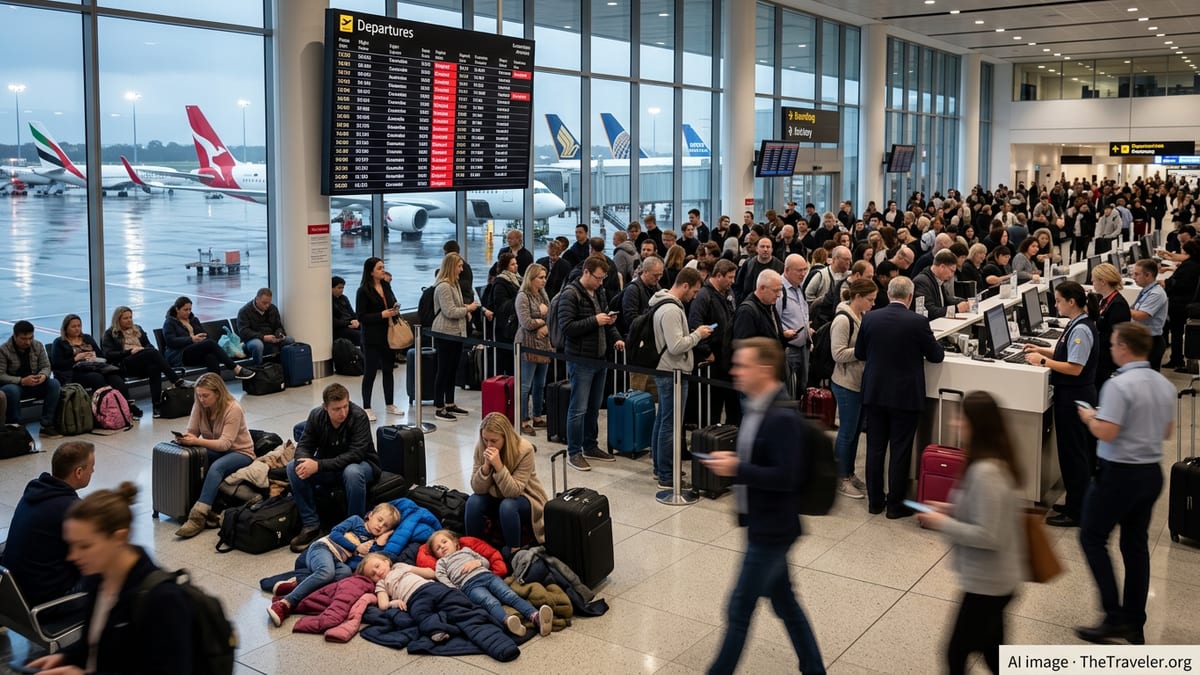
Firm date set for first passenger flights
Publicly available information indicates that Western Sydney International (Nancy-Bird Walton) Airport is now targeting the final week of October 2026 for the start of passenger operations. Reports from Australian media in early June point to Sunday 25 October as the date when the first commercial flight will depart the new terminal, following several months of freight-only operations from July.
Industry coverage shows that Jetstar is expected to operate the airport’s first commercial passenger service, using an Airbus A320 on a domestic route to the Gold Coast. The launch flight is set to depart late morning, providing a highly visible milestone for the 5 billion dollar-plus project that has been under construction for much of the past decade.
Government and company documents describe the October start as the formal opening of the airport’s initial stage, with capacity to handle up to 10 million passengers a year. Further expansion, including additional runways and terminal growth, is planned over coming decades as demand from western Sydney and regional New South Wales increases.
The passenger launch follows a long sequence of milestones. Major construction on the airfield, terminal and landside precinct wrapped up in 2025, and the project is now deep in its testing and operational readiness phase ahead of the first paying customers.
Curfew-free operations and airlines lining up
Western Sydney International will be Sydney’s first major curfew-free airport, giving airlines the ability to schedule flights through the night, unlike the existing Kingsford Smith Airport at Mascot, which is subject to an overnight curfew. Reports from aviation and travel outlets indicate that from early November 2026, the airport is expected to make full use of its 24-hour operating status.
Several carriers have signalled their intention to base or schedule aircraft at the new hub. Coverage in travel and business publications notes that Jetstar plans multiple weekly services to Melbourne, Brisbane and the Gold Coast within the first year, while Qantas is preparing to introduce its own domestic flights a few months after the October opening. International airlines including Air New Zealand and Singapore Airlines have also been named in public material as launch partners for the airport’s early years.
Industry analysis suggests that the airport’s initial flight program will be modest, with a limited number of daily services as airlines test demand and ground transport options bed in. However, planners expect that the combination of population growth in the city’s west and the curfew-free operating window will make the new airport increasingly attractive for both low-cost and full-service carriers.
Airport planners have positioned Western Sydney International as a complementary gateway to the existing Sydney Airport, rather than a direct replacement. Over time, observers expect long-haul and freight operators to be drawn to the additional slots and flexible operating hours that the western site can offer.
Transforming access to Sydney’s booming west
The new airport sits at Badgerys Creek, about 44 kilometres west of Sydney’s central business district, in a region experiencing some of the fastest population growth in Australia. Government fact sheets and infrastructure plans describe Western Sydney International as the centrepiece of a broader aerotropolis, envisioned as a new employment and innovation hub linked to the wider metropolitan area.
Road upgrades are already reshaping how travellers and freight reach the site. The new M12 motorway, which connects the airport directly to the existing M7 corridor, opened earlier in 2026, providing a high-capacity route for cars, buses and logistics operators. Additional arterial road improvements across western Sydney are designed to shorten travel times from centres such as Penrith, Liverpool and Campbelltown.
Rail access is more complex. The dedicated Sydney Metro Western Sydney Airport line remains under construction, and recent reporting points to the possibility of delays beyond the airport’s October 2026 opening. While the line was initially expected to open in time for the first passenger flights, current commentary suggests it may not be ready until later in the decade, increasing reliance on road transport in the early years of airport operations.
Despite the uncertainty around rail timing, local economic studies forecast that the airport and its surrounding precinct will support tens of thousands of jobs across aviation, logistics, hospitality and advanced manufacturing over the long term. Western Sydney councils and business groups have framed the airport as a once-in-a-generation chance to rebalance employment away from the traditional coastal CBDs.
Passenger experience in a purpose-built terminal
With construction substantially complete, images and descriptions released by the airport company highlight an architecturally distinct terminal designed to handle both domestic and international traffic from day one. The building incorporates high ceilings, extensive natural light and a layout that aims to simplify movement between check-in, security, departure gates and ground transport.
Design material shows that the terminal has been built with future expansion in mind, including space for additional gates, retail and lounges as flight numbers grow. Digital infrastructure, automated check-in facilities and modern security screening systems are intended to streamline the passenger experience and reduce processing times during peak periods.
Commercial announcements in recent months reveal that Western Sydney International has secured partnerships for a large-scale digital advertising and media network throughout the terminal and forecourt areas. Retail and food and beverage operators are expected to be confirmed closer to opening, with planners aiming to showcase western Sydney businesses alongside national and international brands.
Accessibility and customer experience are emerging as key themes. Publicly available plans reference provisions for step-free access, clear wayfinding and dedicated spaces for families and passengers with reduced mobility. Observers note that, as a new-build facility, the airport has the opportunity to adopt design standards that are harder to retrofit into older terminals.
What October’s opening means for Australian aviation
The start of passenger operations at Western Sydney International in October 2026 represents the most significant change to Australia’s aviation network in more than two decades. Industry commentary frames the project as a long-term response to capacity constraints at Sydney’s existing airport, which has faced slot and curfew limits even as demand for both domestic and international travel has grown.
Economic and transport analysts expect the new airport to gradually reshape route maps and airline strategies. In the near term, the focus is likely to be on high-demand domestic links and short-haul international services across the Tasman and into Southeast Asia. Over time, observers anticipate that Western Sydney International could attract widebody aircraft and long-haul links, particularly if demand from the surrounding catchment continues to rise.
For travellers, the October launch will provide a new set of choices. Residents of western Sydney will gain a closer airport with the potential for shorter door-to-door journeys, while passengers from other parts of the city may weigh the wider range of flight times offered by a curfew-free operation against the longer surface trip to Badgerys Creek.
As ticket sales for the first flights begin and airlines finalise their schedules, the focus over the coming months will be on operational readiness, ground transport and how quickly demand builds. The October opening will mark the start of a long experiment in how a second major airport can reshape one of the Asia Pacific region’s busiest aviation markets.