


More news on this day
Travelers passing through Lima’s Jorge Chávez International Airport faced significant disruption as 21 flights were delayed and three canceled, affecting a mix of domestic and international services across carriers including LATAM Airlines, Sky Airline and JetSMART.
Get the latest news straight to your inbox!
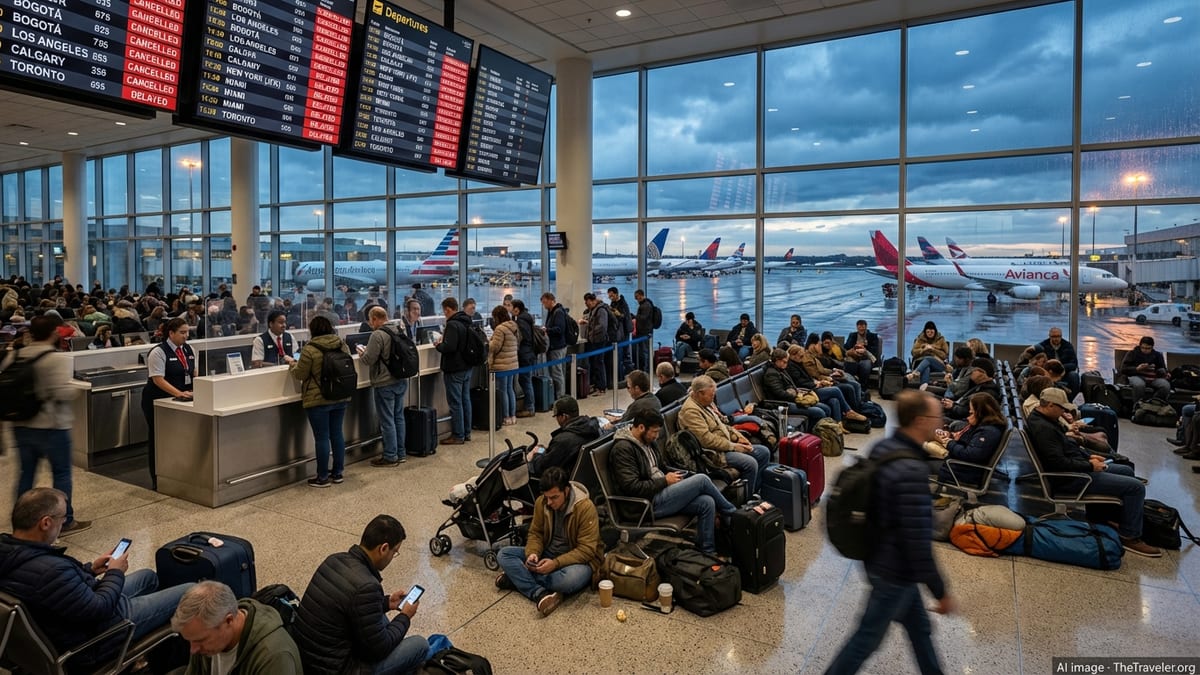
Wave of Delays and Cancellations Hits Key South American Hub
The latest disruption unfolded at Peru’s primary gateway just weeks after earlier operational issues and infrastructure concerns had already put the airport under scrutiny. Publicly available flight boards and tracking data for the most recent incident show an unusually high cluster of delayed departures and arrivals, alongside a small number of outright cancellations, centered on a single operating window.
The 21 delayed flights spanned both domestic links within Peru and regional and long-haul routes, underlining the strategic role of Jorge Chávez International Airport as a connecting hub. The three canceled services further compounded the impact, forcing some travelers to seek last-minute rebookings or overnight accommodation as schedules unraveled.
Although exact causes for individual delays can vary, recent weeks at the airport have been marked by a combination of factors, including air traffic control constraints, previous radar-system issues, and pressure on terminal operations amid ongoing modernization work. The convergence of these elements is increasingly visible to passengers when clusters of delays appear on departure and arrival screens.
For many travelers caught in the disruption, the immediate effect was hours spent in departure lounges, lengthy check-in and customer service queues, and concerns about missed onward connections at other regional hubs in South America and beyond.
LATAM, Sky Airline, JetSMART and Others Affected
The disruption cut across multiple airlines that depend on Lima as a central node in their networks. Among those affected were LATAM Airlines, Sky Airline and JetSMART, all of which operate extensively at Jorge Chávez across domestic and international segments. Other regional and intercontinental carriers also saw knock-on schedule changes as delays cascaded through the day.
Flight status records and airline timetables show that LATAM, the largest player at Lima, shouldered a significant share of the delays, largely because of its dense schedule of short-haul domestic and regional flights. Sky Airline and JetSMART, both low-cost competitors that increasingly link Lima with destinations in Chile, Argentina, Colombia and Ecuador, also experienced disruptions to rotations that typically rely on quick turnarounds.
The three cancellations, reported across different carriers, had an outsized impact compared with their number, particularly for travelers relying on limited-frequency services. On routes where only one or two daily flights operate, a cancellation can effectively erase a day’s connectivity, with alternative options involving complex re-routing or overnight stops.
As the day progressed, some airlines were able to recover portions of their schedules, trimming delay minutes on later departures as aircraft and crews were repositioned. However, passengers on early flights bore the brunt of the operational shock, especially those with tight international connections onward to North America and Europe.
Domestic and International Routes Disrupted
The disruption at Jorge Chávez did not remain confined to Lima’s immediate surroundings. Domestic routes to major Peruvian cities such as Cusco, Arequipa, Piura, Trujillo and Iquitos reported late departures and arrivals, affecting both tourism traffic and essential business and government travel within the country.
On the international side, services linking Lima to regional hubs including Santiago, Buenos Aires, Bogotá and Quito were among those affected, according to airline schedules and airport departure boards. These routes are key for connecting South American travelers onward to long-haul flights, so delays in Lima risked creating a domino effect across wider networks.
Published route maps and capacity data highlight how tightly integrated Lima is with South America’s broader air transport system. Frequent services by LATAM, Sky Airline and JetSMART connect the Peruvian capital with major cities in Chile, Argentina, Brazil and Colombia, while long-haul operations link Lima to North America and Europe. When a wave of delays strikes at Jorge Chávez, the repercussions often extend to airports across the continent.
For some passengers, disruptions materialized as missed connections several airports away from Peru, as inbound delays into Lima left insufficient time to board onward flights. In those cases, travelers typically rely on airline rebooking policies, which can vary by carrier, ticket type and the underlying reason for disruption.
Operational Strain Amid Infrastructure and Regulatory Pressures
The latest episode of delays comes at a time when Lima’s main airport is undergoing a period of transition and scrutiny. The ongoing expansion and reconfiguration of terminals and runways, designed to increase long-term capacity, has coincided with intermittent operational bottlenecks and periods of heavier congestion.
In recent months, public reports have also pointed to temporary problems in air traffic management systems, including radar-related issues that previously forced delays and a cancellation at Jorge Chávez. While the current wave of disruptions has not been tied to a single clearly identified cause, the pattern of repeated strain has renewed discussion about the resilience of Peru’s main aviation hub.
Separately, airlines based in Lima have raised concerns over regulatory and fee changes, including a new structure for airport charges affecting transfer passengers. According to coverage in Peruvian business media, carriers such as LATAM Airlines Perú have already announced reductions in certain international services, citing the impact of higher costs on the viability of hub operations in Lima.
Together, these infrastructure, regulatory and systems pressures provide the backdrop against which each new cluster of delays and cancellations unfolds. For travelers, the operational context may be less visible than the departure board, but it shapes the reliability of the journeys they plan through Peru’s capital.
What Passengers Can Expect in the Coming Days
In the immediate aftermath of the latest disruption, schedules at Jorge Chávez International Airport began to normalize as aircraft and crews returned to planned rotations. Flight-tracking data typically show that, after a burst of delays, airlines work to stabilize subsequent departures, although residual knock-on effects can linger into following days.
Travelers with upcoming itineraries through Lima are being advised, through publicly available airport and airline channels, to monitor flight status closely and arrive early for departures, particularly on international routes. Ongoing roadworks and traffic changes around the Callao area, which can lengthen surface travel times to the airport, add another layer of uncertainty for passengers trying to reach their flights on time.
Consumer advocates often recommend that passengers facing significant delays or cancellations retain documentation of disruptions, including boarding passes and written confirmations of schedule changes, in case they wish to pursue compensation or refunds under airline policies or applicable regulations. In South America, specific rights can vary by country and route, so travelers are encouraged to review the conditions of carriage for their particular ticket.
As Jorge Chávez continues its evolution into a larger, more modern hub, the hope among passengers and industry observers alike is that the frequency and severity of disruption will ease. For now, the latest incident of 21 delayed flights and three cancellations serves as a reminder of how quickly operational pressures at one airport can ripple through air travel plans across an entire region.