


Search for a scooter or motorbike on BikesBooking.com and you will see what most travelers focus on first: daily price, model, and star rating. What many people do not examine with the same care are the rental terms that sit just behind those tempting prices. Yet it is in those terms where you will find the rules on security deposits, insurance coverage, fuel, mileage, late returns, and damage charges that can easily turn a cheap daily rate into an expensive mistake.
Get the latest updates straight to your inbox!
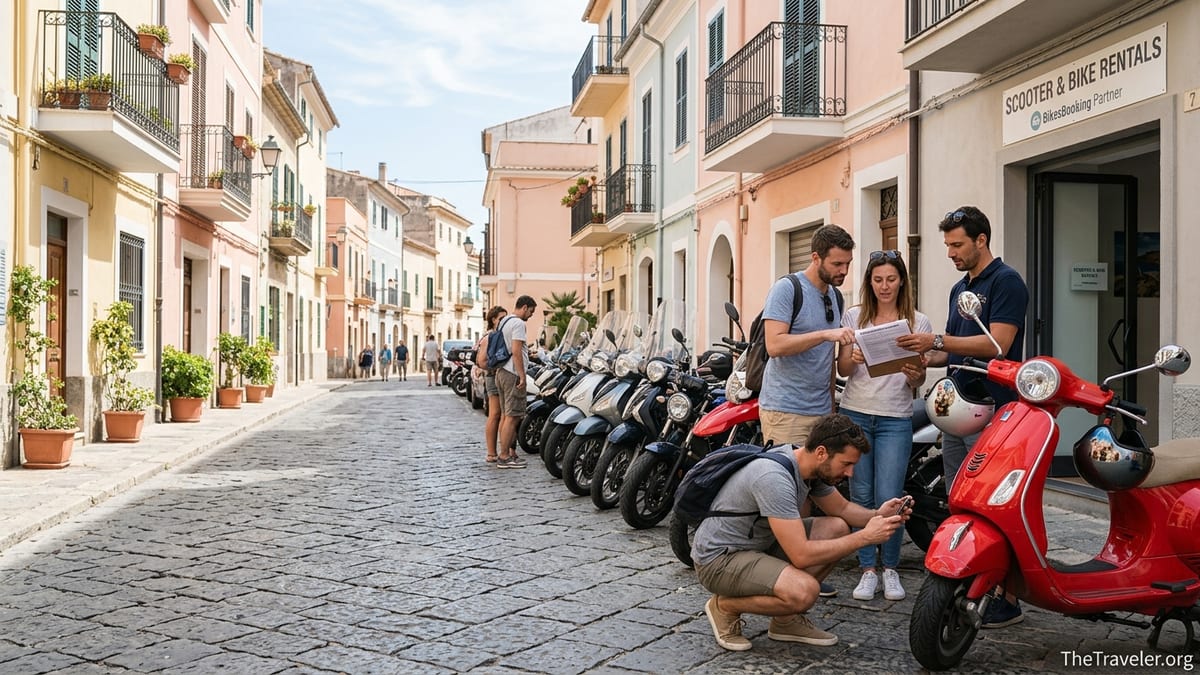
How BikesBooking Actually Works Behind the Scenes
BikesBooking.com is an aggregator. It connects travelers with hundreds of local rental companies that supply the scooters, motorcycles, bicycles and ATVs in popular destinations from the Greek islands to Bali. When you click “Book now” on a listing in Santorini or Tenerife, you are not renting from BikesBooking itself. You are entering into a rental agreement with a local provider whose own terms and conditions apply at pickup. BikesBooking displays a summary of those terms, but the full contract is usually signed on arrival.
That structure is convenient because you can compare models and prices in one place, but it also means the fine print varies widely between partners. A scooter in Paros might come with free cancellation up to 24 hours before pickup and a small cash deposit, while a big BMW touring bike in Croatia may require a sizable credit card preauthorization and stricter mileage limits. Travelers often assume terms are standardized across the platform. In reality, every listing can be different, and you need to read the specific conditions for the vehicle and supplier you choose.
This also explains why BikesBooking can advertise benefits such as “no credit card fees” and “no hidden commissions” for its own service while your rental company may still charge local taxes, one-way fees, or cross-border surcharges. On the site you will usually see a short section for “Rental Conditions” and sometimes a link to “Important information.” Those sections are where the local partner’s ground rules are summarized and where you should slow down and read line by line before paying.
Because BikesBooking operates globally, the terms you encounter in Spain or Portugal can be very different from what you see in Thailand or Indonesia. In parts of Southeast Asia, for example, it is still common for independent shops to ask for a passport as collateral and to offer only basic or no insurance with the scooter, while European partners tend to rely on credit card deposits and formal insurance policies. The booking page will usually tell you which applies, but only if you look closely.
Security Deposits and Passport Holds: The Money at Stake
One of the most important pieces of fine print on a BikesBooking listing concerns the security deposit. Many travelers focus only on the daily rate, then are surprised at pickup when the local company asks for a sizeable hold on a credit card or a few hundred euros in cash. It is common for European motorcycle rentals to require a deposit in the range of 500 to 2,000 euros depending on the engine size and insurance excess. For example, one Croatian operator advertising through comparison sites states that it preauthorizes about 2,000 euros on your card as a damage deposit for a high-end BMW adventure bike.
Smaller scooters and 125 cc motorcycles often come with lower deposits, but even then you may face a hold of 300 to 500 euros in popular holiday spots such as Mallorca or Lisbon. A Portuguese rental company lists security deposits of 500 euros for scooters up to 125 cc, 700 euros for mid-size motorcycles, and 1,400 euros or more for large touring models. Those figures may not always be visible in the card-style search results, but they are normally specified in the Rental Conditions section once you click through to the vehicle page and before you reach payment.
In destinations where cards are less common or fraud risk is higher, some local partners use passports or physical documents as collateral instead of, or in addition to, card holds. Around the islands of Thailand, family-run scooter shops frequently ask guests to leave a passport with the rental contract or provide a cash deposit on pickup. If a BikesBooking partner requires a passport as security, that should be clearly mentioned in the conditions, but travelers sometimes miss it until arrival. Handing over your passport can be uncomfortable and can complicate things if you need the document for hotel check in or internal flights, so it is worth checking in advance and looking for listings that only require a card or small cash deposit if you are not comfortable with passport holds.
Another easily overlooked detail is how long it takes to release a deposit. Some companies return a cash deposit immediately after inspection, others promise a refund to your card within three to five business days, and some hold preauthorizations until any potential traffic fines or tolls can appear. If your travel budget is tight or you rely on a single credit card with limited limit, tying up a thousand euros for several days after you have already flown home can be an unwelcome surprise. Before booking, confirm both the deposit amount and the stated release timeframe so you can plan your available credit.
Insurance Gaps and Fine Print Around Damage
Insurance coverage is one of the most misunderstood aspects of bike rentals, and BikesBooking listings can only ever summarize what the local partner offers. Many travelers see the word “insurance included” beside a daily rate and assume they are fully protected for any accident. In practice, standard coverage on a rental scooter or motorcycle usually mirrors a basic car hire policy: it may cover liability for damage you cause to others and partial damage to the vehicle itself, but with a high excess or deductible that you must pay first. That deductible often matches the deposit amount. If the deposit is 1,000 euros and you scratch the fairing in a parking lot, do not be surprised if you are billed up to that amount.
Some European rental companies list optional “reduced excess” or “deposit protection” products, where you pay a daily supplement to lower your maximum liability. A Croatian BMW rental, for example, promotes a special insurance policy that protects the 2,000 euro deposit amount if you buy it in advance. However, these products come with their own exclusions. Certain behaviors such as drunk riding, off-road use, carrying more passengers than allowed, or breaching local traffic rules can void coverage entirely. The fact that the bike feels like a holiday toy does not protect you from the insurance contract language that treats it as a motor vehicle with serious risk.
Outside Europe, coverage can be even thinner. On popular Thai islands, it is common for rental shops to offer little more than basic compulsory motor insurance required by local law, which typically covers injury to third parties but not damage to the scooter itself or to other vehicles. If a BikesBooking partner in such a destination includes insurance, read the description closely to see what is actually covered and whether it extends to personal medical costs or just physical damage to the bike. Many travelers end up depending on their own travel insurance or health insurance in case of an accident, and not all policies cover riding a motorcycle or scooter, especially above certain engine sizes or without a proper license.
One practical step before booking is to compare the rental company’s excess with what external “rental excess” or travel insurance policies can offer. Specialist insurers sometimes sell products that reimburse the deductible a rental company charges, up to a limit, if you damage the vehicle. These can be cheaper than reducing the excess directly with the rental firm, but they require you to pay the rental company first and then claim back later, which can mean significant out-of-pocket expense during your trip. Whichever route you take, what matters on BikesBooking is not just that “insurance is included,” but specifically what the deductible is and which situations are excluded.
Mileage, Fuel, and Late Return: The Hidden Cost Multipliers
Mileage and fuel policies are among the most common sources of surprise bills, mainly because they are tucked away behind attractive daily rates. Some BikesBooking partners advertise “unlimited kilometers,” which is ideal for road trips across regions such as Andalusia or the Alps. Others, especially for larger motorcycles, impose daily caps. A Spanish adventure rental company, for instance, sets a limit of around 300 kilometers per day on many models. Go beyond that and you pay a per-kilometer surcharge when you return the bike. On a multi-day tour, those overage fees can exceed the base rental cost if you are not careful.
Fuel rules are similarly easy to overlook. Many partners adopt a simple “full to full” policy: the bike is handed over with a full tank and you must return it full, using the correct type of fuel. If you bring it back partially empty, the company refuels it and charges you, often at a premium per liter plus a service fee. Some scooter rentals in city centers note that vehicles are supplied with enough fuel to reach a nearby station, and you are expected to return them with the same level recorded at pickup. Misfueling, such as putting petrol in a diesel motorcycle or vice versa on certain models, can trigger repair costs that are not fully covered by insurance, so do not rely on guesswork at the pump.
Late return policies also deserve close attention. Rental contracts often specify a grace period, such as 30 or 60 minutes, after which an additional day’s rental may be charged. Others charge by the hour according to a published schedule. If you are planning a scenic loop with uncertain timing, those details matter. For example, if you pick up a bike in the Algarve at 9 a.m. on Friday and the contract says it must be returned by 9 a.m. Sunday, dropping it back at midday may cost you an extra full day. When booking through BikesBooking, check the specified pickup and return windows and be realistic about your plans so that your schedule and the contract conditions align.
Cleaning fees and small-damage policies are another area to read carefully. Some operators hand over bikes clean and expect them to be returned in similar condition, charging a cleaning fee if the motorcycle is caked in mud or sand. Others publish a “minor damage table” with fixed costs for scratched mirrors, broken indicators, or cracked fairings. A small parking-lot tip-over that leaves a scuff on the exhaust can easily translate into a three-figure bill based on those tables. Because these rules vary widely, it is wise to photograph or film the bike at pickup and to ask the staff to note any existing damage on the handover form before you leave.
Age, License, and Territory Restrictions Many Riders Ignore
Across bookings made through BikesBooking, one of the most frequent problems is not price but eligibility. Local partners typically set minimum age and license rules that are stricter than what travelers expect. A German or Spanish motorcycle rental might require you to be at least 21 or 25 years old and to have held an appropriate motorcycle license for at least two years before renting a large machine. Scooters up to 50 or 125 cc can be more flexible, but even then, you often need a full car license or specific local endorsement. If you show up with only an international driving permit that is not backed by a valid home-country license, the shop can refuse to release the vehicle, and you may lose your prepaid booking.
In some countries, the category of license matters even more. Travelers used to automatic scooters at home sometimes assume that any two-wheeled rental is acceptable. However, a 600 cc motorcycle in Mallorca or Tuscany typically requires a full “A” class license, not just an A1 or A2. A number of Mediterranean rental companies explicitly state in their terms that renting a big touring bike is only possible from age 21 with two years of full-class license. On BikesBooking, that information is usually summarized near the top of the vehicle description under “Requirements” or “Driver’s License,” but it is easy to skip on a phone screen.
Territory restrictions are another widely overlooked clause. Many riders dream of picking up a bike in one country and popping across the border for a day. Yet some rental agreements forbid crossing into certain neighboring countries, restrict unpaved roads, or require written permission for ferries and islands. For instance, while not universal, it is common for Southern European motorcycle rentals to bar travel into specific non-EU countries or to charge extra insurance if you plan to ride outside the country of pickup. If you book a bike for a coastal tour in Croatia through an aggregator and intend to hop into Bosnia and Herzegovina or Montenegro, you need to make sure the contract allows it, otherwise an accident across the border can leave you effectively uninsured.
Additional drivers are also tightly controlled. Most rental contracts state that only the people named in the agreement may ride the bike. If your partner or friend takes a turn and you did not list them as an additional rider, any insurance can be void in the event of a crash. This is often spelled out in the fine print of the partner’s terms that BikesBooking references but does not reproduce in full. Before you book, decide who will actually ride and ensure everyone is named on the contract, even if that adds a minor fee.
Cancellation, No-show, and Weather Clauses You Might Regret Skipping
BikesBooking highlights free cancellation badges on many listings, but the underlying rules still come from the local partner. Some companies allow cancellation without penalty up to a certain number of days before pickup, then gradually apply fees as the date approaches. A motorcycle rental in Mallorca, for example, offers free cancellation up to one week before pickup, then charges around 20 percent of the rental price if you cancel in the final seven days. Others are more flexible and allow free cancellation up to 24 or 48 hours before your booking, but may exclude peak periods or special models.
On the other end of the spectrum, several rental companies offer cheaper “non-refundable” or “limited cancellation” rates where you save a little on the daily price but lose flexibility. One scooter company notes in its conditions that bookings marked with a certain option have no right to refund if canceled within 24 hours of the first rental day. If your travel plans involve flights and ferries that could shift, or if you are booking far in advance of knowing the weather, those restrictions carry real risk.
No-show penalties and late modifications are another area where assumptions can be dangerous. Some contracts state that if you do not appear within a set window after the booked pickup time, the company may treat it as a no-show, keeping part or all of your prepayment and releasing the bike to other customers. Requests to postpone a booking may be treated as a fresh cancellation plus a new reservation, with associated administrative and logistics costs. Before confirming on BikesBooking, look at whether the listing specifies free changes, paid changes, or no changes allowed, and be honest about how firm your travel schedule really is.
Many riders also assume bad weather automatically qualifies them for a refund. While some shops will accommodate last-minute date changes in the face of heavy rain or storms, others stick to the letter of the contract. Several European operators emphasize that rentals go ahead regardless of weather unless conditions are officially judged unsafe, and even then, the remedy may be a rebooking rather than a cash refund. If you are planning shoulder-season trips where rain is likely, it may be worth choosing a slightly more expensive listing with a clear, flexible cancellation policy rather than the absolute cheapest option.
Practical Steps to Read BikesBooking Rental Terms Like a Pro
Knowing that the details matter is one thing. Turning that awareness into a quick, practical process when you are browsing BikesBooking on your phone is another. A sensible first step once you find an appealing scooter or motorcycle is to tap through to the full listing and scroll down to any sections labeled Rental Conditions, Important Information, or similar. There you will typically see concise lines for deposit amount, fuel policy, mileage limits, minimum age, license required, and cancellation rules. Treat that checklist as seriously as the price and star rating.
Before clicking “Book,” it also helps to think through a few common scenarios. Ask yourself what happens if your flight is delayed and you miss pickup by several hours, if you decide mid-trip to keep the bike an extra day, or if a light rain turns into a storm and you do not feel safe riding. If the answers are not obvious from the conditions on BikesBooking, consider sending a message to the rental company through the platform to clarify. Many smaller operators respond quickly and appreciate a customer who wants to understand the rules in advance.
Once you arrive to pick up the bike, use your phone to record a slow walkaround video of the vehicle and capture any existing scratches or dents. Some contracts explicitly encourage this and even ask you to send the video via messaging apps or email so there is a timestamped record. Compare what you see with the damage sheet the shop provides and request that any marks be noted before you sign. When you return the bike, do a similar walkaround together with a staff member if possible and ask for written confirmation that it was received in good condition. Those simple habits can prevent disputes over small cosmetic damage later.
Finally, remember that BikesBooking’s role is to connect you with local partners, not to override their contracts. If a dispute arises about deposits, damage or extra charges, the resolution will usually depend on the original rental agreement you signed at the counter and any local consumer laws that apply. Keeping digital copies of the rental confirmation email, the platform’s summary of terms, and photographs of the bike can strengthen your position if you need to negotiate or, in serious cases, complain through BikesBooking’s support channels after the trip.
The Takeaway
Booking a scooter or motorcycle through BikesBooking.com can be a smart way to line up local transport before you land, often at competitive prices and with more choice than you would find wandering from shop to shop. Yet the convenience of an aggregator does not remove the need to study the fine print. Key details about security deposits, passport or card holds, insurance coverage and deductibles, mileage caps, fuel rules, age and license thresholds, cross-border travel, and cancellation or no-show penalties typically sit just below the main price and photo gallery.
If you take a few extra minutes to read those terms with the same attention you give to reviews and daily rates, you are far less likely to face surprise charges, refused handovers, or stressful arguments at the counter. Compare the deposit to your available credit, check what “insurance included” really means, confirm that your license and age qualify you for the specific bike you want, and weigh the savings of a non-refundable rate against the flexibility you might need. With those boxes ticked, BikesBooking can be what many travelers hope it will be: a straightforward, reliable way to enjoy two wheels wherever you go, without unwelcome surprises overshadowing the ride.
FAQ
Q1. Does BikesBooking itself set the rental terms for scooters and motorcycles?
BikesBooking acts as an intermediary between travelers and local rental companies. The detailed rental terms, such as deposits, insurance coverage, and age or license requirements, are set by the individual partner you book with, not by BikesBooking directly.
Q2. How can I find the exact security deposit required before I book?
On most listings you can scroll down to the Rental Conditions or Important Information section, where the deposit amount and type, such as credit card preauthorization or cash, are usually specified per vehicle. If it is unclear, you can contact the rental company through the platform before confirming.
Q3. Is giving my passport as a deposit a normal requirement?
In some destinations, especially parts of Southeast Asia, smaller rental shops may still ask to hold a passport as collateral, while others rely on card deposits or cash. Whether this is required should be stated in the rental conditions on BikesBooking, and if you are not comfortable with passport holds you can look for alternatives that accept only a card or modest cash deposit.
Q4. What does “insurance included” on a BikesBooking listing usually cover?
Included insurance typically resembles basic rental car coverage and may offer liability protection and partial coverage for damage to the rented bike, but usually with a deductible equal to the security deposit. It rarely provides comprehensive personal medical coverage, so it is important to read what is covered and excluded and to consider additional travel or excess insurance if needed.
Q5. Can I ride across borders or on ferries with a rental bike booked through BikesBooking?
Territory permissions depend entirely on the local rental company. Some allow cross-border travel or ferry crossings with prior approval, sometimes for an extra fee, while others strictly forbid leaving the country or riding on unpaved roads. Always check the territorial use clause in the conditions and obtain written permission if you plan to cross borders.
Q6. What happens if I return the bike late?
Most rental agreements include a defined return time and explain how late returns are charged, whether as an extra day after a short grace period or by the hour. Returning significantly late can cost the equivalent of an additional rental day, so you should check the policy and plan your route to avoid overruns.
Q7. Are mileage limits common on BikesBooking rentals?
For small city scooters, unlimited mileage is quite common, but mid-size and large motorcycles often have daily mileage limits, such as around 300 kilometers per day. Exceeding those limits can trigger per-kilometer charges on return, so you should verify the policy if you are planning long-distance rides.
Q8. What should I do at pickup to protect myself from unfair damage claims?
At pickup, inspect the bike carefully, film a full walkaround with your phone, and make sure all existing scratches or dents are noted on the rental form. Keeping those photos or videos and asking for written confirmation of the bike’s condition at return can help prevent disputes about minor cosmetic damage.
Q9. How do cancellation and no-show policies usually work through BikesBooking?
Cancellation rules depend on each partner, but many allow free cancellation up to a certain deadline, after which fees apply, and some cheaper rates may be non-refundable. No-shows or very late arrivals can result in losing some or all of your prepayment, so you should always read these clauses before booking and notify the company promptly if your plans change.
Q10. Can I rely on my regular travel insurance instead of the rental company’s coverage?
Some travel insurance policies cover injuries from riding rented motorcycles or scooters and may reimburse certain rental excess charges, but many apply engine size limits or require a valid motorcycle license. You should check your policy wording carefully and then compare it with the rental company’s coverage to understand where you may still be exposed.