


For many travelers, live events are the highlight of a trip. A Broadway show squeezed into a New York weekend, a Premier League match on a London layover, or a last-minute arena concert on a work trip can turn a routine journey into a story. Yet again and again, people only discover at the final checkout screen that the ticket they thought cost 120 dollars is actually closer to 160. The surprise usually traces back to one company that dominates ticketing in North America and far beyond: Ticketmaster.
Get the latest updates straight to your inbox!
Why Hidden Fees Hit Travelers Especially Hard
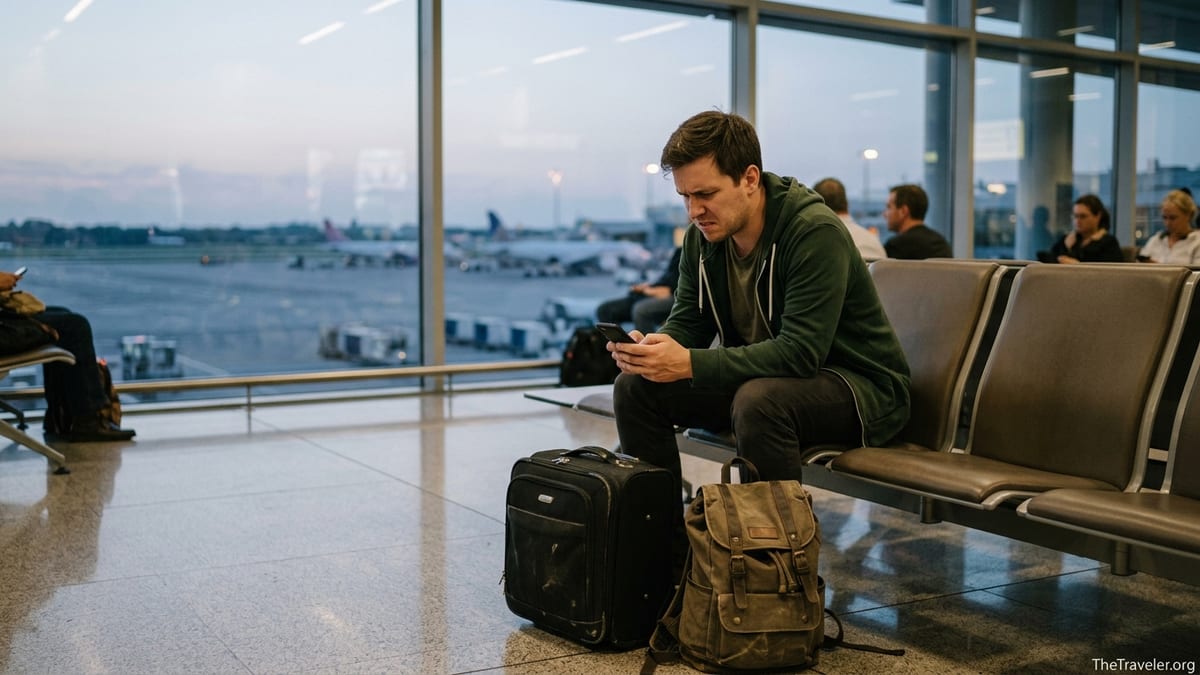
Travelers are uniquely vulnerable to ticketing surprises because they often buy in unfamiliar cities, under time pressure, and on mobile devices. Someone planning a weekend in Chicago might see 95 dollar tickets for a Friday night concert, mentally budget for two seats, then get a nasty shock when the total jumps by 40 or 50 dollars at checkout. By the time the extra costs appear, they may already have booked flights, hotels, or dinner reservations around the show, making it far more likely they will grudgingly pay rather than abandon the experience.
Hidden or late-disclosed fees are especially common when travelers bounce between platforms in search of a deal. A visitor to Los Angeles might compare prices on a venue’s own site, the Ticketmaster app, and a resale listing. All three may show similar “face values,” but only in the last step do the full charges emerge. Because tourists rarely know local alternatives like in-person box office hours or smaller regional ticketing companies, they are more likely to accept Ticketmaster’s price as the going rate instead of a negotiable premium for convenience.
This pattern has become such a flashpoint that regulators in the United States and other countries have moved to crack down on so-called junk fees and drip pricing, where mandatory costs appear only near the end of a transaction. While rules now push Ticketmaster toward showing all-in prices more clearly, many travelers still encounter sticker shock once they click into specific seats and see the detailed breakdown of what they are actually paying for.
How a 120 Dollar Ticket Becomes 160 at Checkout
The core frustration for travelers is not only that Ticketmaster tickets are expensive, but that the advertised price rarely matches the final bill. A typical primary ticket purchase is built from three or four components: the face value set by the promoter or team, a per-ticket service fee, a venue facility charge, and an order processing fee charged once per transaction. In many jurisdictions, sales tax is then calculated on top of this combined amount, not just the original face value.
Consider a concrete example resembling what many fans report. A traveler in Boston selects two 120 dollar seats for an arena concert. On the seat map, the price appears as 120 dollars each, suggesting a total of 240 dollars. When they proceed to checkout, the order summary might look more like this: 240 dollars for tickets, 52 dollars in service fees, 20 dollars in facility charges, an 8 dollar order processing fee, and roughly 20 dollars in local tax on the entire bundle. The final total is suddenly around 340 dollars, or 170 dollars per ticket, a nearly 40 percent increase over the apparent starting price.
In another real-world scenario discussed widely by fans, a user buying four midrange concert tickets in Canada saw a receipt that started around 472 Canadian dollars in base ticket prices. By the time Ticketmaster’s service fees and facility charges were added, the buyer was paying well over 550 Canadian dollars, even before accounting for currency conversion on a foreign credit card. For travelers juggling multiple exchange rates, these layers of add-ons make it extremely difficult to budget accurately until the last screen.
The issue is not that the fees are mathematically hidden. On modern Ticketmaster pages, a small breakdown is usually available via drop-down arrows or secondary screens. Instead, the problem for travelers is practical visibility: on a smartphone in a taxi or hotel lobby, it is easy to tap “buy” based on the large face value shown on the seat map and only fully absorb the true cost after commitments have already formed in their mind.
Inside Ticketmaster’s Fee Stack: Service, Facility, and Processing
Ticketmaster describes its fees as covering the cost of running the ticketing platform, from software and customer support to fraud prevention. The main recurring charge is the per-ticket service fee, which appears on almost every order and can run from under 10 dollars for a small club show to more than 30 dollars or more for high-demand tours or major league games. Internal and venue contracts reported in industry coverage indicate that this fee is usually agreed between Ticketmaster and the event organizer or venue, and the revenue is commonly shared rather than kept entirely by Ticketmaster.
On top of that, many venues add a facility charge or restoration fee, which Ticketmaster collects and passes to the building. This might be labeled as a 5 or 10 dollar fee per ticket to support maintenance or upgrades at a stadium or theater. Then there is the order processing fee, typically a flat amount per transaction. Historically this might have been around 4 to 6 dollars per order in the United States, regardless of whether a customer bought two tickets or eight, though some venues have recently scrapped or reduced this charge while adjusting other fees upward.
For travelers, the important practical takeaway is that these fees combine and compound. If an arena show in Dallas has a 25 percent service fee and a 7 dollar facility charge on each 100 dollar ticket, plus an order fee, a family buying four tickets could see their total climb by more than 120 dollars in fees alone. Because taxes are often calculated on the full bundle, these add-ons also increase what fans pay in sales tax. On resale purchases facilitated through Ticketmaster, a second layer of service charges is often added on top of the already fee-laden original price, meaning that the same seat can generate revenue for Ticketmaster and its partners multiple times as it changes hands.
Even when Ticketmaster promotes “all-in pricing,” where the list price is supposed to include mandatory charges, the breakdown can be confusing. Some venues roll what used to be a separate facility fee into the face value. Others reduce the processing fee but quietly increase the service fee per ticket. For a traveler glancing quickly at prices, it is hard to tell whether a 150 dollar seat advertised today is truly cheaper or simply structured differently than a 135 dollar seat plus 15 dollars in fees last year.
Regulators Push Back on Junk Fees, but Surprises Persist
Public anger at surprise fees has grown loud enough that governments have stepped in. In the United States, the Biden administration and the Federal Trade Commission have targeted junk fees in several sectors, including live-event ticketing. Rules finalized in late 2024 require companies like Ticketmaster to disclose the full price, including mandatory fees, upfront rather than adding them at the last click. Canadian and European authorities have launched parallel efforts against drip pricing, and ticketing platforms that fail to comply have already faced fines in some markets.
Ticketmaster and its parent company Live Nation have responded by promoting all-in pricing at many venues and festivals, particularly those they operate directly. In practice, this might mean that when a traveler clicks on a Taylor Swift show in Miami or a major rock tour in Toronto, they see a single number that reflects the base price plus service and facility charges. Executives argue that this makes comparison shopping easier and improves transparency, even if fans still dislike the overall level of fees.
However, travel-focused buyers continue to report frustration. One issue is that the new rules do not necessarily reduce total costs; they simply change when and how they are shown. After some U.S. venues dropped separate order processing fees to comply with upfront pricing requirements, contract documents and fan receipts indicated that service fees on each ticket crept higher to compensate. The result is that a traveler may now see a shockingly high all-in price earlier in the process but still have limited alternatives if they want to attend a popular game or show during a brief visit.
Another challenge is inconsistency across borders. A U.S. traveler booking a concert in London, a football match in Barcelona, and a festival in Toronto over the course of a year may encounter three different disclosure styles and varying terminology for similar charges. In some European markets, platforms must clearly show whether delivery or service fees are avoidable, for example by collecting at the box office. In others, mandatory costs are still sprinkled throughout the flow in ways that can catch an international visitor off guard when currency conversion and foreign transaction fees are layered on top.
Dynamic Pricing and Resale: When Fees Stack Twice
Beyond the explicit surcharges, Ticketmaster relies heavily on dynamic pricing tools that adjust face values based on demand, similar to airline fares. For travelers, this means that seats for a Friday night hockey game or a summer stadium concert in a tourist city can surge within minutes of going on sale. Fans have documented clicking on 150 dollar seats, placing them in their cart, and then seeing the base price climb by 10 or 15 percent before checkout, even before service fees are added. The system is designed to capture more of what secondary resellers might otherwise earn, but to the end buyer it simply feels like shifting sand under their feet.
When resale enters the picture, the fee situation becomes even more tangled. Ticketmaster’s own resale marketplace often charges sellers a commission in the range of a mid-teens percentage of the sale price, while buyers once again pay service fees similar to those on primary tickets. A traveler who cannot attend a show in Denver might relist two tickets at cost for 200 dollars each. If Ticketmaster charges the seller about 15 percent and adds roughly 25 percent in buyer-side fees, the company and its venue partners can collect well over 100 dollars in combined charges on a pair of tickets that already carried fees in the original sale.
There are also reports of what some fans describe as dynamic resale fees, where the service charge visible to the buyer fluctuates depending on demand, browser, or time of day. One user trying to sell three-hundred-dollar seats noticed that the displayed service fee for buyers swung from around 66 dollars to nearly 80 dollars without any change in the seller’s asking price. For international travelers paying in a different currency, these shifting layers of markup can make it nearly impossible to judge whether a listing is remotely fair or a trap.
In extreme cases, forum posts show total fee loads of more than 25 percent of the face value for standard primary tickets, and significantly higher percentages on resale. A group of friends buying four midlevel seats for a marquee tour reported paying more than 140 dollars in service fees alone on top of several hundred dollars of base prices. For a traveler already spending on flights, hotels, and meals, this can be the difference between squeezing in a second event on a trip or skipping live entertainment entirely.
How Travelers Can Minimize or Avoid Ticketmaster Surprises
Despite Ticketmaster’s dominance in many markets, travelers do have practical tactics to limit the impact of hidden or confusing fees. One of the simplest strategies is to check whether the event’s venue offers in-person box office sales without the full online fee stack. For example, some theaters in New York and Chicago, and a number of U.S. sports arenas, sell tickets at their own ticket windows with little more than a modest facility charge and tax. A traveler arriving a day early might be able to walk up and save 20 to 30 dollars per ticket compared with buying through the app, especially for non-premium seats.
Another useful approach is to use Ticketmaster’s own filters and settings to surface all-in prices early. On many event pages, travelers can toggle an option to show the “price including fees,” which updates the seat map labels to reflect the full mandatory charges. While the numbers may be sobering, seeing them upfront allows for better comparison against alternatives such as smaller clubs, matinee performances, or events in less touristy neighborhoods where demand and fees are lower. For a family planning a week in Orlando, choosing a Tuesday-night game at a smaller venue instead of a Saturday blockbuster at a major arena can trim both base prices and percentage-based service fees.
Travelers should also be cautious with resale listings that sit alongside primary tickets within Ticketmaster’s interface. The visual design sometimes makes it difficult to distinguish between face-value seats and those already inflated by previous buyers. Clicking on a section and seeing near-identical prices can be misleading if one row is a primary ticket that will incur a 20 percent service fee, while the next row is a resale listing that will carry both a higher base and a similar fee percentage. Taking a moment to tap into the details, verify whether seats are “standard tickets” or “resale,” and check the total for a single seat before committing to a full group purchase can prevent particularly painful markups.
Finally, when a trip’s schedule allows, travelers can consider alternative ticketing platforms or even same-day purchases. Some smaller festivals and independent theaters use competing systems that charge simpler and lower fees. In cities like London or New York, same-day booths and rush programs sometimes offer discounted tickets with fewer add-ons, though popular dates and shows may sell out quickly. None of these options entirely escape the reality of high demand and limited seats, but they can at least reduce the degree to which opaque fees erode a travel budget.
The Takeaway
For travelers, the shock of Ticketmaster’s hidden or late-disclosed fees is often less about a few extra dollars and more about a sense of lost control. Building an itinerary around a concert, game, or show only to discover at checkout that the true cost is 25 or 40 percent higher than expected can sour an entire evening. While recent regulatory pressure has nudged Ticketmaster toward clearer all-in pricing, the underlying system of service fees, facility charges, order processing costs, dynamic pricing, and resale commissions still turns many ticket purchases into a maze.
The most realistic path forward for travelers is a mix of awareness and strategy. Understanding that the first price on a seat map is rarely the full story, checking for all-in views of ticket costs, exploring box office sales where feasible, and scrutinizing resale labels can all make a noticeable difference. These habits will not dismantle the fee structure overnight, but they can reduce the number of times a spontaneous night out on the road becomes a budget-busting surprise.
As regulators in multiple countries continue to examine junk fees and competition in the live-events market, the landscape may gradually shift. Until then, the smartest travelers treat Ticketmaster prices the way they treat airline fares and hotel rates: a starting point to be interrogated, not a final number to be taken on trust.
FAQ
Q1. Why do Ticketmaster fees seem so high when I buy tickets on a trip?
They feel higher because you are often buying in tourist markets, at peak dates, and sometimes through resale, where both the base price and percentage-based service fees are elevated compared with off-peak or local events.
Q2. Are Ticketmaster’s service fees actually hidden or illegal?
The fees themselves are generally legal, but regulators have criticized the way they are disclosed. Rules now push Ticketmaster to show all-in prices earlier, yet many travelers still only grasp the true cost when they reach the final checkout screen.
Q3. Who keeps the money from Ticketmaster’s fees: the venue or Ticketmaster?
In many cases, the service fee revenue is shared between Ticketmaster and the event organizer or venue, while facility charges typically go straight to the building. Ticketmaster keeps a portion to operate the platform, but not all of what you see as “fees” goes to the ticketing company alone.
Q4. Is there any way to avoid Ticketmaster fees when I’m traveling?
You cannot always avoid them, especially for major tours and big-league games, but you can sometimes reduce them by buying at the venue box office, choosing less in-demand dates, or looking at smaller events that use different ticketing systems with simpler fee structures.
Q5. What is “drip pricing” and how does it affect travelers?
Drip pricing is a practice where mandatory fees are added gradually during the checkout process rather than shown upfront. For travelers comparing multiple events quickly, this can lead to underestimating the real cost until they have already invested time and emotion into a particular show or game.
Q6. How does dynamic pricing make Ticketmaster tickets more expensive?
Dynamic pricing adjusts base ticket prices according to demand, similar to airline fares. When a show in a popular destination sells quickly, face values can rise in real time, and because service fees are often calculated as a percentage of the ticket price, the total cost climbs even faster.
Q7. Are resale tickets on Ticketmaster always a bad deal for travelers?
Not always, but they require careful scrutiny. Some resale listings are reasonably priced and offer flexibility if a trip’s dates change, while others combine inflated base prices with a fresh layer of service fees, making them significantly more expensive than remaining primary tickets or alternative events.
Q8. Do international travelers pay more in Ticketmaster fees than locals?
The fee structure is generally the same, but international travelers may feel a greater impact because of exchange rates, foreign transaction fees from their bank, and unfamiliarity with local options like in-person box office sales or alternative ticketing platforms.
Q9. Will new regulations actually lower Ticketmaster fees?
Regulations are mainly focused on transparency rather than capping amounts, so they may not significantly reduce totals in the short term. Some venues have removed specific charges while increasing others, so travelers should expect clearer information more than dramatic price cuts.
Q10. What practical steps should I take before buying Ticketmaster tickets on a trip?
Before purchasing, toggle any all-in price views, check whether seats are primary or resale, look up box office options if you can visit in person, and compare a few different events or dates. Spending five extra minutes on these checks can save you a meaningful amount of money and frustration.