


Klook has become a go to platform for travelers booking attraction tickets, transport passes and local experiences across Asia, Europe and beyond. Its prices often look cheaper than buying at the gate or from big global agencies, which makes it especially appealing to value conscious travelers. Yet the final amount that hits your card can end up higher than expected, and the small print on refunds, no shows and add ons can surprise even frequent travelers. Understanding where the real costs hide is the key to getting the savings Klook is known for, without the unpleasant extras.
Get the latest updates straight to your inbox!
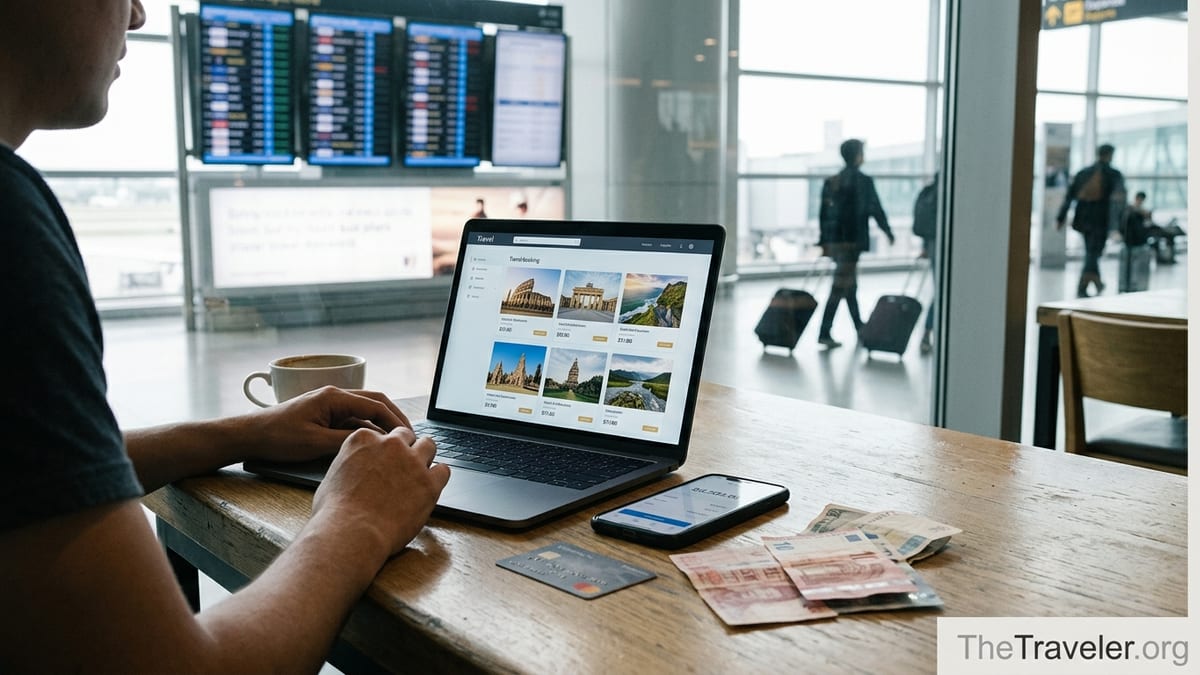
The difference between sticker price and what hits your card
When you open the Klook app and search, for example, for a Tokyo Skytree ticket or a Greater Tokyo attraction pass, you typically see a clean headline price in your chosen currency, such as 36 US dollars or the equivalent in yen. That number is based on Klook’s internal exchange rate and the price it has negotiated with the local operator. It does not reflect what your bank or card issuer will ultimately charge if your payment is processed internationally or in a foreign currency.
Klook itself states that it does not add an extra handling fee on top of the price you see at checkout. In practice, though, many travelers notice that the amount posted to their credit card differs slightly from the app total. This is usually because the payment is settled in a different currency behind the scenes and converted by your bank. For a US traveler paying for a Hong Kong airport transfer, for instance, Klook may show a total of 40 US dollars, but the charge that appears on your statement could be 41 or 42 dollars after currency conversion and bank fees.
On relatively small bookings this discrepancy can be only a dollar or two and easy to ignore. On big purchases such as a Greater Tokyo multi attraction pass for a family of four, or several regional train tickets, a 3 percent uplift becomes meaningful. If your cart totals the equivalent of 600 US dollars, a typical bank foreign transaction fee can easily add 18 dollars or more on top, and that is before any dynamic currency conversion markups if you choose the wrong option at checkout.
The key point is that the apparent saving you see when comparing Klook to an official ticket office or another booking site only becomes real after you factor in the extra charges your bank layer onto the transaction. Two prices that look 5 dollars apart in the app can end up almost equal once your statement closes.
Foreign transaction fees and dynamic currency conversion traps
Most of the invisible costs around Klook bookings come not from Klook itself but from how your bank handles foreign payments. Many US credit cards still charge a foreign transaction fee, often around 3 percent of the converted transaction amount, whenever you buy something in a non US currency or the payment routes through a non US bank. For a 200 dollar theme park ticket bundle in Singapore, that fee alone could add about 6 dollars.
Another layer that catches Klook users off guard is dynamic currency conversion, usually shortened to DCC. This is when a payment processor or bank converts a foreign currency amount into your home currency at checkout and shows you a total in dollars, euros or another familiar currency. It can feel reassuring to see “You will be charged 210 US dollars” instead of a figure in yen or Singapore dollars, but the embedded exchange rate is often several percent worse than what your card network would have used if you had simply paid in the local currency.
Because Klook caters to a global audience, it often lets you toggle between currencies and can show you totals in your home currency even for attractions in another country. Travelers on forums have reported that when they chose to pay in their home currency for a Dubai or Singapore activity, their bank treated it as a dynamic currency conversion and added its own fee on top. The combined effect of a DCC markup and a 3 percent foreign transaction fee can quietly push the real cost 5 to 7 percent higher than the sticker price.
In practical terms, a US traveler booking a 500 Singapore dollar bundle of activities might see an equivalent of around 370 US dollars in the Klook app. If they accept a DCC style offer and their bank then levies its own foreign fee, the final cost on the statement could end up closer to 390 dollars. That 20 dollar gap is the kind of hidden cost that quickly erodes the savings that drew people to Klook in the first place.
Currency settings inside Klook and how they affect you
Klook lets you change the display currency from the profile or settings area, and many travelers default to their home currency so that prices feel intuitive at a glance. There is an important distinction, though, between the currency in which Klook displays prices and the currency in which your payment is actually processed. Even if you see Indian rupees or US dollars in the app, for example, the underlying transaction might still be processed in Hong Kong dollars, Singapore dollars, or another settlement currency depending on where Klook routes the payment.
This means that simply seeing your home currency on screen does not guarantee that your bank will treat the transaction as domestic or fee free. A traveler using an Indian credit card, for example, might think that selecting rupees in the app avoids any foreign charges, only to discover a separate dynamic currency conversion line item on their card statement later because the payment was processed abroad. Similarly, a US traveler with a no foreign transaction fee card can safely ignore conversion costs, but someone using a debit card with a 3 percent markup will feel the difference.
Another nuance is that Klook’s internal exchange rates are not necessarily identical to the real time interbank rate. They are usually in a reasonable range, but if your card has no foreign transaction fees and you are comfortable with foreign currencies, you may get a better deal by setting Klook to display and charge in the local currency of the activity, such as Japanese yen for a Tokyo city pass or Singapore dollars for a Universal Studios Singapore ticket, and then letting your card network handle the conversion.
A sensible workflow is to check roughly what the activity costs in its native currency, compare it to what Klook quotes in your home currency, and then choose the option that keeps your bank from adding extra layers of conversion. For many US based travelers, that means pairing Klook with a travel credit card that has zero foreign transaction fees and always paying in the local currency of the activity rather than defaulting to the comfort of a home currency total.
Cancellation policies, refund fees and timelines
Even travelers who diligently compare prices can be tripped up by cancellation rules and refund related charges. Klook acts as an intermediary, so the cancellation policy for a given activity or pass depends heavily on the local operator. Some tours and attraction tickets are fully refundable up to a cut off point, others carry tiered cancellation fees, and some are strictly non refundable from the moment you confirm the booking.
A typical example is a regional bus or train ticket bought through Klook. One recent policy for certain tickets allowed a full refund if you cancelled within a short window after booking and up to two days before departure. Cancel between one day and one hour before departure and a 5 percent cancellation fee applied. Cancel in the final hour and the fee rose to 10 percent, while cancelling after departure cut the refund down to 70 percent or eliminated it entirely. Although the exact percentages vary by product and route, this kind of sliding scale is common.
Attraction bundles and city passes often carry even stricter rules. A multi day Greater Tokyo pass that includes admission to several major attractions may be non refundable once you have activated or used any part of it. Even before activation, some passes have fees that increase the closer you get to the first valid date. Hotel bookings made through Klook can also mirror standard hotel policies, which frequently mean one night’s charge or more if you cancel inside the property’s cancellation window.
On top of the operator’s cancellation fee, there can be differences in how quickly your money comes back to you. Klook typically initiates refunds back to your original payment method, but bank processing times can stretch from a few days to nearly two weeks. If you have partly paid with platform credits and partly with cash, the refund often arrives in that same mix, which can leave you with residual credits to use on a future trip instead of a full cash return.
No show protection, add ons and optional extras
Another cluster of costs many travelers do not notice until they appear at checkout are add ons such as no show protection and optional insurance like coverage for late arrivals or missed activities. Klook offers a product sometimes called a no show refund upgrade on certain activities, which you can add for a small percentage of the booking value. If you then completely miss the activity and your claim is approved, Klook returns a set portion of the activity cost, often around 60 percent, while keeping the fee for the upgrade itself.
For example, if you book a 100 US dollar activity and add a no show protection option for 4 dollars, then miss the tour because your flight is severely delayed, you might receive around 60 dollars back after your claim. The 4 dollar upgrade is non refundable regardless of outcome. For some travelers, especially those on tight connections or booking early morning airport transfers, that trade off is reasonable. For others with flexible itineraries or low risk activities, it may simply be an unnecessary extra cost.
There can also be service style add ons within individual activities, such as meal vouchers, hotel pick up, or priority access. A standard attraction ticket might be 30 dollars, but a ticket with hotel transfer, reserved timeslot, and lunch included could jump to 70 or 80 dollars per person. Klook usually displays these as separate options within the same listing, which makes comparison easy, but it is still worth checking what you realistically need. For instance, in a city like Singapore where public transit is excellent, paying a significant premium for hotel pick up to an easily accessible attraction may not be money well spent.
Travelers should also pay attention to language around taxes and local fees. Some tours in destinations like the Philippines, Indonesia or certain European cities require visitors to pay a small environmental or city tax on the day, in cash, even if the base tour price was prepaid on Klook. A snorkelling trip that looks like 50 dollars all in might come with a separate marine park fee or harbour charge payable on arrival. These extras are usually mentioned in the fine print of the activity description but are easy to skim past when you are rushing to lock in a good time slot.
Account credits, coupons and loyalty points
Klook frequently runs promotions involving coupons, promo codes and KlookCash credits, especially in the lead up to major travel seasons or anniversaries. These can meaningfully reduce your upfront cost, but they also add complexity when it comes to refunds, partial cancellations and membership progress. If your booking is partly paid with cash and partly with credits or a coupon, Klook generally refunds in the same proportions. That can mean you get less actual cash back than you expected if a trip falls through.
Imagine you book a 200 dollar theme park day for your family using 50 dollars in platform credits and 150 dollars on your card. If you later cancel within the free cancellation window, Klook might send 150 dollars back to your card and restore 50 dollars of credits to your account. That can be perfectly fine if you plan to use Klook again soon, but if you were hoping for a full cash refund to your bank account, the split can feel restrictive.
Loyalty points and membership tiers add another subtle layer. Some policies specify that if you fully cancel a booking, the amount no longer counts toward your progress to the next membership tier, and any refund fees are excluded entirely from points calculations. If you partially cancel an activity but still participate in part of it, only the remaining amount used typically counts. For travelers trying to build up status benefits through a series of bookings, this can influence whether they consolidate activities in one big booking or spread them out over separate purchases.
Coupons can have their own conditions, such as minimum spend, applicable regions, or product exclusions like concert tickets, high demand events or certain rail passes. When comparing platforms, it is easy to focus purely on the headline discount percentage without noticing that a particular 10 percent off coupon does not apply to the big ticket item you had planned to buy. Always check the fine print on offers and mentally separate guaranteed discounts from those that only apply in specific circumstances.
How to minimize surprise costs when using Klook
For most travelers, Klook still offers genuine value when used carefully. The goal is not to avoid the platform but to be deliberate about how you book. The first step is to use a payment method that keeps international fees under control. If you travel regularly, consider a credit card with no foreign transaction fees so that the exchange rate you see from the card network is as close as possible to the market rate, without an extra 3 percent padded on top.
Next, pay attention to the currency options at checkout. Where possible, set prices to display and settle in the local currency of the activity, especially if you have a fee free card. Decline any prompts from your bank or payment interface that offer to convert the charge into your home currency at a fixed rate. Even though it feels safer to see a number in dollars or euros, allowing your own bank or card network to handle conversion usually costs less in the end.
Before finalizing a booking, read the cancellation and refund terms specific to that activity, not just Klook’s general policy. Note any sliding scale of fees, cut off times for free cancellation, and whether partial refunds are possible after the start date. For big ticket items such as rail passes, attraction bundles or multi day tours, consider whether paying a little more for a flexible fare through another channel might be better value than a non refundable bargain that locks up hundreds of dollars.
Lastly, treat add ons and protections like no show upgrades, insurance and transfers as optional rather than default. Ask yourself if you would still book the activity without them, and whether there are cheaper ways to cover the same risks, such as a separate travel insurance policy or public transport instead of hotel pick up. With a clear view of how currency, bank fees and policy details interact, Klook can remain a powerful tool for stretching your travel budget instead of a source of surprise charges.
FAQ
Q1. Does Klook itself charge a booking or handling fee on top of the advertised price?
Klook states that it does not add an extra handling fee on top of the price you see at checkout. However, your bank may still charge foreign transaction fees or apply an unfavourable exchange rate if the payment is processed in a foreign currency.
Q2. Why is the amount on my credit card different from the total shown in the Klook app?
The most common reason is currency conversion by your bank. Even if Klook displays a total in your home currency, the transaction may be processed abroad, and your bank can convert the amount at its own rate and add a foreign transaction fee.
Q3. How can I avoid dynamic currency conversion charges when paying for Klook bookings?
Where possible, choose to pay in the local currency of the activity rather than your home currency, and use a card with no foreign transaction fees. Decline any prompts from your bank or payment gateway that offer to convert the total into your home currency at the point of payment.
Q4. Are all Klook bookings refundable if my plans change?
No. Refundability depends on each activity’s individual policy. Some tickets are fully refundable up to a certain time before use, others carry sliding cancellation fees, and many discounted or high demand products are completely non refundable once booked.
Q5. What happens to my Klook credits or coupons if I cancel a booking?
If you paid with a mix of cash and credits or coupons, refunds usually follow the same mix. Cash goes back to your payment method and credits or coupon value returns to your Klook account, often with the same original expiry conditions.
Q6. Is Klook’s no show protection or refund upgrade worth buying?
It depends on the activity and your risk tolerance. The upgrade costs an extra fee that is non refundable, but it can return a portion of your activity cost if you completely miss the booking and your claim is approved. For critical one off activities it may be useful; for low risk plans it might be unnecessary.
Q7. How long do Klook refunds take to appear on my card or bank statement?
Once Klook approves and processes a refund, the timing depends on your bank or card issuer. Many travelers see refunds within a few business days, but it can take up to roughly two weeks for the credit to fully post.
Q8. Do Klook bookings help me earn status or points on the platform if I later cancel?
Generally, only completed and non refunded portions of bookings count toward membership progress. If you fully cancel, the amount is often removed from your progress, and any refund related fees usually do not earn points at all.
Q9. Are there extra local taxes or fees I might have to pay on the day of the activity?
Some tours and activities require separate local fees, such as city taxes, harbour charges or environmental levies, that must be paid directly on site. These are typically mentioned in the activity description but are not included in the prepaid Klook price.
Q10. Is it always cheaper to book through Klook than to buy tickets directly?
Not always. Klook often secures attractive rates or bundles, but once you factor in your bank’s fees, the exchange rate and any differences in flexibility, buying directly from the attraction, transport operator or another platform can sometimes be comparable or better value.