


Klook has become a go-to platform for travelers booking attraction tickets, rail passes, day tours, airport transfers and even hotels. Used carefully, it can save you money and time compared with buying on the spot. Booked in a rush, though, it can lock you into non-refundable dates, blocked promo codes or unexpected fees that are difficult to undo once you hit pay. Before you commit your next theme park day or Japan rail ticket to the app, it is worth understanding the most common pitfalls and how to avoid them.
Get the latest updates straight to your inbox!
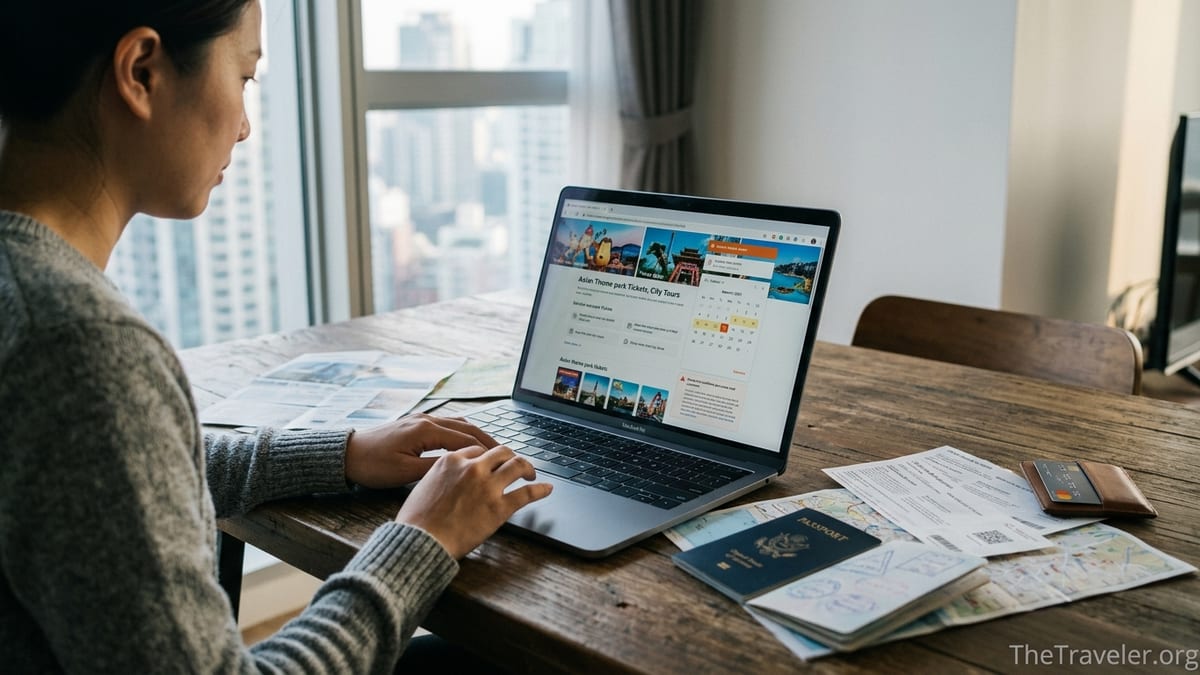
Not Reading the Cancellation and Refund Rules for Each Activity
One of the easiest mistakes to make on Klook is assuming that all bookings follow the same cancellation policy. In reality, every listing has its own rules set by the local operator and displayed in the “Cancellation policy” section of the activity page and later on your voucher. Klook’s own help pages highlight that some activities allow free cancellation, some offer conditional refunds, and others are strictly non-refundable once booked. That means two similar-looking tickets, such as entrance to a Hong Kong theme park and a Bangkok river cruise, can behave very differently if your plans change at the last minute.
Consider a traveler buying a discounted open-date ticket to a popular observation deck in Tokyo. The listing might advertise “Instant confirmation” and a good price, but the fine print may clearly state “No cancellation” with no refunds after payment. If bad weather rolls in on your chosen day, you will still be stuck with a ticket you cannot move or refund. By contrast, some city passes or attraction bundles, such as Klook Pass Los Angeles, highlight “Free cancellation before redemption” and give you a window to cancel up to 24 or 48 hours before the first activity, as long as you have not yet used the pass.
The same nuance applies to transport products. A regional train ticket or bus pass sold on Klook might show a sliding scale of cancellation fees that increase as departure time approaches. For example, a ticket could be fully refundable up to two days before departure, partially refundable with a small fee within 24 hours, and non-refundable once the scheduled arrival time has passed. If you book blindly assuming you can always claim a full refund, you risk losing most or all of your payment when you later adjust your itinerary.
Before you book, pause on the activity page and scroll deliberately to the cancellation section. Check whether the listing explicitly says “Free cancellation” and, if so, exactly how many hours before the scheduled start you have to cancel. If the words “No cancellation” or “Non-refundable” appear, treat the purchase like a final sale and only proceed if you are comfortable with that risk. Taking 30 seconds to verify this per item is one of the most effective ways to avoid costly disappointment later.
Overlooking Date, Time and Voucher Validity Restrictions
Another frequent booking error is misunderstanding how dates and validity periods work on Klook. Some tickets are tied to a fixed date and time, while others are open-date vouchers that can be used anytime within a set validity window. The two operate very differently in practice. Klook’s own booking guides explain that open-date tickets allow you to redeem your voucher on any date within the stated period, but many headline attractions and transport services still require you to lock in a specific date and time at checkout.
A practical example is a city attractions pass, such as a Klook Pass for San Diego or Los Angeles. The pass itself might need to be activated within a certain number of days after purchase, for instance within 60 days, and once activated you might have 30 or 90 days to visit the included attractions. On top of that, each individual activity within the pass can have separate availability constraints. Some popular tours or theme park days sell out on weekends and holidays, meaning that a traveler who activates the pass late in their trip and then tries to book same-weekend slots may find nothing left that fits their schedule.
The risk is similar with timed-entry tickets. A family booking morning admission to a studio tour may accidentally select the wrong date or time in the app, especially when switching between time zones. If they do not notice the error on the voucher and the ticket is non-changeable, they can arrive at the gate only to be told their booking was yesterday or for the afternoon slot instead of the morning. In high-season destinations like Osaka, Seoul or Paris, operators are often strict about honoring the exact time on the QR code.
Before paying, always double-check that your dates in Klook match your actual travel plans, including time zone differences for flights that cross the international date line. For open-date vouchers, note the final day you can use the ticket and consider building your itinerary so that you do not leave redemption to the last possible day. Screenshot or save the validity details somewhere you can access offline, since you may not have constant data when you arrive at the attraction.
Misusing Promo Codes, Bank Deals and KlookCash
Many travelers head to Klook precisely because they have seen a promo code on social media, in a bank newsletter or on a Reddit thread. The catch is that these discounts are surrounded by fine print. Klook’s own support pages state clearly that promo codes and KlookCash must be applied before completing payment, and that once the transaction is done there is no way to retroactively add a code. If you forget, the only workaround is canceling and rebooking, and that is only possible when the underlying activity is refundable and you are still within its free-cancellation window.
In 2026, one of the more widely discussed generic codes is ICHIKLOOK, which travel bloggers describe as giving a modest percentage off eligible activities and hotels, often with a one-time-use condition and a maximum discount cap. Travelers regularly report that the code only works when entered correctly in the “Platform Promo Code” field and only on eligible products that meet the minimum spend. If you try to apply it to a deeply discounted flash sale or a blacklisted activity, the system simply refuses the code, leaving some users confused at checkout.
Bank-specific deals add another layer. A credit card campaign might advertise “20 percent off at Klook” for hotel bookings during a certain quarter, but the terms often mention that the promo is not applicable to blacklisted activities, cannot be stacked with other platform promotions, and may have strict date ranges. A traveler who books on the app using a different card, or who selects a tour labeled as excluded, can end up paying full price even though they thought the offer would apply. Similarly, Klook’s own welcome offers and referral bonuses usually specify that they are for first bookings only and limited to particular regions or product types.
Before relying on any promo, slow down and do three checks. First, confirm your account eligibility, such as whether you are a new or existing user and whether your Klook region (for example, United States or Singapore) matches the promotion. Second, verify that the specific listing you want is not on a non-applicable activities list or already part of another promotion that blocks stacking. Third, key the code into the correct field at checkout and make sure the reduced total appears on screen before you hit pay. If no discount appears, treat it as full price and decide whether the booking still makes sense without the promo.
Ignoring Price Differences Across Platforms and Devices
Another subtle trap lies in the way Klook displays prices in its app versus on its desktop site, and even in different currencies. Travelers on forums occasionally report noticing large discrepancies when they compare the same hotel or activity side by side on a laptop and on the mobile app. In one example, a user planning a stay in Southeast Asia saw a significantly lower nightly rate inside the Klook app compared with the website for identical room types and dates. Others have shared the opposite: an activity appearing cheaper in a foreign currency on the web, once converted, than the same listing in their home currency in the app.
These variations typically come from a mix of dynamic pricing, regional campaigns and currency conversion practices. The app may quietly apply an in-app only promotion to encourage mobile bookings, while the website shows the base rate. Exchange rate assumptions can also change how prices look. If you pay in Japanese yen versus United States dollars, Klook’s internal exchange rate, plus any spread your bank or card issuer adds, will influence the final effective price. A ticket that appears to be a small bargain in local currency can actually be more expensive once your card converts it and adds an international transaction fee.
Because of this, booking impulsively from the first screen you see can mean missing an easy saving. Before you confirm, compare the same booking in at least two views: the Klook app and the browser, and ideally at least two currency choices if your account allows you to switch. Check whether the price is genuinely lower after conversion, not just in appearance. If you hold a credit card that waives foreign transaction fees, it may be cheaper to book in the activity’s local currency; if not, sticking with your home currency might still be safer even if the sticker price looks slightly higher.
This cross-checking takes only a few minutes and can be especially worthwhile for big-ticket items like multi-day rail passes, expensive theme park bundles or longer hotel stays. For a family spending several hundred dollars on Tokyo Disney, Universal Studios or a series of Shinkansen tickets, a 5 to 10 percent difference between app and web pricing quickly adds up to meaningful money.
Underestimating Capacity Limits, Time Slots and No-show Terms
One of Klook’s selling points is the ability to secure spots for popular experiences in advance, but that only works if you respect capacity limits and no-show rules. Many of the highest-demand activities on the platform, from small-group food tours in Osaka to skip-the-line Venice gondola rides, strictly limit headcount. The activity pages often warn that some popular dates sell out quickly and that reservations must be made days or weeks in advance. Travelers who wait until the last moment to lock in time slots can find their ideal departure fully booked, especially on weekends and holidays.
No-show policies are another area that can surprise travelers. Some Klook products offer optional add-ons like a no-show protection or refund package with their own terms, often stating that these add-ons are non-refundable and non-transferable once confirmed. Even without such extras, many operators treat a no-show as a completed service: if you miss your airport transfer pickup at Seoul’s Incheon Airport or arrive late for your guided tour in Rome, the voucher is considered used and no refund applies. Klook’s own guidance usually notes that once an activity is successfully completed, or if the scheduled time has passed under certain policies, no refund is available.
Real-world consequences show up when flights are delayed or travelers underestimate transit times. For instance, a couple landing in Manila might schedule their Klook airport transfer too close to their flight’s arrival time, not accounting for immigration queues. By the time they emerge from the terminal, the driver has left, the booking is marked as a no-show, and rebooking costs them the full fare again. With train tickets, if you cancel after the scheduled arrival time, some policies reduce or eliminate refunds entirely, leaving only a small portion of the fare recoverable at best.
To avoid this, build generous buffers into your bookings. Choose airport transfers scheduled at least an hour or more after your stated landing time, particularly in busy hubs. For timed attractions, aim for slots that allow for local traffic, possible transit delays and security lines. Read the operator’s instructions about check-in times, meeting points and grace periods carefully, and save their contact details in case you need to alert them about a delay. In practice, a five-minute review of these terms can be the difference between a relaxed arrival and a costly missed connection.
Skipping Operator Details and Special Conditions
Travelers sometimes forget that Klook is a marketplace: the company acts as an intermediary between you and hundreds of different local operators. Each operator can impose its own age limits, ID requirements, voucher usage rules and additional conditions, and these sit inside the long description and “Important information” sections that are easy to skip. Ignoring these details can lead to awkward scenes at check-in or even outright refusal of service.
Event tickets are a clear case. A festival or concert sold through Klook might state that all e-vouchers are non-refundable and non-transferable, that they are unique to each buyer, and that valid government-issued photo ID must match the name on the voucher. It may specify age restrictions, such as entry only for guests over 18, or rules on re-sale and changes. A traveler who casually enters a nickname or forgets their passport at the gate can discover that staff refuse entry without refund, since the terms allow the organizer to do so.
Accommodation and staycation offers can carry equally strict rules. A hotel promotion in the Philippines, for example, might mention that vouchers are non-refundable but rebookable within certain dates, and that due to local regulations only guests between specified ages are allowed to check in. If you book a stay for a relative or friend without reading those conditions, you may find that the property declines the booking or requires extra documentation at arrival. Likewise, some deals mention mandatory deposits, resort fees or government taxes payable directly at the property, which means the price you see on Klook is not the final amount you will pay.
Before confirming any booking, scroll through the activity page until you reach the operator’s detailed terms. Look for age limits, ID requirements, dress codes, health restrictions and extra on-site fees. Pay attention to wording around non-transferable vouchers, as this affects whether you can give tickets to someone else or change the lead traveler’s name. If anything is unclear, it is better to ask Klook support or the operator a question before paying than to argue about terms at the door.
The Takeaway
Booking through Klook can be a smart way to organize a trip, bundle attractions and tap into occasional discounts that are difficult to access directly. Yet the same convenience that makes it attractive also makes it easy to rush, tap through several screens and accept terms you have not really read. The most common mistakes are subtle, often involving assumptions about cancellation, validity, promo codes and operator rules that do not hold up once something in your plans changes.
If you treat every listing on Klook as a separate contract, you will naturally slow down enough to spot the crucial details. Check the cancellation policy on each activity, verify all dates and time slots, compare prices across devices and currencies, and only apply promo codes once you see the discount reflected on the final amount. Pay particular attention to no-show rules, age limits, identification requirements and any extra fees payable on arrival.
In practice, these habits turn Klook from a potential source of frustration into a useful, money-saving tool. Travelers who approach the platform with the same care they would use for flights or hotel bookings tend to come away with solid deals, fewer surprises and a smoother overall trip. A few extra minutes before you tap pay is far cheaper than trying to fix a non-refundable mistake once your voucher is already in your inbox.
FAQ
Q1. Is Klook a legitimate company to book travel activities and tickets?
Klook is a well-known online travel platform that partners with local operators worldwide to sell attraction tickets, tours, transport and hotels. It is generally considered legitimate, but the quality of your experience depends heavily on the individual operator you book and how carefully you read each activity’s terms and conditions.
Q2. Can I get a refund on a Klook booking if my plans change?
It depends entirely on the cancellation policy of the specific activity. Some listings allow free cancellation up to a set number of hours before the start time, some permit partial refunds with fees, and others are strictly non-refundable. Always check the cancellation section of the activity page before you pay.
Q3. What happens if I forget to apply a promo code or KlookCash?
Once you complete payment, Klook does not allow you to retroactively add promo codes or KlookCash. If your booking is refundable and still within the free-cancellation window, you may cancel and rebook with the code, but for non-refundable activities there is no way to recover the discount afterward.
Q4. Why does my Klook promo code say it is invalid or not applicable?
Promo codes often fail because the booking does not meet the promotion’s rules. Common reasons include trying to use the code on excluded activities, not reaching the minimum spend, using it on an ineligible account type, or entering it in the wrong field. Check the campaign’s terms and only pay once you see the discount applied to your total.
Q5. Are prices on the Klook app different from the website?
They can be. Klook sometimes runs app-only promotions or regional campaigns that change how prices appear between devices and currencies. Before booking high-value items like rail passes or theme park bundles, compare the same listing in the app and on the website, and consider how currency conversion and your bank’s foreign transaction fees affect the final amount.
Q6. How can I avoid losing money on no-shows or missed activities?
To reduce the risk of no-show fees, build extra time into your schedule for airport transfers and timed activities, read the operator’s instructions about meeting points and grace periods, and keep their contact details handy. If your booking allows free or partial cancellation up to a certain time, make changes before that deadline rather than hoping for leniency after you miss the activity.
Q7. Can I transfer my Klook voucher to someone else?
Many vouchers, especially for events and some promotions, are explicitly non-transferable and tied to the name of the original buyer. Others may allow you to enter the actual traveler’s details at booking. Check the operator’s terms on the activity page; if vouchers are listed as non-transferable or requiring matching ID, you should not assume you can give them to another person.
Q8. Why is my Klook booking non-refundable even though I never used it?
Some tickets are sold on a strictly no-cancellation basis regardless of whether you redeem them. If the listing states “No cancellation” or similar wording, the booking is typically non-refundable from the moment of confirmation, even if you do not use the voucher or attend the activity. This is particularly common for certain event tickets, transport products and peak-season theme park entries.
Q9. Does Klook cover extra fees like resort charges or local taxes?
Not always. Some hotels and activities list separate charges such as resort fees, security deposits or local government taxes that must be paid directly on arrival. These may not be fully reflected in the Klook price shown at checkout. Reading the “Important information” and fine print for each listing is essential so you can budget for any on-site costs.
Q10. How far in advance should I book popular attractions on Klook?
For high-demand experiences such as major theme parks, small-group tours and seasonal events, it is wise to book at least several weeks in advance, especially for weekends and holidays. Activity pages often warn when dates are likely to sell out. Booking early gives you a better choice of time slots and reduces the risk that your preferred day will be unavailable when you finally try to reserve it.