


On summer weekends, New Jersey’s oceanfront can feel like one long traffic jam of beach chairs, pizza boxes, and neon boardwalk signs. Yet just across the bridge from Atlantic City’s flashing casinos, Brigantine keeps a quieter kind of coastal life. Here, tidal marshes outnumber tiki bars, the soundtrack is more laughing gulls than loudspeakers, and the best views often have no buildings in them at all. For travelers willing to trade some spectacle for space, Brigantine is where the side of the Jersey Shore most tourists never see quietly carries on.
Get the latest updates straight to your inbox!
A Barrier Island That Chose a Different Path
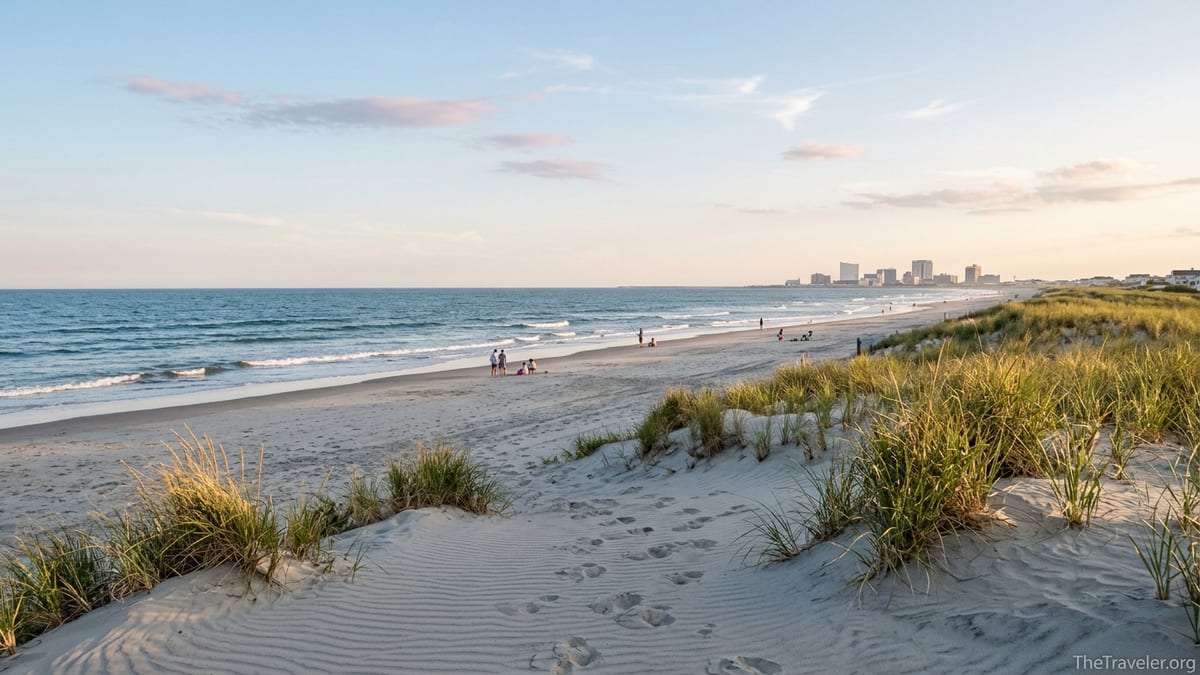
Brigantine sits immediately north of Atlantic City, connected by a single causeway, but the two places feel worlds apart. While Atlantic City doubled down on casinos, high-rise hotels, and a famous boardwalk, Brigantine evolved into a low-key residential island with relatively sparse commercial strips and long stretches of uninterrupted sand. Local guides often describe it as “minutes from the casinos, miles away in pace,” and that contrast is exactly what many repeat visitors come for.
Instead of a dense strip of motels and arcades, you find mostly homes and low-rise condos, a modest town center with a few cafes and pizzerias, and just a handful of beachfront dining spots. A simple comparison makes the point: in peak summer, finding elbow room on the sand in nearby casino beach zones can be a minor sport. On Brigantine, especially north of the main guarded beaches, you can still walk for several minutes before passing another beach umbrella.
This slower development has kept Brigantine firmly in the “family town” category. There is no boardwalk, no amusement pier, and nightlife is intentionally subdued. A night out might mean grabbing seafood on an outdoor deck, catching live acoustic music at a laid-back bar, and then listening to the surf from a rental porch. For travelers drained by crowds in Seaside Heights or Wildwood, that simplicity is the main attraction.
All of this has another, less obvious payoff: Brigantine still feels like a barrier island shaped by wind, tides, and birds as much as by real estate. Dune lines remain intact in many places, salt marshes wrap the bay side of the island, and the northern end transitions into federally protected land where development simply stops.
The Wild North End and Forsythe Refuge
Drive to Brigantine’s northern tip and the Jersey Shore looks very different from the busy promenades many visitors know. Pavement gives way to sandy access paths and wooden viewing platforms, beyond which the North Brigantine Natural Area and the Brigantine division of the Edwin B. Forsythe National Wildlife Refuge take over. Here the island is mostly dunes, beach, and marsh, with strict limits on what can be built or driven.
The refuge, managed by the U.S. Fish & Wildlife Service, protects tens of thousands of acres of coastal habitat in southern New Jersey, and Brigantine forms its southern gateway. The marshes, shallow bays, and barrier beach here are important stops along the Atlantic Flyway for migrating shorebirds and waterfowl. In late summer and early fall, patient visitors with binoculars might spot flocks of sandpipers and plovers working the tide line, or ospreys hovering above the shallows hunting for fish.
Public access on the most sensitive beaches is sometimes restricted during nesting season for rare species like the piping plover. Visitors will see signs and roped-off areas, a reminder that this is first and foremost a wildlife refuge rather than a recreational park. Those protections are one reason Brigantine’s north end feels so unusually undeveloped. You can park at a viewing platform, step out, and face a horizon of dunes and ocean without a high-rise in sight.
For travelers used to boardwalk culture, this shift can be surprisingly moving. Instead of standing in line for rides, you might find yourself watching a great blue heron stalking in a marsh channel as the sun sets, with only the distant rumble of the Atlantic City Expressway faintly audible behind you. It is the rare part of the New Jersey coast where the wild landscape still clearly sets the terms.
Empty Beaches, Gentle Crowds, and The Cove
Brigantine’s main guarded beaches have the expected summer bustle: families under pop-up tents, teenagers tossing footballs at the waterline, surf lessons setting up near the jetty. Yet even close to town, crowds tend to thin out more quickly than in bigger resort communities. Walk a few blocks north or south of the most popular access points and you often gain several meters of personal space between towels, even during July weekends.
One of the island’s singular spots is The Cove, a broad curve of sand at the island’s southern tip facing Atlantic City’s skyline. Accessible on foot from the south-end parking area and by four-wheel-drive vehicle with a beach permit, The Cove feels different from the oceanfront. On calm days the water can be more protected, making it popular for families with paddleboards and inflatables, while anglers set up near the inlet channels to cast for flounder, bluefish, or striped bass in season.
In the late afternoon, The Cove becomes a kind of informal gathering place. Locals back their permitted SUVs and trucks onto the sand, set up grills and beach chairs facing west, and watch the sun drop behind Atlantic City’s high-rises. Instead of nightclub bottle service, you are more likely to see families sharing coolers, kids building sandcastles near the tire tracks, and neighbors greeting each other between tailgate setups.
Visitors considering the 4x4 option should know that Brigantine enforces permit rules and expects drivers to air down tires and respect tidal patterns. The island’s social media occasionally circulates photos of overconfident visitors who backed luxury vehicles too close to the incoming tide. For those who would rather leave the driving to others, simply walking to The Cove from the parking area still delivers the same quiet inlet views.
Back Bays, Kayaks, and Everyday Island Life
Most tourists sticking to the main highways never see Brigantine’s bay side, where the island reveals another face. Narrow residential streets end in pocket parks and docks facing a maze of marsh creeks. On summer mornings, residents carry kayaks to the water or wheel them on small carts to public ramps, slipping into the glassy back bays long before the ocean crowds wake up.
Several local outfitters rent kayaks and stand-up paddleboards, typically by the hour or half-day, so visitors can explore without bringing their own gear. A common route is to launch from a bayfront dock, then paddle along the island’s edge, watching diamondback terrapins pop their heads above the surface and egrets feed along the marsh fringe. On still evenings, paddlers often turn to face the casino lights flickering on across the channel, enjoying the contrast between the quiet water and the glowing skyline.
Because Brigantine is primarily residential, daily life for visitors revolves around things like the community farmers market, held seasonally in the parking lot of the local school, and small clusters of restaurants along Brigantine Avenue. Instead of chain-heavy commercial strips, you find a handful of breakfast spots serving egg sandwiches wrapped in foil, seafood shacks offering local catch when available, and taverns where staff know most of the regulars by name.
Grocery runs, surf-shop visits, and bike rentals all happen within a small, human-scale grid. It is common to see kids riding beach cruisers with fishing rods strapped to the frame, or parents towing coolers behind wagons on the way to the sand. For travelers used to more heavily programmed resort experiences, this do-it-yourself rhythm can feel refreshingly unstructured.
Practicalities: Getting There, Staying, and Beach Logistics
Reaching Brigantine is straightforward but comes with one unavoidable quirk: the only road on and off the island is the Brigantine causeway through Atlantic City. Drivers coming from the Garden State Parkway typically exit near Atlantic City, thread past the casinos and outlet malls, and then cross the low bridge over the bay. In peak summer, traffic can stack up at predictable times, especially Sunday afternoons when weekenders head home, so planning arrivals and departures for early morning or late evening can save time.
Once on the island, lodging skews to vacation rentals and small motels rather than large resort hotels. Summer weekly rentals range widely depending on proximity to the ocean, size, and amenities, from modest two-bedroom condos to multi-level houses near the dunes. Travelers who prefer traditional hotels often choose to stay in Atlantic City and drive or rideshare to Brigantine’s beaches during the day, combining Brigantine’s low-key shoreline with casino entertainment at night.
Brigantine uses seasonal beach tags for access to guarded ocean beaches in summer, which can be purchased on the island at kiosks and municipal offices. Parking near popular entrances is a mix of free street parking and municipal lots with posted rules. Four-wheel-drive beach use, including access to The Cove and certain fishing areas, requires a separate permit from the city and compliance with tire pressure and equipment guidelines. Visitors should plan ahead, since permits often must be obtained in person and safety gear such as tow straps and boards may be required.
Surfing, fishing, and other specialized activities are governed by local zones and state regulations. Surf breaks near the jetty draw a dedicated local community, and visiting surfers are expected to respect posted areas and lifeguard instructions. Anglers should review New Jersey saltwater licensing requirements and seasonal restrictions, especially when targeting popular species like striped bass. In all cases, Brigantine’s relatively uncrowded nature depends on people spreading out and sharing space thoughtfully.
Seasons of Solitude: Why the Off-Season Matters
Summer may be when Brigantine fills most of its rental houses, but the island’s character is easiest to appreciate in the shoulder seasons. In late April and May, dunes green up, shorebirds migrate through, and daytime temperatures often invite beach walks in light layers rather than swimsuits. By June the ocean may still be brisk, yet the sand is warm enough for long, empty strolls, especially on weekdays.
After Labor Day, when many Jersey Shore towns noticeably quiet down, Brigantine becomes even more relaxed. September and early October often bring some of the year’s best weather, with warm days, cool nights, and water that retains summer heat. Local restaurants typically stay open, but wait times shrink dramatically. It is during these weeks that you are most likely to have wide sections of beach nearly to yourself, with only a few dog walkers and anglers punctuating the horizon.
Winter strips things back further. On clear, cold days, you might see only a handful of people on the entire oceanfront, bundled in parkas and walking into a northwest wind. The payoff is a sense of scale that is hard to find in July: wind-carved patterns in the sand, distant container ships crawling along the horizon, and, on some mornings, frost glinting on the marsh grasses of the bay. For many year-round residents, this solitude is not a downside but the reason they stay.
For travelers who can be flexible with dates, planning a long weekend in late fall or early spring can reveal Brigantine at its most authentic. Rental rates often drop outside of peak season, and roads and parking become simpler. The trade-off is that some seasonal businesses shorten their hours or close, so it helps to confirm restaurant and shop schedules ahead of time.
Beyond the Beach: Simple Pleasures and Nearby Contrasts
Because Brigantine lacks a boardwalk and amusement rides, entertainment pivots to low-key, everyday pleasures. Mornings might start with coffee from a local bakery carried out to a dune crossover, followed by shell collecting on an uncrowded stretch of shore. Afternoons could mean flying kites in the steady ocean breeze, biking the flat length of the island, or watching surfers from a beach chair near the jetty.
On select summer Saturdays, the farmers market becomes a social anchor. Local growers bring Jersey tomatoes, sweet corn, and berries, while small-batch vendors sell everything from soaps to pastries. It is as much about chatting with neighbors and listening to live acoustic music as it is about shopping. Visitors staying in rentals often plan meals around their market haul, grilling vegetables on small decks while the sound of distant waves carries over the roofs.
When you do crave more stimulation, Atlantic City is just across the bridge. In a single afternoon, you can go from photographing egrets in a Brigantine marsh to walking a busy casino boardwalk lined with souvenir shops, bars, and concert venues. This proximity makes Brigantine uniquely versatile: it can function as a calm home base for travelers who want occasional bursts of big-city energy without sleeping above a slot floor.
Returning over the bridge at night, the contrast is stark. Casino lights recede in the rearview mirror, streetlights thin out, and the steady rhythm of residential life reappears. For many visitors, that quiet drive back onto Brigantine is when they realize that the island’s real luxury is not high-end amenities but the rare chance to hear the ocean clearly, even in high season.
The Takeaway
Brigantine is not the Jersey Shore of roller coasters, funnel cakes, and loud cover bands. It is the shore of patient surfcasters standing ankle-deep in the wash at sunrise, of retirees chatting on bayfront benches, of kids biking home from the beach with sand still on their ankles. Its most valuable asset is not a single attraction but the blend of wide beaches, protected wildlands, and a community that has chosen to prioritize everyday livability over spectacle.
For travelers, that choice opens up a different kind of trip. You come to Brigantine not to check off a list of must-see sights but to live briefly at a slower coastal tempo: walking long dune lines, paddling quiet creeks, watching birds wheel over marsh grass, and sharing simple meals on porches as the sky turns pink over the bay. The boardwalk thrills of Atlantic City remain close at hand, but they are optional, not omnipresent.
If your idea of the Jersey Shore has been shaped mostly by crowded beaches and noisy nightlife, Brigantine offers a counterpoint. It is the side of the coast most tourists never see, partly because it does not shout for their attention. Instead, it waits at the end of a single bridge, with an empty stretch of sand and the low hiss of the Atlantic, ready for those who prefer the quieter story the shore can tell.
FAQ
Q1. Is Brigantine a good alternative to staying in Atlantic City?
Yes. Many visitors choose Brigantine for its quieter beaches and residential feel while making short drives into Atlantic City for dining, concerts, or casinos when they want more nightlife.
Q2. Does Brigantine have a boardwalk or amusement rides?
No. Brigantine does not have a traditional boardwalk or amusement piers. The island’s appeal is its wide beaches, dunes, and low-key town center rather than rides and arcades.
Q3. How crowded do Brigantine’s beaches get in summer?
Guarded areas near main access points can be busy on peak weekends, but in general Brigantine is less crowded than major resort towns. Walking a short distance from popular entrances usually leads to more space.
Q4. Can I drive my 4x4 on Brigantine’s beach?
Yes, in designated zones and with a city-issued permit. Drivers must follow local rules, air down tires, carry required safety gear, and stay clear of environmentally sensitive areas and incoming tides.
Q5. What is special about Brigantine’s north end?
The north end borders the Edwin B. Forsythe National Wildlife Refuge and the North Brigantine Natural Area, creating long stretches of undeveloped dunes and beach that feel far more wild than most of the Jersey Shore.
Q6. Are there good options for kayaking and paddleboarding?
Yes. The back bays and marsh channels around Brigantine are popular for kayaking and paddleboarding, with local outfitters offering rentals and easy access from bayfront docks and ramps.
Q7. Is Brigantine family-friendly?
Very. The town has a relaxed atmosphere, guarded beaches in season, modest traffic compared with larger resorts, and simple activities like biking, fishing, and beach days that work well for families.
Q8. When is the best time of year to visit Brigantine?
Summer is warmest and most lively, but many travelers prefer late spring or early fall, when weather is often pleasant, water can still be warm, and beaches are significantly less crowded.
Q9. Do I need a car while staying in Brigantine?
A car is helpful, especially for getting on and off the island or carrying gear to the beach, though once you are there the town is compact enough that many people bike or walk for daily errands.
Q10. What should I know about wildlife protections on the beach?
Parts of Brigantine’s shoreline, especially near the refuge, may have seasonal restrictions to protect nesting birds and fragile dunes. Visitors should obey all signs, avoid fenced-off areas, and keep a respectful distance from wildlife.