


Driving over the causeway into Brigantine, it took a few minutes for my ears to catch up with my eyes. The casino towers of Atlantic City still shimmered on the horizon, but the sound that usually comes with a Jersey Shore summer never arrived. No pounding boardwalk music, no bar chatter spilling into the street, no carnival rides grinding away behind the dunes. My biggest surprise in Brigantine was how quiet the shore felt, even at the height of the season.
Get the latest updates straight to your inbox!
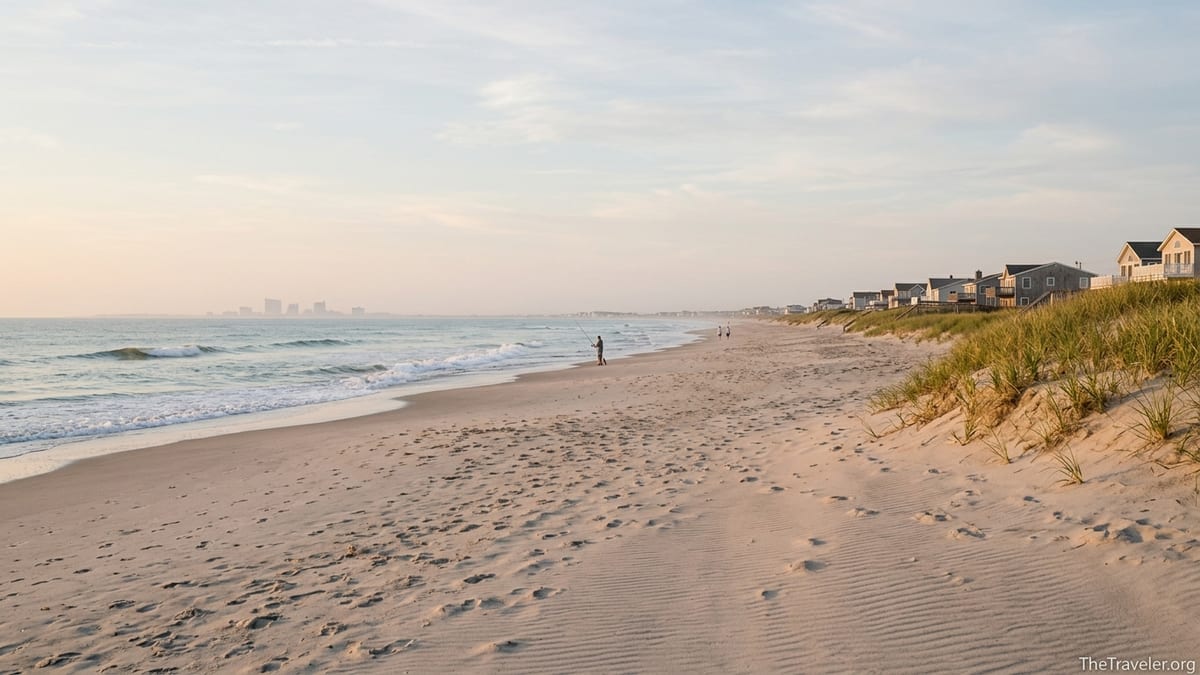
A Barrier Island Hiding in Plain Sight
Brigantine sits directly north of Atlantic City, separated by a sweep of marsh and open water, which makes the contrast all the more striking. In less than fifteen minutes you can drive from a casino valet stand to a low-key island where the loudest sound on many mornings is the surf and a few laughing gulls. The city grid is compact, and instead of neon and franchise signs, the main drags are lined with modest beach houses, a handful of family restaurants, and small markets that close at reasonable hours. That physical separation from the boardwalk scene does a lot to keep ambient noise down.
The island itself is only about seven miles long, and its northern third is largely protected land associated with the Edwin B. Forsythe National Wildlife Refuge. That means fewer homes, fewer rental towers, and almost no commercial strip development along the oceanfront. As you drive north on Brigantine Avenue, the houses thin out, the dunes rise, and the skyline disappears, replaced by dune grass and the occasional pickup with a surf rod in the back. By the time the road ends near the North Brigantine natural area, you feel as if you have slipped completely off the resort map.
Even in the busier central blocks around Brigantine Avenue and 14th Street South, where there is a small cluster of cafes and ice cream shops, the atmosphere is more neighborhood than nightlife. You might hear kids on bikes and the clink of dishes from a rental’s open windows, but there is little of the continuous amplified soundtrack that defines so many Shore towns. That is the first surprise: how quickly the volume knob turns down once you cross over from Atlantic City.
Why the Shore Feels So Quiet
The quiet in Brigantine is not accidental. Unlike places built around a boardwalk or amusement district, there is no entertainment zone concentrating bars and live music near the ocean. There is no pier with late-night rides, no strip of clubs along the sand. Most of Brigantine’s businesses sit a few blocks back from the water, and many are small, family-owned spots that shut their doors by 10 p.m. This spreads human activity away from the dune line and keeps the beachfront itself largely devoted to walking, fishing, and families turning in early.
Local rules help reinforce that calm. Beaches designated for swimming have lifeguards on duty roughly from mid-June through Labor Day, generally 10 a.m. to 5:30 p.m., at a string of guarded streets from 2nd Street North down through the 40s South and a few bay beaches. After the guards step down and the flags come in, the oceanfront does not abruptly become a party zone. Without a boardwalk or a row of oceanfront bars, there simply are not many places for crowds to congregate loudly at night, and the streets behind the dunes stay mostly residential and dimly lit.
The presence of conservation land also plays a role. The northern section of Brigantine links into areas managed as part of the Forsythe refuge and the North Brigantine natural area, which emphasize dune protection and habitat for migratory birds. That conservation focus discourages large-scale commercial projects and keeps the skyline low. The absence of roller coasters, concert stages, and beachfront hotels leaves the dominant soundscape to wind, waves, and shorebirds. When you walk north along the sand, phone in your pocket, it is easy to forget that a full-blown resort city glows just across the inlet.
Walking the Beach in Near-Silence
The quiet really clicks the first time you take an early-morning walk along the ocean. On a July weekday around 7 a.m., the guarded beaches at 10th Street North or 14th Street South are mostly empty except for a few joggers and dog walkers on leashes before the daytime restrictions begin. The only continuous sound is the surf rolling up a wide, gently sloped beach. The sand is broad enough that even when more people arrive later in the day, everyone seems to spread out instead of stacking towels shoulder to shoulder along a narrow ribbon of oceanfront.
Head toward the northern end of the island and the solitude grows. Beyond the clusters of guarded bathing beaches, you step into stretches that feel more like a nature preserve than a resort. Truck permit holders sometimes park farther up to surf fish, but the vehicles are well spaced and engines off once they settle in. On many afternoons, especially outside peak weekends, you can walk a quarter mile or more between groups. The background noise is gulls calling, wind threading through the dune grass, and the low thump of waves. Even the usual beach town soundtrack of radios and portable speakers feels toned down.
Sunset walks on the bay side offer another layer of quiet. The small City Dock bay beach at 26th Street and Bayshore Avenue draws locals with beach chairs and fishing rods, not packed bar patios. Instead of thudding bass lines, you hear the creak of dock lines and, if you are lucky, the breathy exhale of a kayak paddle slipping through the back-bay shallows. Stand on the dock around dusk and Atlantic City’s lights shimmer across the water, visible but acoustically distant, like a movie playing in another room.
Where to Stay When You Want Peace
Brigantine’s lodging stock is another reason the shore feels quiet. There are no massive casino hotels on the island, and only a handful of small inns or condominium complexes. The dominant option is private homes and condos offered as seasonal rentals. Many are classic Jersey Shore two-story houses on quiet residential streets, often rented weekly from late June through August. On major vacation sites and local brokerages, it is common to see summer weeks priced around 3,000 dollars to 4,000 dollars for a three-bedroom close to the ocean, with larger or newly renovated homes commanding more in prime weeks.
The weekly rhythm of these rentals subtly shapes the island’s mood. Instead of a constantly rotating crowd of weekenders arriving at all hours, families typically check in on Saturdays, stock up at the island supermarket or big-box stores off the causeway, and settle in for the week. After dinner, many vacationers are on porches with board games or walking to get ice cream rather than cramming into loud bars. By 11 p.m., even in midsummer, plenty of residential blocks are quiet enough that you can hear the distant crash of waves three streets inland.
If you are seeking extra calm, look at properties toward the northern half of the island, especially near the avenues in the 30s and 40s South or close to the North Brigantine natural area. These blocks are farther from the small commercial cluster near the center of town and tend to have less through-traffic. For a more affordable and equally low-key option, some travelers base themselves in Brigantine for the quiet nights and take the short drive into Atlantic City or down to Ocean City for day trips, returning to the island when they are ready to turn the volume back down.
Simple Days: What a Quiet Beach Day Looks Like Here
A day in Brigantine typically starts with decisions measured in minutes, not miles. Do you walk three blocks to the guarded ocean beach at 22nd Street South or drive five minutes up to the quieter sand at Surfside Road. Many visitors buy seasonal or weekly beach tags from the city’s kiosks or on the sand from roving attendants and then simply rotate between the same two or three nearby street ends. The lack of a crowded boardwalk means less temptation to spend all afternoon in arcades or shops and more time reading, napping, or swimming.
On guarded beaches, lifeguards set up stands midmorning and designate swimming zones with flags, which quietly organizes the crowd without the sense of packed chaos found elsewhere. Surfers peel off to dedicated surfing sections, often near the jetties, which keeps the main swimming area open for families with small children. Because the commercial center is a few blocks inland, you do not hear bar music drifting over the sand. Instead, the loudest human sounds might be lifeguards calling out conditions or children cheering as they jump waves near the shorebreak.
Lunch is often a walk back to the house for sandwiches on a shaded deck instead of a scramble to find a crowded boardwalk restaurant. In the evening, instead of lining up for amusement rides, visitors might wander to the bayfront to watch the sun sink behind the marsh, perhaps with a takeout pizza or seafood platter from a local restaurant. That kind of slow, repetitive rhythm is not flashy, but it is precisely what makes Brigantine feel like a throwback to an earlier, quieter era of the Jersey Shore.
Nature at the Edge: Forsythe Refuge and North Brigantine
Brigantine’s quiet is amplified by its proximity to the Edwin B. Forsythe National Wildlife Refuge, especially the Brigantine-related lands and the North Brigantine area. Much of the marsh and tidal flats visible from the causeway and the island’s northern tip are conserved habitat used by migratory shorebirds and waterfowl along the Atlantic Flyway. That conservation status limits development and helps preserve long stretches of unlit horizon. At night, the marsh beyond the last houses is almost completely dark, so you can sit on a back deck and see a clear line of stars interrupted only by the glow of Atlantic City in the distance.
Even a short drive off the island toward the official refuge entrance opens up more opportunities for low-key exploration. Wildlife drives and observation towers look out over salt marshes, shallow bays, and mudflats frequented by egrets, herons, and in some seasons tens of thousands of shorebirds. While these areas are technically beyond the municipal boundary of Brigantine, they feel like an extension of the same soundscape: wind in the reeds, the clatter of a fishing reel, and the occasional rush of wings as a flock lifts off from a tidal pond.
For many visitors, pairing a morning on the quiet Brigantine beach with an afternoon loop through the refuge or a stroll along the North Brigantine natural area turns a standard beach vacation into something closer to an unplugged retreat. There are no loud tour boats pushing party music into the back bays here, only small skiffs, kayaks, and paddleboards sliding past marsh islands. That absence of mechanical noise is part of the surprise. When you step out of the car at an overlook and realize you can hear individual spartina blades rustling in the breeze, you understand how rare this kind of coastal hush has become.
Planning Your Own Low-Noise Getaway
If you are intrigued by the idea of a quieter shore stay, a bit of planning goes a long way. Summer weeks from late June through mid-August are still the busiest, so expect higher weekly rental prices and more people on the guarded beaches midday. Those same weeks, however, can still feel much calmer than boardwalk towns, especially if you choose lodging on a residential block away from Brigantine Avenue. Shoulder seasons in late May, early June, and September are often ideal for travelers who prioritize quiet. Ocean temperatures can still be comfortable in early fall, and the beaches thin out dramatically once local schools resume.
When comparing rentals, pay attention to how close a property is to the ocean versus the central commercial cluster. A house two and a half blocks off the beach near 34th Street South might offer a quick walk to the sand with virtually no nighttime noise, while something on a busier corner near the center of town could have a bit more traffic hum. If you are particularly noise-sensitive, ask rental agents or hosts about nearby restaurants, outdoor seating, or late-night activity. In Brigantine, the answer is often "not much," but it never hurts to confirm if you are seeking a near-silent retreat.
Transportation planning also affects how peaceful your stay feels. Many visitors park the car on arrival and leave it for days, choosing to bike or walk almost everywhere on the island. Fewer car trips mean less engine noise on the residential streets and more chance to notice the subtle sounds that define Brigantine: the buzz of cicadas in the dunes, the distant bark of a dog, the low rumble of surf that is always, faintly, in the background.
The Takeaway
For many travelers, the Jersey Shore is synonymous with sensory overload: bright lights, loud music, crowded promenades, and a constant hum of motion. Brigantine quietly subverts that expectation. The absence of a boardwalk, the dominance of residential blocks and seasonal homes, and the proximity of protected natural areas combine to keep the island’s soundscape surprisingly subdued, even when parking lots are full and beach tags well worn.
What lingers after a week in Brigantine is not the memory of thrill rides or late-night concerts, but the feel of sand that never seems quite as trampled, and the sound of waves clearly audible from a dark, residential porch. It is the contrast of watching Atlantic City glitter across the water while your own street settles into early quiet. If your idea of a perfect shore vacation includes long, nearly silent walks, early nights, and the company of seabirds rather than bar speakers, Brigantine may surprise you too, in the best possible way.
FAQ
Q1. Is Brigantine really quieter than other Jersey Shore towns?
Yes, generally. Brigantine has no boardwalk, very limited nightlife, and large areas of protected land, so the beaches and residential streets stay noticeably calmer, especially at night.
Q2. When is the quietest time of year to visit Brigantine?
The quietest periods are typically late spring and early fall, especially late May, early June, and mid-September onward, when schools are in session and crowds thin while the weather often remains mild.
Q3. Are the beaches in Brigantine crowded in summer?
On peak July and August weekends, guarded sections can be busy, but the wide beach and long shoreline let people spread out. Northern stretches and weekday mornings usually feel much less crowded.
Q4. Does Brigantine have a boardwalk or amusement rides?
No. Brigantine does not have a boardwalk, amusement rides, or oceanfront arcades. That lack of a built-up entertainment strip is a major reason the shore feels so quiet.
Q5. Where should I stay in Brigantine if I value peace and quiet?
Look for rentals on residential streets a block or two off the ocean, especially in the northern and southern parts of the island away from the small commercial center, and ask hosts about nearby nightlife.
Q6. Can I still access livelier attractions from Brigantine?
Yes. Atlantic City is only a short drive across the causeway, so you can visit casinos, shows, and restaurants by car or rideshare, then return to Brigantine for quieter nights.
Q7. Are there nature areas to explore near Brigantine?
Yes. The island connects to protected areas linked with the Edwin B. Forsythe National Wildlife Refuge and the North Brigantine natural area, offering marsh views, birdlife, and peaceful walking and driving routes.
Q8. What kind of accommodations are common in Brigantine?
Most visitors stay in private homes or condos rented weekly in summer, plus a few small inns and apartment-style buildings. Large resort hotels are found across the water in Atlantic City, not on the island itself.
Q9. Is Brigantine a good choice for families with young children?
Yes. The calm beachfront, guarded swimming areas in season, and absence of late-night noise make Brigantine appealing to families who prefer simple beach days and early bedtimes.
Q10. Do I need a car to enjoy a quiet stay in Brigantine?
A car is useful for arrival and day trips, but once you are on the island many visitors walk or bike to the beach and shops. Fewer car trips help keep the overall atmosphere even more peaceful.