

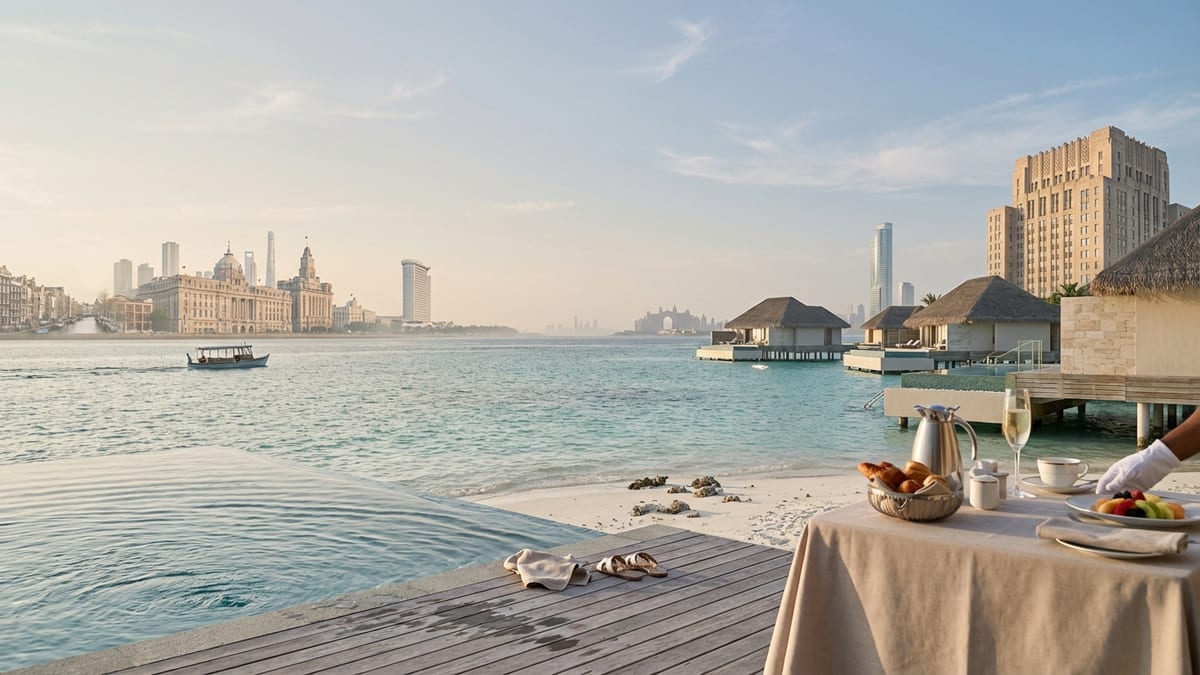
Best Waldorf Astoria Hotels in the World Ranked by Experience
The Waldorf Astoria name carries almost unmatched weight in luxury travel, evoking white-glove service, soaring lobbies and a certain old-world glamour that modern brands often try to imitate but rarely equal. Today the portfolio spans tropical private islands, skyscraper palaces and urban icons in some of the most coveted destinations on earth. This ranking looks beyond simple star counts to assess the best Waldorf Astoria hotels in the world by experience, considering setting, design, service, dining and that elusive sense of theater that defines a truly great stay.
How This Ranking Was Decided
Ranking Waldorf Astoria properties is an exercise in splitting hairs. Nearly every hotel in the collection offers high thread counts, polished marble and attentive concierges. To separate the extraordinary from the merely excellent, this list prioritizes experiential depth: the way a stay lingers in memory long after check-out.
Key factors include sense of place, originality of design, service culture, culinary ambition and spa or wellness programming. Recognition from respected arbiters in luxury travel was also considered, particularly where awards are consistent over multiple years. Current relevance matters as well. Properties that have recently emerged from significant renovations or are shaping conversations in their destination carry extra weight.
Finally, balance plays a role. This is a global brand with very different expressions, from overwater villas to city towers. The ranking reflects that diversity rather than clustering solely around one region or style. What unites the hotels selected here is that they deliver a stay that feels less like a transaction and more like a carefully staged experience.
1. Waldorf Astoria Maldives Ithaafushi: The Brand’s Purest Fantasy
If one resort embodies Waldorf Astoria at its most contemporary and aspirational, it is Waldorf Astoria Maldives Ithaafushi. Spread across three interlinked islands in the South Male Atoll, the property is conceived as a private world of all-pool villas, each a self-contained retreat with direct access to the lagoon or beach. The scale is impressive, yet the feeling on arrival is deeply personal, with butlers orchestrating everything from unpacking to bespoke excursions.
The resort has rapidly become a benchmark for ultra-luxury in the region, a status underlined by repeated recognition from Forbes Travel Guide with a Five-Star rating over multiple consecutive years. That consistency is telling. It indicates not only gleaming hardware and design, but also a service culture that delivers at a level seasoned luxury travelers now expect in the Maldives. From sunrise floating breakfasts to private sandbank dinners, the emphasis is on tailoring each stay to the guest rather than funneling everyone through the same program.
Design-wise, villas strike a balance between contemporary minimalism and a warm residential feel. Expansive decks, oversized pools and high-volume interiors are framed by floor-to-ceiling glass, which makes the exquisite blues of the lagoon the real centerpiece. Privacy has been carefully considered, especially in reef and overwater categories, so that even when the resort is near full occupancy it rarely feels crowded. The experience is further elevated by clever small touches: discreet buggy transfers, personalized bicycles, and surprising treats left in-villa.
Gastronomy is a major part of the narrative here. With a double-digit count of dining venues ranging from barbecue-focused poolside concepts to treetop tasting menus, guests can spend a week experimenting without repetition. Wine programs and mixology are on par with serious city hotels, yet the setting is barefoot and relaxed. Add in a spa that leans into botanical and ocean-inspired therapies, plus serious programming for couples and families alike, and it becomes clear why Ithaafushi sits at the top of the Waldorf Astoria experience pyramid.
2. Waldorf Astoria New York: The Reborn Grand Dame
Few hotels in the world carry the cultural and historical weight of the Waldorf Astoria New York. Opened in its current Park Avenue incarnation in 1931, it has played host to royalty, film stars and every sitting United States president from Herbert Hoover onward. After closing in 2017 for a wholesale restoration, the property’s phased reopening in 2025 has been one of the most closely watched events in luxury hospitality.
The relaunch is no simple refresh. Rooms have been dramatically reduced in number to create just 375 keys, meaning significantly more space per guest and a genuine shift into an ultra-luxury bracket. The restoration focuses on honoring the Art Deco bones of the building while layering in contemporary comforts. Signature public spaces such as the grand lobby, the iconic clock and Peacock Alley have been meticulously preserved and reimagined, reinforcing the sense that you are moving through living history rather than a themed set.
What pushes the New York flagship this high in the ranking is not just its heritage, but the way the new incarnation weaves that legacy into a modern urban stay. Guestrooms, designed with a residential sensibility, now match or exceed the size of many Manhattan apartments, and technology has been thoughtfully integrated rather than grafted on. A large spa and wellness center, serious event spaces and next-generation dining, including the two-level brasserie Lex Yard under a respected New York chef, signal that the hotel is reclaiming its role as a civic and social hub as well as a place to sleep.
In terms of experience, the Waldorf Astoria New York is unmatched for travelers who value narrative. Checking in feels like stepping into a chapter of the city’s story, yet the service ethos is resolutely current: less stiff formality, more polished ease. For many guests, this is the Waldorf: the reference point against which the rest of the portfolio is measured.
3. Waldorf Astoria Beverly Hills: Hollywood’s Contemporary Jewel
In Los Angeles, where luxury hotels tilt either toward Old Hollywood nostalgia or glass-box minimalism, Waldorf Astoria Beverly Hills manages to embody both romance and sharp modernity. Opened in 2017 at the intersection of Wilshire and Santa Monica Boulevards, it has quickly become a magnet for entertainment industry insiders who appreciate discretion, big views and a design language that feels thoroughly of-the-moment.
The building rises as a pale, curving tower with a rooftop pool deck that offers some of the most cinematic vistas in the city, from the Hollywood Hills to distant downtown. Nearly every room includes a terrace, a rarity in this part of Beverly Hills, which transforms even short stays into something that feels more residential and relaxed. Interiors are bright and polished, with Art Deco echoes in the materials and detailing that nod subtly to the brand’s roots without sliding into pastiche.
Culinary partnerships have further boosted the property’s reputation. Its rooftop restaurant and bar are well established on the city’s dining and social map, popular with both hotel guests and locals. Service in the public spaces tends to be crisp and anticipatory, well attuned to the particular rhythms and privacy needs of its celebrity and high-net-worth clientele. The concierge desk is adept at crafting last-minute experiences, whether that involves a hard-to-get table, a quick Malibu escape or an impromptu shopping tour along Rodeo Drive.
What makes Waldorf Astoria Beverly Hills stand out in experiential terms is its balance of urban resort and vertical pied-à-terre. You can spend a day at the spa, linger by the rooftop pool and barely feel like you are in the city at all, then be on the Sunset Strip or in West Hollywood within minutes. For travelers who want Los Angeles energy but insist on a cocoon of quiet luxury at day’s end, it is arguably the strongest option in the region.
4. Waldorf Astoria Dubai Palm Jumeirah: A Gulf-Side Escape with Skyline Drama
Dubai’s Palm Jumeirah is dense with five-star resorts, but Waldorf Astoria Dubai Palm Jumeirah remains one of its most compelling stays for travelers seeking a softer, more tranquil edge to the city’s spectacle. Located on the eastern crescent of the Palm, the resort commands sweeping views of both open sea and the city skyline, offering a remarkable contrast between beach calm and glass-and-steel drama.
The experience here is anchored in a sense of gentle indulgence. Rooms are bright, with a light palette and generous balconies, and the overall atmosphere skews more Mediterranean Riviera than futuristic Gulf metropolis. The beach is broad and meticulously maintained, and the resort’s pools are thoughtfully separated so that adults and families can each find their preferred environment without compromise. Service is gracious and discreet, leaning into the timeless Waldorf tradition of recognizing returning guests and remembering their preferences.
Dining is a major highlight. Several of the hotel’s restaurants have attracted attention beyond the typical resort circuit for the quality and breadth of their cuisine, from seafood-forward fine dining to more casual international options. The property’s bar program capitalizes on the skyline views, making sundowner cocktails a daily ritual for many guests. Meanwhile, the spa offers a full suite of treatments and thermal experiences that encourage lingering for half a day rather than a quick visit.
In a city known for sensory overload, Waldorf Astoria Dubai Palm Jumeirah differentiates itself by offering a measured, almost contemplative take on luxury, without sacrificing access to the city’s shopping and entertainment. For many visitors, the best way to experience Dubai is precisely this rhythm: intense urban exploration followed by a retreat to a resort that feels comfortably removed, yet just a short drive away.
5. Waldorf Astoria Amsterdam: Canal-Side Elegance in a Quintessential European City
Occupying a row of historic canal houses on Amsterdam’s Herengracht, Waldorf Astoria Amsterdam delivers a very different expression of the brand: intimate, quietly opulent and deeply embedded in the city’s fabric. Rather than a tower, this is a horizontally spread hotel, its entrance and public rooms threaded through 17th and 18th century townhouses that have been joined together with painstaking attention to architectural detail.
The sense of arrival is subdued in the best way. Guests enter through a modest doorway, then progress into double-height spaces where original staircases, ceiling reliefs and period details coexist with contemporary furnishings. Many rooms and suites overlook the canal, giving a front-row seat to the slow choreography of boats and cyclists. Others face a surprisingly expansive private garden at the rear of the property, a rare open green space in the heart of Amsterdam.
Service here is particularly thoughtful, in keeping with the smaller scale. Staff are quick to offer nuanced neighborhood recommendations and can tailor itineraries for art lovers, design aficionados or visitors interested in exploring the city’s less trafficked districts. The hotel’s dining program has historically included Michelin-recognized cuisine, and its bar is a favorite among those who appreciate craft cocktail culture with a strong sense of place. Breakfast, with views over the canal and the garden, often becomes an unhurried event rather than a simple pre-sightseeing refueling.
In experiential terms, Waldorf Astoria Amsterdam excels because it does not try to overpower the city. Instead, it functions as a calm, refined base that amplifies everything that makes Amsterdam special: the light, the waterways, the compact yet cosmopolitan feel. For travelers who prefer their luxury wrapped in historic masonry rather than glass and steel, this is one of the most satisfying stays in Europe.
6. Waldorf Astoria Shanghai on the Bund: Glamour on the Huangpu
Perched along one of the world’s most storied waterfronts, Waldorf Astoria Shanghai on the Bund offers a compelling blend of historical grandeur and sharp modern luxury. The hotel occupies the restored former Shanghai Club building, a 1911 edifice whose neoclassical façade anchors the property firmly within the architectural tableau of the Bund. Behind it, a contemporary tower adds additional rooms and facilities, bridging old and new both physically and experientially.
Step inside the heritage portion and the atmosphere is immediately cinematic. High ceilings, ornate moldings and a palette that nods to early 20th century opulence recall Shanghai’s era as the “Paris of the East.” The Long Bar, resurrected from archival photographs and stories, is a particular highlight, stretching nearly the length of the building and serving as a living link to the city’s pre-war social scene. It remains one of Shanghai’s most iconic hotel bars, popular with visitors and locals alike.
Guestrooms in the heritage wing preserve elements of period character while making room for modern bathrooms and technology. Those in the tower lean contemporary, with floor-to-ceiling windows framing either the Bund promenade or the skyscrapers of Pudong across the river. The duality is part of the charm: guests can choose the flavor of Shanghai they want to inhabit, whether that is nostalgic, forward-looking or a bit of both.
Service is polished and international, reflecting Shanghai’s role as a global financial and cultural hub. The concierge team is adept at arranging everything from private gallery visits and restaurant reservations to river cruises and day trips to nearby water towns. For travelers who want to feel fully immersed in the drama of the city, there are few better perches than a suite here, lights of the skyline shimmering off the Huangpu after dark.
7. Waldorf Astoria Bangkok: Vertical Sanctuary in a Megacity
Bangkok’s luxury hotel scene is fiercely competitive, with riverside legends and sleek newcomers vying for attention. Waldorf Astoria Bangkok has carved out its own niche as a vertical sanctuary that hovers above the downtown traffic, offering calm, light and sweeping views in a city known for sensory intensity. Located near the Ratchaprasong intersection and central shopping districts, it is perfectly positioned for business and leisure travelers who want immediate access to the city’s core.
The hotel’s interiors, created with input from prominent international designers, riff on Art Deco motifs filtered through a contemporary lens. Soft curves, warm metals and a rich, layered palette give public spaces a warmth often missing from glass-and-steel towers. The lobby, set high above street level, feels almost residential, encouraging guests to linger rather than simply pass through. Rooms are generously proportioned for Bangkok, and high floor placement ensures broad city views even from entry-level categories.
Culinary experiences are a strong draw. The hotel’s rooftop bar and restaurant complex, stacked across the building’s uppermost floors, has quickly become a city hot spot, especially at sunset when Bangkok’s skyline stretches to the horizon. Menus marry Thai and international influences and lean into presentation and storytelling. At lower levels, more casual outlets ensure that guests can find something appropriate to every mood without leaving the building, although some of the city’s best independent restaurants are also just a short taxi or skytrain ride away.
What distinguishes Waldorf Astoria Bangkok experientially is its understanding of urban fatigue. The spa and pool areas are designed as true retreats, with generous space, natural materials and service that encourages guests to slow down. After a day in the city’s markets, temples or meeting rooms, returning here feels like ascending to a quieter parallel world, one that is still connected to Bangkok’s energy but not overwhelmed by it.
The Takeaway
The world of Waldorf Astoria is far more diverse than a single famed New York address or a recognizable logo might suggest. From a constellation of all-villa retreats in the Maldives to urban sanctuaries in Asia and heritage showpieces in Europe and North America, the brand’s best hotels reinterpret a shared ethos of grand hospitality through radically different lenses. The properties ranked here rise to the top because they do more than offer luxury; they choreograph experiences that feel specific to their place and era, grounded in thoughtful service rather than rote protocol.
For travelers, the practical implication is simple. Choosing among Waldorf Astoria hotels should start not with the question of which is objectively “best,” but which experience aligns with the kind of journey you want. Do you crave castaway quiet, urban theater, cultural immersion or a bit of each in sequence. Within this portfolio, there is a property that can answer each of those calls at a level that is difficult to match. The true hallmark of the brand at its best is not marble or chandeliers, but the way it can make the ordinary rituals of travel check-in, breakfast, a drink at the bar feel once again like an occasion.
FAQ
Q1. What makes Waldorf Astoria Maldives Ithaafushi rank above other resort properties in the brand?
It combines a rare level of privacy and space, a consistently high standard of service recognized by independent ratings, and an unusually rich range of dining and activities, all set in a classic Maldivian lagoon environment. The resort feels both expansive and intensely personalized, which is difficult to achieve at scale.
Q2. Is the reopened Waldorf Astoria New York worth visiting even if I am not staying there?
Yes. The restored public spaces, including the lobby, bar and dining venues, are part of New York’s architectural and social fabric. Even a drink or afternoon tea can provide a sense of the building’s history and the scale of the recent restoration.
Q3. How does Waldorf Astoria Beverly Hills differ from other high-end hotels in Los Angeles?
Its location on the border of Beverly Hills, emphasis on terraces and views, and rooftop pool and dining scene give it a strong resort feel in an urban environment. It also tends to attract a high concentration of entertainment industry guests, which subtly shapes the service culture and overall atmosphere.
Q4. Is Waldorf Astoria Dubai Palm Jumeirah suitable for families as well as couples?
Yes. The resort offers family-friendly pools, a well-developed kids’ program and spacious rooms and suites that can accommodate groups, while still maintaining quieter zones and dining experiences that appeal to couples seeking a more romantic stay.
Q5. What is unique about Waldorf Astoria Amsterdam compared with other luxury hotels in the city?
Its location in a series of canal palaces, the presence of a large private garden and an intimate scale that allows for very personalized service make it stand out. It feels more like staying in an elegant private residence than in a conventional hotel.
Q6. Does Waldorf Astoria Shanghai on the Bund focus more on heritage or on contemporary design?
It offers both. The heritage building on the Bund delivers early 20th century glamour and historically inspired spaces such as the Long Bar, while the attached modern tower provides contemporary rooms with panoramic city views. Guests can choose the experience that suits them or move between the two.
Q7. Is Waldorf Astoria Bangkok a good base for first-time visitors to the city?
It is an excellent base, thanks to its central location near major shopping streets and transport links. The hotel’s elevated, quiet environment provides a welcome escape from the city’s intensity, which many first-time visitors appreciate after long days of exploring.
Q8. How far in advance should I book to secure the best rooms at these top Waldorf Astoria properties?
For peak seasons especially in destinations like the Maldives, Dubai and Amsterdam it is wise to book several months in advance to secure preferred room types and views. For major holidays or local events, planning six to nine months ahead is recommended.
Q9. Are there meaningful differences in service style between Waldorf Astoria hotels in different regions?
Yes. While all aim for a high standard of personalized service, regional culture shapes the experience. For example, service in Bangkok and the Maldives may feel more gently informal and resort-oriented, while New York and Shanghai lean slightly more formal and urban in tone.
Q10. If I am planning a multi-stop trip, which combination of Waldorf Astoria hotels pairs especially well?
A popular approach is to combine an intense city stay with a restorative resort. Examples include New York followed by the Maldives for a long-haul escape, or Bangkok paired with a beach destination in Southeast Asia. Within Europe, Amsterdam couples well with other major capitals, allowing you to experience the brand in both grand-urban and canal-side modes.