


More news on this day
Thunderstorms sweeping across the Houston area are disrupting operations at George Bush Intercontinental Airport, triggering waves of departure and arrival delays and prompting travelers to check real-time flight status tools before heading to the terminal.
Get the latest news straight to your inbox!
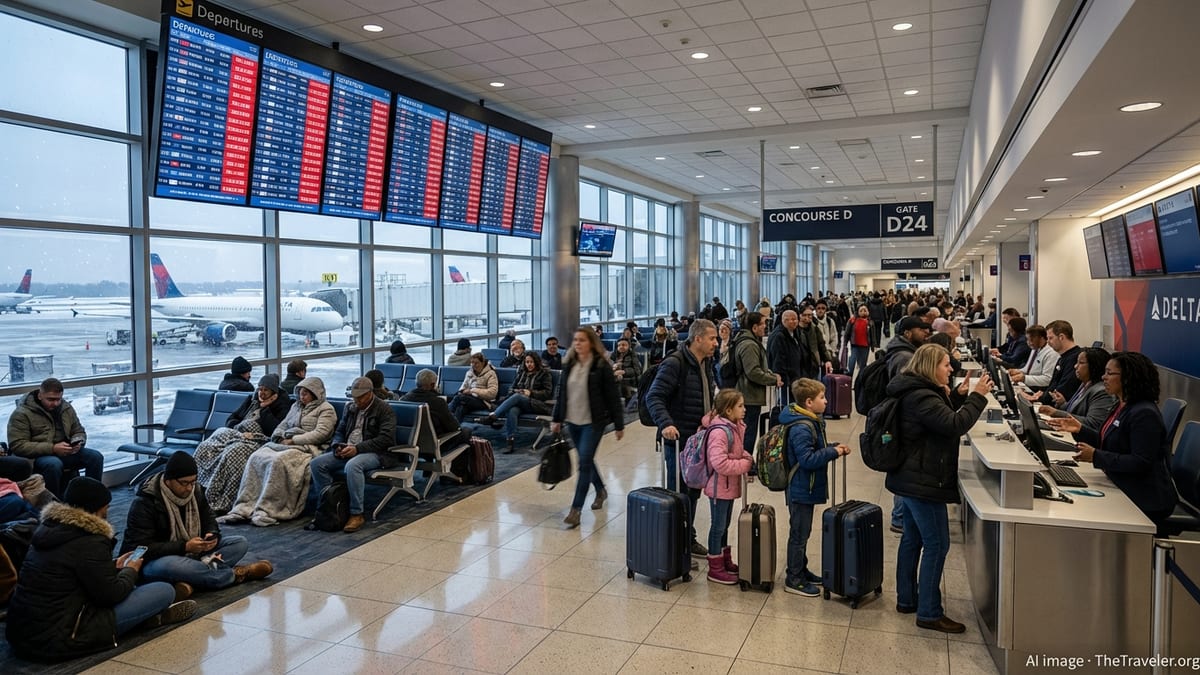
Stormy Conditions Add Strain To Busy Houston Hub
George Bush Intercontinental Airport, one of the nation’s busiest hubs, is particularly sensitive to convective weather, and the latest round of thunderstorms is again testing its capacity. Thunderstorm cells moving through the region can force short-term ground stops, reduce the number of active runways, and slow the overall rate at which aircraft can land and depart.
Recent weather systems have shown how quickly conditions can shift. Publicly available information from Federal Aviation Administration resources and local media coverage in May and mid-June described thunderstorms that led to ground delay programs at both Bush Intercontinental and nearby William P. Hobby Airport, with hundreds of flights delayed and some cancellations as storm bands passed over the area. Those events underline how similar storm patterns can rapidly create backups even when the worst conditions last only a few hours.
Although thunderstorms are often localized and short-lived, their impact on a hub airport can extend well beyond the period of heavy rain or lightning. When aircraft are held on the ground or rerouted around active storm cells, schedules quickly become misaligned, crews can time out, and aircraft end up out of position. That knock-on effect is particularly visible at a connecting hub such as Bush Intercontinental, where many travelers rely on tightly timed connections.
The current round of stormy weather is arriving as Bush Intercontinental manages elevated summer travel volumes and long-running construction and infrastructure work, factors that can make the system more vulnerable to disruption once thunderstorms develop in the vicinity of the airfield.
Latest Delay Picture At Bush Intercontinental
National airspace summaries and airport status dashboards on Saturday, June 27, indicate that Bush Intercontinental is operating without a formal nationwide ground delay program in place for the airport itself. Federal aviation data shows general arrival and departure flows continuing, with airborne and taxi delays largely reported in the range of 15 minutes or less for much of the day.
However, a number of third-party trackers that aggregate airline and aviation data are showing pockets of delay at the individual flight level, with some departures leaving later than scheduled as thunderstorms move through the broader Houston area. These tools describe an elevated average delay compared with a typical clear-weather day, even as the airport remains officially open and accepting traffic.
Reports from recent weather episodes this spring illustrate how quickly the picture at Bush Intercontinental can change. In early May, severe thunderstorms prompted a ground delay program affecting both Bush Intercontinental and Hobby, with local coverage citing more than 300 delayed flights at Bush alone during the height of the disruption. In mid-June, a separate round of storms and a related travel waiver from at least one major carrier again led to measurable slowdowns as operators waited for safer conditions.
Today’s conditions appear less severe than those peak events, but travelers are experiencing a mix of minor and moderate delays that can still cause missed connections and rebooking challenges, particularly on popular domestic and international routes that are tightly scheduled around banked departure waves.
Where Travelers Can Check For Real-Time Impacts
Because official national airspace summaries are not flight specific, passengers are being encouraged through public guidance to use multiple resources to verify their exact flight status before departing for the airport. Airline mobile apps and websites remain the primary reference for gate assignments, departure times, and any rebooking options if a flight is significantly delayed or canceled.
Several public-facing tools that compile Federal Aviation Administration feeds provide an overview of airport conditions nationwide and show whether an airport such as Bush Intercontinental is categorized as having normal operations, delays, or a ground stop. On Saturday, June 27, these tools generally list Houston’s main hub as “on time” at the system level, even as individual departures may face weather-related adjustments.
Independent tracking services that display live departure and arrival boards, average delay statistics, and historical on-time performance can offer added context. Some of these dashboards also integrate checkpoint wait estimates and note ongoing terminal construction at Bush Intercontinental, helping travelers plan extra time for security and walking between concourses when storms are in the forecast.
Travelers are advised in publicly available guidance to recheck their flight status repeatedly in the hours leading up to departure, since thunderstorms can trigger last-minute changes. A flight that is on time early in the morning can slip into a delay status if storm cells intensify near departure, or if earlier disruptions elsewhere cause the inbound aircraft to arrive late into Houston.
Thunderstorms, Construction And A Tight Summer Schedule
The latest storms are arriving at a time when Bush Intercontinental is already contending with structural challenges that can magnify the impact of poor weather. Federal aviation planning documents and airport briefings describe multi-year airfield and terminal projects, including taxiway rehabilitation work and a substantial Terminal B transformation program, scheduled to continue through at least late 2026. These projects can temporarily reduce usable capacity on parts of the airfield.
When thunderstorms move over an airport with portions of its taxiway or gate infrastructure offline for construction, controllers and ground crews must route aircraft through a more constrained layout. That can lead to additional holding on taxiways, longer turnaround times at the gate, and greater sensitivity to even modest reductions in arrival or departure rates imposed for safety during convective weather.
Summer traffic trends add another layer of pressure. Daily air traffic reports from the Federal Aviation Administration show elevated national volumes on late June weekends, with major hubs such as Houston handling dense banks of arrivals and departures throughout the day. When those banks intersect with a thunderstorm window, short delays can ripple outward across multiple waves of flights.
For travelers, this combination of weather, construction, and peak demand means that even if Bush Intercontinental is officially open and categorized as operating normally, the experience on the ground can still involve slower lines, congested terminals, and schedule changes that develop with little notice while storms are active nearby.
Practical Advice For Passengers Flying Through Houston
Public travel advisories from aviation agencies and airlines emphasize preparation when thunderstorms are in the forecast at a major hub. Passengers are generally urged to arrive at the airport earlier than usual, particularly in Houston, where staffing and construction issues have contributed to longer security and check-in lines in recent months. Allowing additional buffer time can help reduce the stress of unexpected delays or gate changes once storms begin affecting traffic flows.
Before leaving for the airport, travelers are encouraged to confirm their flight’s status directly with their airline and to sign up for notifications through carrier apps or text alerts. In a storm situation, airlines may offer same-day changes, standby options, or waivers that allow passengers to adjust their plans without additional fees when certain conditions are met, as seen during previous Houston thunderstorm events this spring.
Once at Bush Intercontinental, keeping an eye on departure boards and listening for general announcements can help travelers react quickly if a gate reassignment or schedule change is posted. For those connecting through Houston, planning longer layovers when possible during storm-prone periods can provide a margin of safety if an inbound segment is delayed by thunderstorm activity en route or near the airport.
Ultimately, while the current thunderstorms are not triggering the most severe types of nationwide flight restrictions at Bush Intercontinental on June 27, they are contributing to a more fragile operating environment. Travelers who monitor real-time information closely and build flexibility into their plans are likely to navigate the day’s disruptions more smoothly as Houston’s weather evolves.