


More news on this day
A full commercial flight was delayed for more than an hour after a three-year-old refused to sit down for takeoff, according to recent social media posts, triggering renewed debate over whether airlines should offer “no-kids” flights or child-free sections on board.
Get the latest news straight to your inbox!
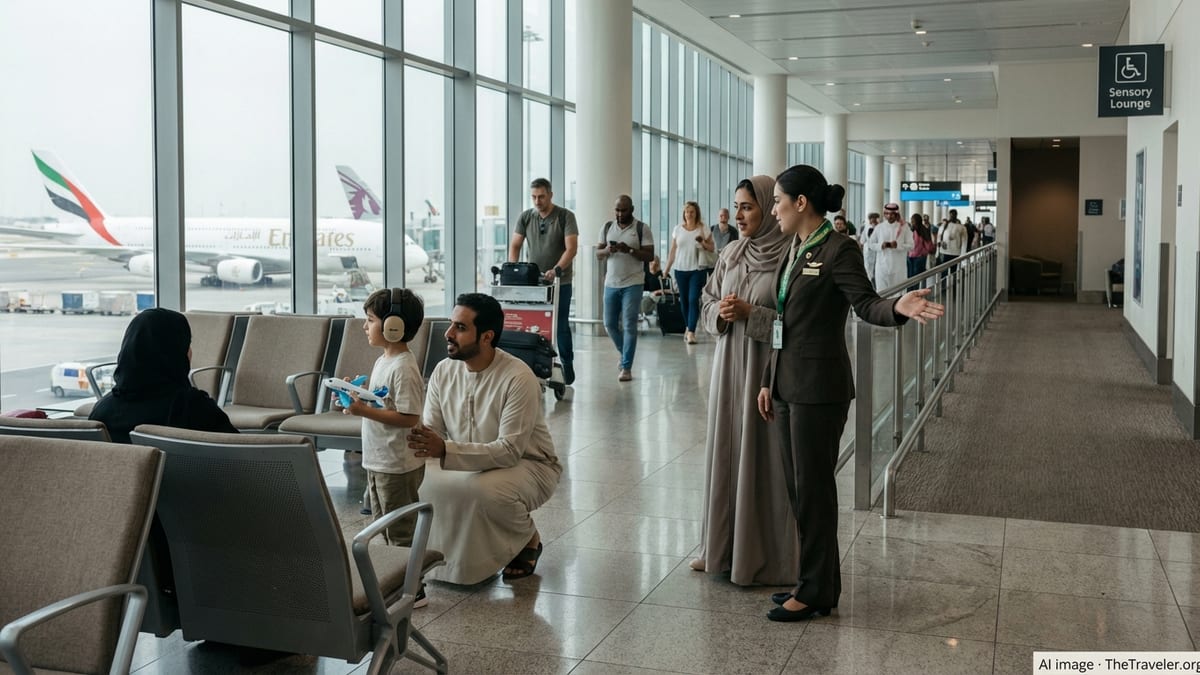
The Incident That Sparked a Global Argument
Reports indicate the disruption began as cabin crew prepared the aircraft for departure on a short-haul European route. A three-year-old child allegedly refused to sit down and fasten a seatbelt, a basic safety requirement before takeoff. Witnesses described prolonged crying and resistance, with the child reportedly unable or unwilling to remain seated independently.
Accounts shared online suggest crew members attempted to resolve the situation while the aircraft remained at the gate. Because the child was older than the age typically allowed to sit on an adult’s lap, seating the toddler with a parent was not considered compliant with safety rules. With the seatbelt sign on and the departure slot approaching, the stand-off stretched long enough that the flight lost its initial takeoff window.
Publicly available coverage in European and Latin American media states that the family was eventually asked to leave the aircraft, a decision that required staff to locate and unload their checked baggage from the hold. That process, combined with the earlier delay at the gate, is reported to have pushed the total delay to roughly an hour before the remaining passengers could depart.
While the carrier involved has not been widely identified in mainstream international coverage, the account, first detailed in an anonymous Reddit post and later picked up by regional outlets, rapidly spread across platforms and language markets, transforming a single flight’s delay into a flashpoint in a much broader cultural discussion.
Safety Rules, Seating Ages and Airline Constraints
The episode has drawn attention to how tightly regulated aircraft seating and restraint rules are when it comes to young children. Aviation safety regulations in many jurisdictions distinguish between “lap infants,” usually under the age of two, and older children who must occupy their own seat with a secured belt. Once a child exceeds the lap-infant threshold, cabin crew have limited flexibility to improvise if the child refuses to sit.
Publicly available airline policies and regulatory guidance emphasize that all passengers, regardless of age, must be properly seated and belted for taxi, takeoff and landing. Crew members do not have the option to depart with a child loose in the aisle or on the floor, even if parents express willingness to hold the child. Failure to comply can expose both the operator and individuals to penalties, and passengers who refuse instructions may be removed.
The incident also intersects with longstanding concerns about family seating practices. Over the past decade, regulators and consumer advocates in both the United States and Europe have pressed airlines to seat young children next to a parent or guardian without added fees, arguing that separating families can create confusion and delay during boarding and in emergencies. Recent policy updates in the European Union, for example, have focused on making it easier for families with children under a certain age to sit together without surcharges, while passenger-rights frameworks already provide compensation for long delays and cancellations in many circumstances.
In this case, the child was reportedly seated with parents, but the delay has fed into a wider debate about how far airlines should go in accommodating families with young children versus protecting the comfort and schedules of other travelers. Industry observers note that crews are often balancing regulatory requirements, operational pressures such as departure slots and crew duty-time limits, and the emotional complexity of dealing with distressed children in a confined space.
Online Backlash and Renewed Calls for “No-Kids” Flights
As details of the incident circulated, social media comment sections filled with sharply divided reactions. Some passengers framed the delay as an avoidable disruption caused by parents they viewed as unprepared or unwilling to enforce boundaries, expressing frustration that hundreds of travelers missed connections or arrived late because of a single family’s struggles.
Others were quick to defend the parents, pointing out that young children can be unpredictable even with careful preparation. Many commenters highlighted the stress of traveling with toddlers, the challenges of neurodivergence or anxiety in children, and the risk of public shaming when things go wrong. Several self-identified parents on travel forums wrote that stories like this increase their own hesitation about flying with young kids at all.
The most contentious theme to emerge was the idea of “no-kids flights” or child-free cabins. Advocates argued that, just as some trains offer quiet cars, airlines could designate certain routes or sections for adults only, at a premium price point. They suggested this could reduce conflict, give business travelers more predictability, and allow families to cluster in spaces where noise and movement are more expected.
Critics countered that such segregation could stigmatize families, particularly those with children who have special needs. Some also raised practical questions about enforcement, pricing and equity, noting that air travel is already stratified by cabin class and fare type. For them, better solutions would include improved pre-boarding for families, more child-friendly seat configurations and broader social acceptance that public transport includes passengers of all ages.
What the Episode Reveals About Air Travel Frustrations
Beyond the specifics of one delayed departure, the discussion reflects deeper tensions in today’s air travel environment. Passenger volumes in many markets are near or above pre-pandemic levels, while staffing constraints, tight scheduling and high load factors mean flights are often full and margins for delay are thin. In that context, any disruption, whether linked to weather, technical issues, crew schedules or individual behavior, can quickly cascade into missed connections and long waits.
Travel analysts note that online debates about children on planes often act as a proxy for broader frustrations with cramped cabins, limited personal space and a sense that modern flying has become more stressful and less predictable. Conflicts over seat recline, armrests and carry-on baggage routinely go viral, suggesting that simmering irritations can easily flare into public controversy when recorded on smartphones and shared widely.
At the same time, advocacy groups continue to push for stronger passenger protections around delays and cancellations, while airlines lobby for more operational flexibility in the face of weather and air-traffic constraints. Families traveling with young children sit at the intersection of these pressures, relying on clear policies, accessible information and consistent enforcement to navigate complex rules under time pressure.
For many observers, the incident involving the three-year-old is less about a single tantrum than about competing expectations on a crowded aircraft. Some travelers want reassurance that disruptive behavior, regardless of age, will not jeopardize their plans. Others want recognition that families are part of the flying public, and that occasional noise and delay are inevitable. How airlines, regulators and passengers choose to balance those expectations may shape not only any future experiments with kid-free offerings, but also the wider culture of air travel in the years ahead.