

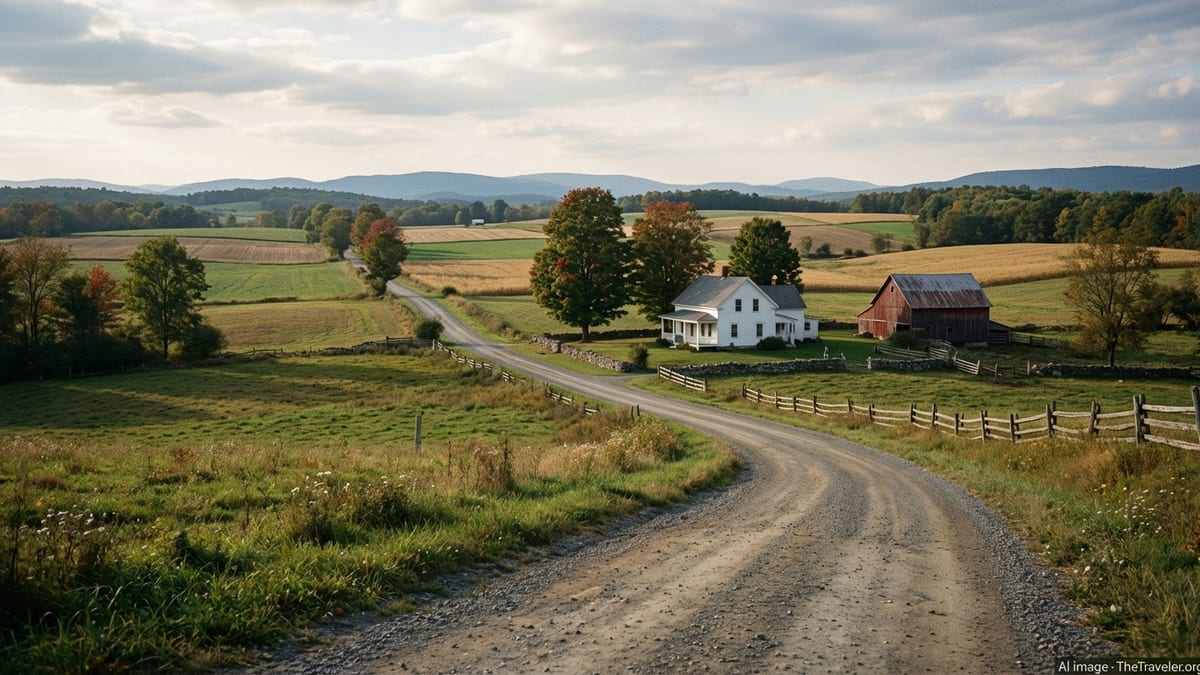
Pennsylvania has long been a go to for travelers who love early American history, stone farmsteads, and rolling green hills. Yet across the United States there are other regions where preserved main streets, heritage sites, and quiet backroads offer a similar combination of stories and scenery. From New England villages to Virginia’s Shenandoah foothills, these destinations provide compelling alternatives to a traditional Pennsylvania history and countryside itinerary.
Why Look Beyond Pennsylvania for History and Countryside
Travelers drawn to Pennsylvania often want two things at once: a tangible connection to American history and an easy escape into gentle rural landscapes. In recent years, concerns about overtourism in some of Pennsylvania’s most popular hubs, along with a desire for new stories and less crowded roads, have encouraged visitors to look farther afield. Fortunately, other regions across the eastern United States share similar historic roots and pastoral character while offering their own flavors of architecture, food, and small town culture.
Several states have invested heavily in preserving historic districts, farmsteads, and battlefield landscapes, while also promoting scenic byways and rail trails that invite slow travel. National heritage corridors, living history museums, and carefully restored main streets make it possible to step into the past without sacrificing modern comforts. Many of these destinations also emphasize lesser told narratives, including Indigenous history, Black heritage, and immigrant communities, which can provide a more nuanced experience than visitors may find on a single Pennsylvania focused trip.
If you enjoy wandering cobblestone streets, touring 18th and 19th century homes, or driving narrow country lanes lined with stone walls and dairy barns, the alternatives highlighted below offer that same sense of layered history. At the same time, each comes with its own regional setting, whether that is rocky New England hills, Virginia Piedmont horse country, or tidal rivers along the Mid Atlantic coast. Together, they form a network of places where the past feels close and the countryside still shapes daily life.
New England Villages and The Last Green Valley, Connecticut and Massachusetts
For travelers who love Pennsylvania’s mix of small towns and farms, the quiet interior of southern New England can feel very familiar. The Last Green Valley National Heritage Corridor, spanning northeastern Connecticut and parts of Massachusetts, protects more than 700,000 acres of rolling hills, river valleys, and forest that remain strikingly undeveloped despite their position between Boston and New York. Winding two lane roads pass dairy farms, clapboard churches, and town greens, with stone walls edging old pastures in a scene that recalls rural Pennsylvania but with a distinctly New England look and light.
Many visitors use one of the corridor’s traditional mill or market towns as a base, choosing from places where brick storefronts, white steeples, and 19th century houses cluster near a river. From there, it is easy to spend days following country roads to state parks, wildlife management areas, or small local museums. The region is also known for its dark night skies within an otherwise urbanized corridor, making it appealing to travelers who want quiet evenings, stargazing, or fireside stays in restored inns and farmhouses after a day exploring historic sites and backroads.
Nearby, the broader New England countryside deepens the sense of stepping into early American history. In rural Massachusetts, living history sites such as Old Sturbridge Village recreate village life from roughly the same era as many of Pennsylvania’s preserved towns. Costumed interpreters, working farms, and water powered mills show how people once lived with the land, and the surrounding fields and maple woods keep the experience rooted in real landscape rather than theme park gloss. Put together, these corners of Connecticut and Massachusetts offer a slower paced, softly scenic alternative to busy Pennsylvania heritage corridors.
Virginia’s Shenandoah Valley and Piedmont
If you love Gettysburg’s mix of battlefield topography and farmland backdrops, or the covered bridges and barns around Lancaster, Virginia’s Shenandoah Valley and the nearby Piedmont offer a natural alternative. Here, the Blue Ridge and Allegheny mountains frame long, agricultural valleys dotted with 18th and 19th century farmsteads, stone churches, and crossroads towns. The countryside feels spacious and open, with stacked stone fences, grazing cattle, and long sightlines that resemble central Pennsylvania, but with higher peaks on the horizon and milder winters.
The region’s historic appeal is layered. In the northern Shenandoah, plantation landscapes such as Belle Grove sit within national historical park boundaries, connecting stories of early settlement, enslaved labor, and Civil War campaigns. Manor houses, slave cemeteries, and battlefield vistas are interpreted across extensive grounds, encouraging visitors to walk between exhibits and consider how agriculture and conflict shaped the same hillsides. Elsewhere in the valley, museums explore frontier life and immigrant communities through preserved German and Scots Irish farmsteads, with log houses and stone barns that often look strikingly similar to their Pennsylvania cousins.
To the east, the Virginia Piedmont rolls away from the Blue Ridge in a landscape of horse farms, wineries, and small towns. Places like Culpeper blend a walkable historic core with access to new state parks, battlefields, and lakes that are still quiet compared with higher profile national parks. Country roads lead to Georgian manor houses, small family run vineyards, and modest county museums where local volunteers keep Revolutionary and Civil War stories alive. For travelers seeking history rich scenery without the busier Pennsylvania turnpikes, Virginia’s backroads offer long, contemplative drives and plenty of places to pull over, read a wayside marker, and listen to the wind moving through the fields.
Hudson Valley and Rural Upstate New York
New York’s Hudson Valley has long attracted artists and writers, but in recent years it has also emerged as a favorite escape for travelers who might otherwise choose Pennsylvania’s countryside. South of Albany and north of New York City, riverfront towns and upland farming communities combine grand historic homes, working orchards, and wooded ridges that glow with color in autumn. The broad Hudson River provides a wider, more maritime feel than interior Pennsylvania, yet many of the historic themes are shared: early Dutch and English settlement, the Revolutionary War, and the evolution of canal and railroad towns into modern small cities.
For visitors, the draw lies partly in the variety packed into a relatively compact region. You can tour riverfront estates with landscaped grounds in the morning, then drive into the hills to find stone farmhouses, timber frame barns, and vintage shops in late 19th century warehouses. Towns recognized by travel and lifestyle publications for their walkability and architectural character often serve as launch points for exploring quieter country lanes, farm stands, and art trails. Antique fairs and seasonal markets add another historical layer, using old fairgrounds and repurposed industrial spaces as backdrops.
Rural upstate New York beyond the main river corridor can also replicate some of the pastoral quiet that many visitors seek in Pennsylvania. In the Finger Lakes and central New York, vineyard covered hillsides, roadside produce stands, and historic canal towns invite slower exploration. Wooden churches and Victorian main streets speak to the same 19th century growth and industry that shaped Pennsylvania’s smaller communities, but with lakes and wide glacial valleys adding a different topographic character. It is an appealing option for travelers who want history, wine country scenery, and fresh air in a single itinerary.
Coastal New England: Mystic and the Southern New England Shore
Travelers who enjoy Pennsylvania’s covered bridges, stone mills, and canal paths sometimes forget that early American history is just as visible along the Atlantic coast. The town of Mystic in southeastern Connecticut has become a particularly noted destination, repeatedly highlighted by national travel magazines as one of the country’s standout small towns. Its waterfront streets, 19th century storefronts, and historic seaport complex immerse visitors in the world of wooden schooners, ropewalks, and working shipyards that once connected inland farms to global trade.
Staying in Mystic or similar coastal towns lets you combine maritime heritage with the tranquil countryside of nearby river valleys and hills. Within a short drive are protected coves, tidal marshes, and interior woodlands, many with preserved farmhouses or stone walled pastures that have slowly returned to forest. The overall mood is quieter than some better known New England resort areas, especially outside of peak summer weekends, and it can feel closer in spirit to Pennsylvania’s more understated river towns than to busy beach resorts.
Historic house museums, churchyards, and small local history centers dot the surrounding region, many interpreting the lives of shipbuilders, captains’ families, and immigrant workers in textile mills. Add in seafood shacks, compact downtowns with independent bookstores and cafes, and small marinas lined with wooden boats, and you have a coastal alternative that still revolves around heritage and everyday scenery. For travelers who might normally split a trip between Philadelphia’s history and the rural Delaware or Susquehanna valleys, a similar blend is possible here, with the added bonus of salt air and working harbors.
The Berkshires and Rural Western Massachusetts
In the highlands of western Massachusetts, the Berkshires offer a countryside escape that often surprises visitors who only know New England for its rocky coastline. Here the hills are soft and layered, more reminiscent of central Pennsylvania’s ridges and valleys than of dramatic alpine landscapes. Small towns dating back to the early 18th century dot narrow river valleys, with white steepled churches, historic houses, and modest town greens at their centers. Surrounding them, a patchwork of meadows, woods, and former farm fields creates a feeling of rural spaciousness even in peak summer and fall seasons.
The region’s history is visible in its architecture and in the museums and historic houses scattered along two lane highways. Colonial era homes preserved by regional trusts tell stories of early land deals, the lives of enslaved and free Black New Englanders, and the region’s role in legal decisions that helped end slavery in the state. These narratives add depth and complexity to a landscape often celebrated purely for its foliage or cultural festivals. Many properties sit on gentle rises with views over fields and mountains, tying historic interiors directly to the countryside outside their windows.
For travelers used to Pennsylvania’s antique shops and farmers markets, the Berkshires can feel immediately familiar. Market towns host seasonal fairs and vintage shows that draw collectors from across the Northeast, often held in long standing fairgrounds or along historic main streets. Meanwhile, nearby state forests, hiking trails, and conservation lands provide the same sort of low intensity, half day walks and scenic drives that many visitors enjoy in Pennsylvania state park country. It is a region where you can spend a morning touring a 1700s house and an afternoon following a leafy backroad that seems to go on forever.
Maryland’s Historic Rivers and Tidewater Countryside
South of Pennsylvania, Maryland offers its own blend of historic towns and gentle rural scenery, particularly along the tidal rivers that feed the Chesapeake Bay. In these landscapes, 17th and 18th century towns grew up where sailing ships could reach inland farms, and many of those communities still retain their brick streets, waterfront warehouses, and church steeples. Compared with Pennsylvania’s inland setting, the presence of creeks, coves, and long views across flat water adds a softer, maritime quality to the countryside, but the vernacular architecture and early American story lines feel closely related.
Travelers interested in history will find a wide range of sites, from colonial era houses and small maritime museums to plantation landscapes and civil rights landmarks. Many are connected by scenic byways that thread past cornfields, orchards, and marshes where birds outnumber cars on many days. By choosing one or two base towns with preserved cores and walkable waterfronts, visitors can slow down their pace, exploring nearby country churches, small historical societies, and roadside farm stands between more formal tours.
The rural character of much of this region makes it especially appealing as an alternative to busier Pennsylvania corridors. Instead of dense clusters of attractions along a single route, history here is spread out, and the pleasure often lies in what you find between obvious highlights: an old general store turned cafe, a weathered tobacco barn, or a quiet ferry crossing. For travelers who measure a day’s success by the quality of its detours, Maryland’s tidewater countryside can be every bit as rewarding as a more traditional Pennsylvania getaway.
The Takeaway
Choosing an alternative to Pennsylvania for history and countryside travel is less about finding a perfect replica and more about identifying places where the past still shapes the landscape. In New England, the mid Atlantic, and upstate New York, preserved towns, working farms, and carefully interpreted historic sites come together in ways that will feel deeply familiar to anyone who loves Pennsylvania’s heritage corridors and backroads. Yet each of these regions offers its own blend of architecture, topography, and cultural memory, whether that means ship masts and tidal flats, Blue Ridge skylines, or maples burning red above stone walls.
For travelers, the opportunity lies in trading a well known itinerary for one that still feels undiscovered in places. By building trips around smaller towns, scenic byways, and lesser known museums, you gain not only quieter photo opportunities but also more space to absorb the stories that landscapes hold. Whether you choose the shadowed valleys of the Shenandoah, the dark skies of the Last Green Valley, or the shipyards and steeples of coastal New England, these destinations demonstrate that the combination of history and countryside that draws people to Pennsylvania is alive and well across much of the eastern United States.
FAQ
Q1. Which destination most closely resembles Pennsylvania’s mix of farms and gentle hills?
The Shenandoah Valley and Virginia Piedmont come closest, with rolling farmland, mountain backdrops, and small towns that feel very similar in scale and character.
Q2. Where should I go if I want walkable historic districts without big city traffic?
Hudson Valley towns, Mystic and nearby New England villages, and many Chesapeake river towns offer compact historic centers that remain easy to explore on foot.
Q3. Are these alternatives generally less crowded than popular Pennsylvania sites?
Many of them are, especially outside peak foliage or summer weekends. Using smaller base towns and traveling midweek can keep crowds low almost everywhere mentioned.
Q4. Which region is best for combining history with hiking and scenic drives?
Virginia’s Shenandoah Valley and Piedmont offer perhaps the best combination of preserved battlefields, historic farms, mountain overlooks, and long, uncrowded backroads.
Q5. Can I visit these destinations without renting a car?
Rail and bus connections reach some gateway towns, but a car greatly expands your options. Most of the rural and countryside experiences described rely on driving small local roads.
Q6. What time of year is ideal for countryside and history focused trips?
Spring and fall are usually best, with mild temperatures, open historic sites, and colorful landscapes. Summer can be pleasant in coastal or higher elevation regions.
Q7. Are these regions suitable for families interested in educational travel?
Yes. Living history museums, small house museums, boat trips, and easy hiking trails make these areas well suited to families who enjoy hands on learning and outdoor time.
Q8. How do costs compare with a Pennsylvania vacation?
Lodging and dining vary by town, but many smaller New England, Virginia, and upstate communities offer prices similar to midrange Pennsylvania destinations, especially outside peak holidays.
Q9. Can I experience Black and Indigenous history in these alternative regions?
Yes. Many sites interpret Indigenous homelands, Black heritage, and the lives of enslaved people, often through house museums, trails, and community history projects.
Q10. How many days should I plan for a history and countryside itinerary?
Three to five days works for a single region. To link two areas, such as coastal New England and the Berkshires or Shenandoah and the Piedmont, allow a full week for a relaxed pace.