

Connecticut may be one of the smallest states in the United States, but it delivers a remarkably rich mix of coastal charm, historic towns, cultural powerhouses, and outdoor escapes. Whether you are road tripping through New England, planning a long weekend from New York or Boston, or exploring your own backyard, the Constitution State offers standout experiences that punch well above its size. These are the top attractions in Connecticut you should not miss.
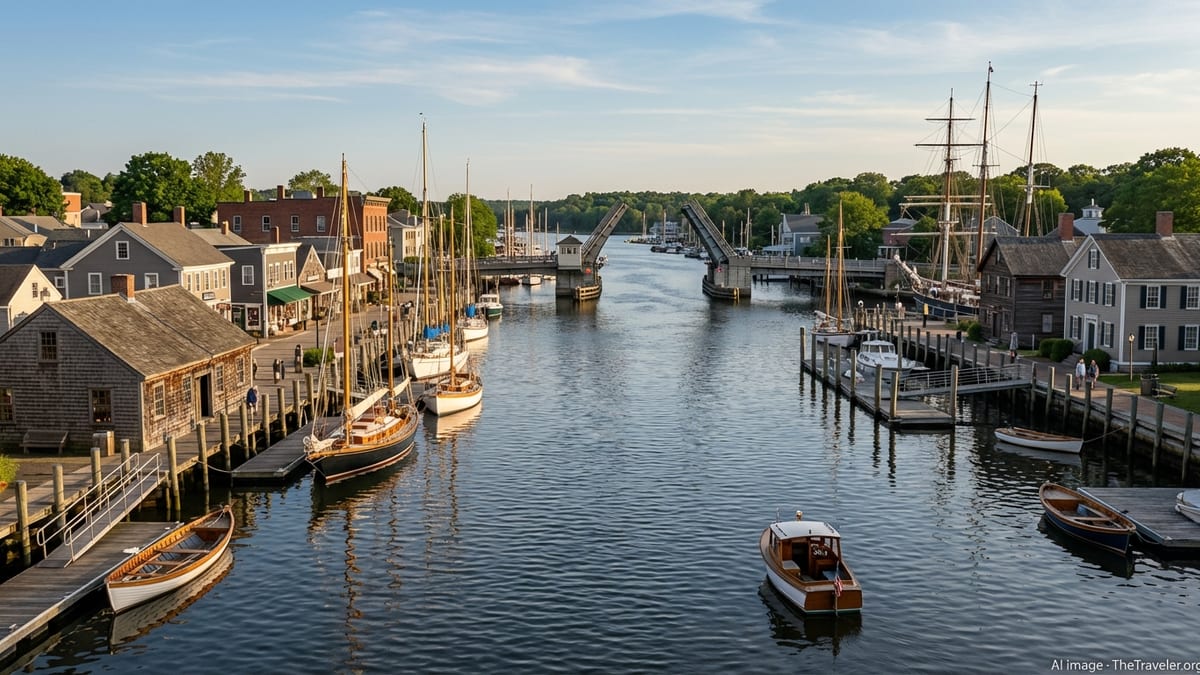
Mystic Seaport Museum and the Coastal Village of Mystic
Any list of Connecticut’s must-see attractions starts in Mystic, the postcard-perfect maritime village along the state’s eastern shoreline. At its heart is Mystic Seaport Museum, often described as one of the leading maritime museums in the United States. Visitors wander a recreated 19th century seafaring village, step aboard historic vessels, and watch shipwrights at work preserving classic wooden boats. The museum’s crown jewel is the Charles W. Morgan, the last remaining wooden whaling ship of its kind, which gives a vivid sense of the scale and hardships of the whaling era.
Beyond the ships and galleries, the museum functions as a living history campus. Costumed interpreters demonstrate traditional skills, from rope making and sail repair to blacksmithing, helping visitors understand how New England’s coastal communities once depended on the sea for every aspect of daily life. Exhibitions shift with the seasons and often highlight themes such as maritime trade, navigation, and marine conservation, making repeat visits rewarding. Families in particular appreciate the hands-on elements, boats to board, and interactive exhibits that encourage children to learn by doing rather than simply looking.
Step outside the museum gates and you are in downtown Mystic, a compact, walkable village stitched together by the Mystic River. Independent boutiques, ice cream parlors, and seafood restaurants line the streets, and the landmark bascule drawbridge opens several times a day for passing boats. The mix of salty air, clapboard buildings, and working marinas gives Mystic an atmosphere that feels both nostalgic and contemporary. For travelers, it is easy to combine a full day exploring Mystic Seaport Museum with an evening stroll along the waterfront and a relaxed seafood dinner.
Nearby, Mystic Aquarium adds another family friendly dimension to the area. Known for its beluga whales, penguin habitat, and focus on marine science, the aquarium gives visitors a closer look at the wildlife of the North Atlantic and beyond. Together, the museum, aquarium, and village make Mystic one of the most complete and satisfying destinations in the state, and a true essential for any first-time visitor to Connecticut.
New Haven’s Cultural Corridor: Yale University and Its Museums
New Haven, home to Yale University, is one of New England’s most rewarding mid-sized cities for art, architecture, and dining. At the center of this appeal is the Yale University Art Gallery, regarded as one of the finest university art museums in the country. The gallery’s collections span everything from ancient Mediterranean pieces and African sculpture to European masterworks and modern American painting, with names like van Gogh, Picasso, and Rothko represented. Visitors often remark that the scale and quality feel comparable to much larger metropolitan museums, yet the gallery remains free and relatively uncrowded.
Equally compelling is the Yale Center for British Art across the street, which houses what is widely considered the largest collection of British art outside the United Kingdom. Portraits, landscapes, and decorative arts trace centuries of British cultural life, and the building itself, designed by Louis Kahn, rewards close architectural attention. Together, these institutions turn a simple stroll along Chapel Street into a deep dive into global art history, with the bonus that admission policies and regular public tours make them easy and affordable to access.
In recent years, Yale’s Peabody Museum of Natural History has reemerged as another major reason to visit New Haven. After a multiyear renovation, the museum reopened with expanded galleries, refreshed dinosaur displays, and updated exhibits on earth science and biodiversity. For families, the combination of towering fossil skeletons and interactive science stations makes the Peabody a standout stop. Importantly for travelers on a budget, Yale has emphasized free or low-cost access across its museums, making New Haven a remarkably good value for culture-focused itineraries.
Beyond the museums, the city’s historic campus, shaded greens, and stone collegiate buildings create a strong sense of place. Walking tours highlight everything from Gothic towers and secret courtyards to contemporary architecture by well-known modernist designers. After exploring the galleries, visitors can sample New Haven’s celebrated pizza scene, independent bookstores, and small music venues. For a compact stop rich in art, history, and food, New Haven belongs on any serious Connecticut short list.
Gillette Castle State Park and the Connecticut River Valley
Perched high above a bend in the Connecticut River, Gillette Castle State Park offers one of the state’s most distinctive combinations of architecture, scenery, and storytelling. The stone mansion, completed in 1914, was the private estate of William Gillette, a stage actor best known for popularizing Sherlock Holmes in live theater. Rather than building a traditional country house, he created a rugged, almost storybook-like castle, complete with turrets, hand-carved woodwork, and idiosyncratic design details that reflect his theatrical imagination.
Guided or self-guided tours of the castle reveal a series of custom-made features that visitors rarely forget. Intricately carved wooden doors, elaborate locking mechanisms, and built-in seating show an almost obsessive attention to detail. Inside, the rooms frame sweeping views across the river and surrounding hills, reminding guests that the house was as much about its commanding vantage point as about its interior design. The decor and preserved personal items give insight into Gillette’s personality and the lifestyle of a successful early 20th-century entertainer.
Outside, the state park’s 184 acres are laced with walking trails and overlooks. Short paths lead to stone outcroppings and clearings where travelers can gaze down at the Connecticut River far below, watching pleasure boats, small cruise vessels, and, in season, the historic Essex Steam Train and Riverboat combination. Picnic tables, wooded paths, and scenic pull-offs make the park a pleasant half-day excursion even for those who only do a brief indoor visit. In summer and autumn, the interplay of green foliage or fall color with gray stone and blue water is particularly photogenic.
The surrounding lower Connecticut River Valley is worth exploring while you are in the area. The nearby town of Essex charms visitors with its village green, white church spires, and marinas, while Chester and Deep River offer galleries, restaurants, and small shops. Whether you arrive by car, combine the visit with a river cruise, or tie it into a rail excursion, Gillette Castle State Park adds drama and personality to any Connecticut itinerary.
Hammonasset Beach State Park and the Long Island Sound Shoreline
For many travelers, Connecticut’s shoreline is synonymous with summer, and Hammonasset Beach State Park in Madison is the clearest expression of that seasonal appeal. With two miles of sandy beach along Long Island Sound, it is the state’s largest shoreline park and one of its most visited outdoor destinations. In warm weather, families spread out with umbrellas and coolers, children build sandcastles at the water’s edge, and walkers use the long, flat shoreline as an ideal place to stretch their legs.
Hammonasset’s popularity rests on more than its beach. A large campground allows tents and RVs, offering an affordable base for multi-day stays along the coast. The park’s network of trails winds through dunes, coastal forest, and salt marsh, giving visitors the chance to see a variety of coastal ecosystems without traveling far from the parking lots. Birdwatchers appreciate the chance to spot seasonal migrations, while photographers come for sunrise and sunset over the Sound, when the low light flattens the waves into soft bands of color.
Another highlight is Meigs Point Nature Center, located within the park. The center’s exhibits and programs introduce visitors to local marine life, coastal plants, and the environmental challenges facing Long Island Sound. Touch tanks, live animal displays, and ranger-led walks help children and adults alike understand the fragile balance that allows this heavily used shoreline to remain an important wildlife habitat. For travelers who like to combine recreation with education, a visit to the nature center turns a simple beach day into a richer experience.
Hammonasset also works well outside of peak summer months. In spring and autumn, when crowds thin, the broad beach becomes an atmospheric place for long contemplative walks, kite flying, or shell collecting. Cooler temperatures make the inland paths more comfortable for hiking or biking. Even in winter, hardy locals come to watch storms roll in over the water. If your time in Connecticut is limited but you want at least one memorable moment by the sea, Hammonasset Beach State Park is a logical and rewarding choice.
Lake Compounce, Litchfield Hills, and Inland Family Adventures
Connecticut’s interior offers a different set of attractions, and Lake Compounce in Bristol and Southington stands out among them. Widely recognized as the oldest continuously operating amusement park in the United States, it blends classic nostalgia with modern thrill rides. Visitors find wooden roller coasters that rumble through the trees, steel coasters that twist above the lake, and a sizable water park called Crocodile Cove, all arranged around the natural body of water that gives the park its name.
The park has invested in upgrades in recent seasons, including retracking and improving its historic Wildcat wooden roller coaster and enhancing the Boulder Dash coaster, which uses the natural hillside to create a fast, terrain-hugging ride. Seasonal events add variety, from Halloween festivities with haunted houses and costumed performers to holiday light displays that transform the grounds into a winter-themed attraction. For families and groups of friends, Lake Compounce offers a full day of entertainment in a setting that feels more intimate than some of the region’s largest theme parks.
Beyond the midway, Connecticut’s inland regions supply quieter forms of recreation. To the northwest, Lake Waramaug State Park near Kent provides a peaceful counterpoint to the kinetic energy of an amusement park. This small park hugs the shore of one of the state’s prettiest lakes, with opportunities for swimming, paddling, fishing, and lakeside camping. In autumn, foliage reflections on the water attract photographers and leaf-peepers, while in summer, the lake’s calm surface is ideal for canoes, kayaks, and stand-up paddleboards. The surrounding country roads, lined with stone walls and old farmhouses, make for scenic drives or bike rides.
Travelers can connect these inland highlights with visits to charming Litchfield County towns such as Litchfield, Kent, and Washington. Antique shops, farm stands, and small museums dot the hills, inviting unhurried exploration. Whether you choose high-speed coasters at Lake Compounce, tranquil mornings on Lake Waramaug, or a mix of both, Connecticut’s interior proves that you do not need to stay on the coast to find memorable attractions.
The Maritime Aquarium at Norwalk and Fairfield County’s Waterfront
On the southwestern edge of the state, within easy reach of New York City, the Maritime Aquarium at Norwalk anchors a revitalized waterfront district known as SoNo. The aquarium distinguishes itself by focusing on the ecology of Long Island Sound, the tidal estuary that shapes so much of coastal Connecticut’s environment and economy. Rather than emphasizing tropical reef fish, it highlights local species such as sharks, rays, harbor seals, and sea turtles that either live in or transit through these colder waters.
Interactive exhibits allow visitors to get close to local marine life, with touch tanks, feeding demonstrations, and diver talks that explain how scientists monitor and protect the Sound. The aquarium’s harbor seal habitat is a perennial favorite, as are seasonal exhibits that may feature everything from jellyfish to animals from other ecosystems that connect to the North Atlantic. Behind the scenes, research and conservation initiatives aim to improve water quality and better understand the changing conditions of the estuary.
The surrounding SoNo neighborhood rewards travelers who linger before or after their aquarium visit. Converted brick warehouses now house restaurants, cafes, and galleries, while the nearby harbor remains active with recreational and some commercial boat traffic. Seasonal cruises, community events, and waterfront walks give visitors a chance to experience the area beyond the aquarium’s doors. For families looking for a manageable day trip with plenty of dining choices, Norwalk is especially convenient.
Elsewhere in Fairfield County, additional attractions such as beaches, nature preserves, and modern architecture can round out a coastal itinerary. From Norwalk you can fan out to coastal parks, nearby art museums, and historic districts in towns like Westport and Fairfield. Framed around a visit to the Maritime Aquarium, this part of Connecticut offers a satisfying snapshot of the state’s relationship with Long Island Sound, both as a natural resource and as a backdrop to daily life.
Historic Towns and Hidden Architectural Gems
Part of Connecticut’s appeal lies not only in its marquee attractions but also in the texture and character of its smaller towns and lesser-known landmarks. Travelers who value architecture and design often seek out the Glass House in New Canaan, the modernist residence designed by Philip Johnson. The property, which includes auxiliary structures and carefully composed landscapes, offers guided tours that explore the intersection of architecture, art, and nature. While it requires advance planning and timed tickets, many visitors consider it one of the most thought-provoking design experiences in the region.
Elsewhere, small historic towns deliver quieter but equally rewarding experiences. Litchfield, with its broad green and well-preserved colonial and Federal-era houses, provides a textbook example of a New England county seat. Essex, as mentioned in connection with the lower Connecticut River, pairs white clapboard architecture with maritime history, including the still-operating steam train and riverboat excursions that depart nearby. Old Saybrook, located at the mouth of the Connecticut River, combines beaches, marshland, and historic inns, making it a popular base for exploring both the shoreline and inland attractions.
New Haven, Hartford, and smaller cities such as New London reveal additional layers of history in their neighborhoods, churches, and civic buildings. Travelers who enjoy walking tours can explore industrial mill complexes converted into housing or creative spaces, 19th-century commercial blocks that have been adapted for modern retail, and residential streets that showcase Victorian and early 20th-century architecture. While these sites may not individually rank as top attractions, together they give visitors a more nuanced feel for how Connecticut evolved from a colonial outpost to a modern state.
For those with time and curiosity, building in hours to simply stroll through historic districts, peek into local historical societies, or pause at small-town greens can be as memorable as a museum visit. The reward is a deeper sense of place and a connection to everyday Connecticut life that exists beyond the headline sights.
FAQ
Q1. What is the single best attraction in Connecticut for first-time visitors?
For many first-time visitors, Mystic Seaport Museum and the surrounding village of Mystic offer the most complete introduction, combining maritime history, coastal scenery, and family friendly activities.
Q2. Is Connecticut worth visiting if I only have one or two days?
Yes. With one or two days you can still enjoy a focused itinerary, such as spending a full day in Mystic or New Haven, or pairing a beach visit at Hammonasset with a stop in a nearby town.
Q3. Do I need a car to see the top attractions in Connecticut?
A car offers the most flexibility, especially for reaching state parks and smaller towns, but some key destinations such as New Haven, Norwalk, and certain coastal areas are accessible by train and local transportation.
Q4. When is the best time of year to visit Connecticut’s attractions?
Late spring through fall is generally the most pleasant, with beaches and amusement parks fully open in summer and foliage at its peak in October, though museums and cities remain appealing year-round.
Q5. Are Connecticut’s museums and major attractions family friendly?
Most of the major attractions, including Mystic Seaport Museum, Mystic Aquarium, the Maritime Aquarium at Norwalk, Yale’s museums, and Lake Compounce, are designed with families and children in mind.
Q6. How crowded do the beaches and parks get in summer?
Popular spots such as Hammonasset Beach State Park can be very busy on peak summer weekends, so arriving early in the day or visiting on weekdays usually provides a more relaxed experience.
Q7. Can I visit several of these attractions in a single weekend?
With thoughtful planning you can combine two or three nearby highlights, such as Mystic and the surrounding shoreline, or New Haven with a visit to a nearby coastal town or inland park.
Q8. Are reservations or timed tickets required for any top attractions?
Some sites, like the Glass House and certain special exhibitions, often use timed ticketing or limited capacity, so checking ahead and reserving online when possible is advisable.
Q9. What should I pack for a trip that includes both coastal and inland attractions?
Packing layers is wise, along with comfortable walking shoes, a light waterproof jacket, sun protection for coastal and lake visits, and casual clothing suitable for both city streets and easy trails.
Q10. Is Connecticut an expensive place to visit compared with other New England states?
Costs vary by region, but in general Connecticut is comparable to neighboring states, with higher prices in Fairfield County and coastal hotspots and more moderate options inland and in smaller towns.