


Istanbul Airport is one of the busiest hubs in Europe, a striking glass and steel gateway between continents that can feel overwhelming even for seasoned travelers. With a single vast terminal, long walking distances, changing transport options and the occasional scam, small mistakes here can easily cost you time, money and nerves. The good news: most problems are predictable, and with a bit of planning you can move through Istanbul Airport with confidence.
Get the latest updates straight to your inbox!
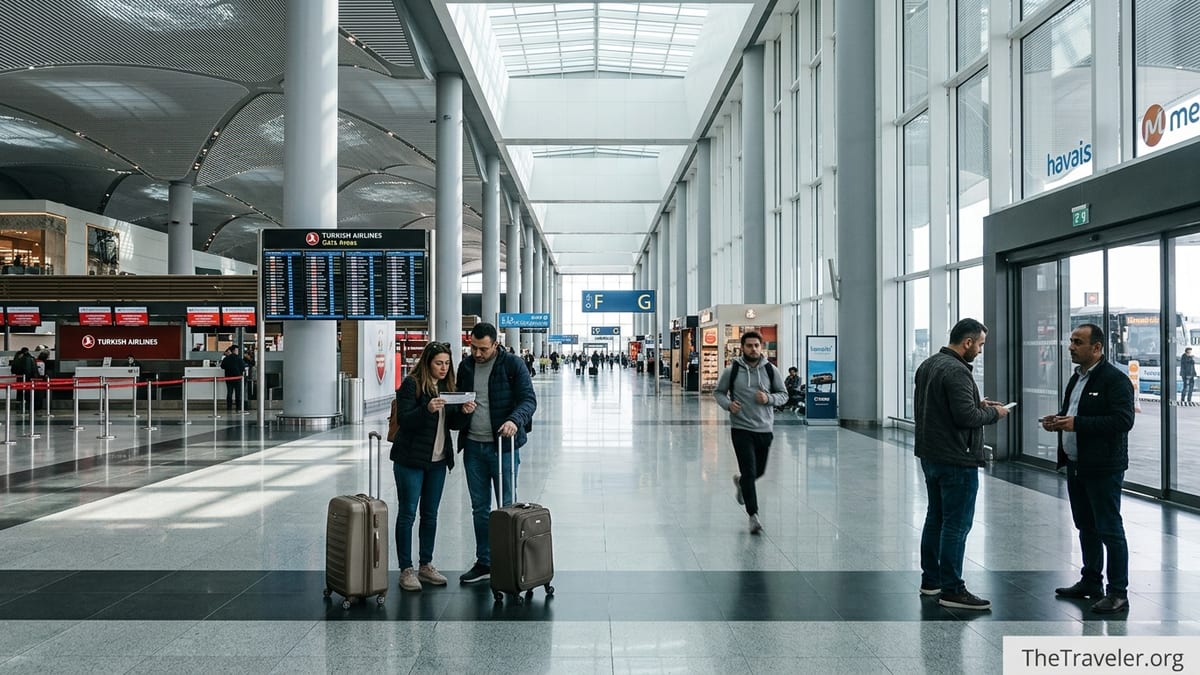
Underestimating Just How Big the Terminal Really Is
The most common mistake at Istanbul Airport is assuming it works like a compact European hub where you can stroll from security to your gate in ten minutes. In reality, IST is a single mega terminal with multiple concourses stretching outward like spokes. Walking from the central duty free area to a far G gate can easily take 20 to 25 minutes at a normal pace, and that does not include time for security or passport control. Travelers who arrive at the airport only 90 minutes before departure on a busy morning often discover they are sprinting to the gate.
This scale catches transit passengers too. If you land from North America at a distant F or G gate and connect to a Schengen destination from an A gate, you may walk well over a kilometer through crowded corridors. Families with strollers, older travelers and anyone carrying heavy cabin baggage should plan for slower movement. If a boarding pass or app shows “Go to gate” shortly after landing, do not linger for coffee in the central shopping area. Start walking and look for rest areas closer to your gate instead.
Another related error is ignoring airport signage and depending only on the airline app. Istanbul Airport’s digital displays and large overhead signs are generally clear and updated faster than some apps. Gates sometimes change as aircraft are repositioned. Many travelers have told stories of relaxing near a C gate because their app had not refreshed, only to hear a final boarding call for a flight that quietly moved to D. Make a habit of checking the nearest screen every time you pass one and verifying your concourse letter, not just the gate number.
For tight connections booked on a single ticket, airlines usually factor these distances into the minimum connecting time, but self-connecting passengers often do not. If you book two separate tickets through IST, avoid scheduling less than three hours between flights, especially if one leg involves immigration, baggage reclaim and recheck. The size of the building and the crowds mean that even straightforward tasks take longer than expected.
Arriving Too Late for Check in, Security and Passport Control
Because Istanbul Airport is modern and efficient looking, many passengers assume they can arrive two hours before a long haul flight and still be fine. In practice, early morning waves for Europe and late night long haul departures can create long lines at airline check in, standard security screening and passport control. On busy days, it is not unusual for travelers to spend 20 to 40 minutes just queuing for border checks before reaching the central airside area.
Airlines serving IST generally recommend arriving at least three hours before international flights and two hours before domestic ones. That advice is based on actual patterns. For instance, if you are flying to London, Berlin or Paris around 08:00, check in areas for Turkish Airlines and partners can be completely full around 05:30 to 06:30. A traveler who arrives by taxi at 06:00 expecting a quick drop off might still be in the check in line at 06:40, with security and passport control still ahead. Missing bag drop deadlines is a real risk.
Online check in and mobile boarding passes help, but they do not eliminate queues. Many airlines still require document checks at the counter for certain destinations, and everyone must pass through security and, for international flights, passport control. Travelers with onward connections from Istanbul sometimes ignore the second set of lines on departure. For example, a passenger ending a beach holiday in Antalya and connecting via IST to New York could face waiting first at domestic security in Antalya, later at international security and passport control in Istanbul, then a long walk to a distant gate. Building enough buffer at the first departure point is essential.
Another frequent misstep is ignoring airline specific cut off times. Some carriers close economy class bag drop 60 minutes before departure and will not add bags afterward, even if you are physically in the terminal. Unlike smaller airports where staff sometimes “push you through,” Istanbul Airport often adheres more strictly to published deadlines because of the volume. Double check your airline’s check in cutoffs and treat them as firm limits, not guidelines.
Misjudging Transport Costs and Falling for Taxi Pitfalls
Transport between Istanbul Airport and the city is where many first time visitors lose money or peace of mind. After a long flight, it is tempting to accept the first person who approaches you in the arrivals hall offering a “good taxi deal” or “private transfer.” That is the starting point for many overcharging stories. Official taxis queue at signed ranks outside the terminal, and you do not need to go with anyone walking up to you inside.
Metered yellow taxis from IST to central areas like Taksim or Sultanahmet typically cost the equivalent of a modest Western city ride, with the fare depending on traffic and route. Travelers report paying in the range of several hundred Turkish lira for daytime rides, sometimes more late at night or with heavy traffic. Problems arise when drivers refuse to use the meter, propose a flat price that is well above the typical range, or take a deliberately long route on the toll highway to inflate the fare. Some visitors also describe a “money switch” trick, where the driver insists you handed over a smaller bill than you actually did.
To reduce risk, many experienced visitors choose alternatives like the Havaist airport shuttle buses, the M11 metro line combined with inner city lines, or pre booked private transfers organized through a reputable company. Havaist buses run from outside the terminal to central points such as Taksim or Sultanahmet, with tickets priced in Turkish lira and payable by card or Istanbulkart. Ride times vary from about an hour to over ninety minutes, depending on traffic. The metro is cheaper but involves changing lines and walking through large transfer stations, which can be tiring with large suitcases.
Those who still prefer taxis can protect themselves by joining the official line, checking that the meter starts at the correct base fare, and following the route on a mapping app. If the driver proposes a fixed price that seems high, you can calmly decline and return to the queue for another cab. Some travelers use local ride hailing apps like BiTaksi, which call a licensed taxi but provide a digital record of the trip, route and approximate cost. The main mistake is not the choice of taxi itself but stepping into an unmetered ride without clarity on the fare or allowing fatigue to override your judgment.
Choosing the Wrong Option for an Overnight or Long Layover
Istanbul Airport is increasingly used as a long haul connection point, and many travelers find themselves with layovers of eight, ten or even sixteen hours. A common error is deciding to “just stay in the terminal” without thinking through comfort, sleep and immigration rules. While IST is modern and comparatively safe, spending a full night in a standard waiting area chair under bright lights and constant announcements can be exhausting.
The airport offers several better options, but each has caveats. There is an airside transit hotel used by passengers who do not want to clear immigration, with rooms bookable for blocks of hours. There is also a landside hotel connected to the terminal for travelers who are willing and allowed to enter Turkey and then re clear security in the morning. In addition, the terminal has pay per use lounges with showers, food, Wi Fi and in some cases quiet or nap areas. Travelers often assume these lounges are only for business class passengers, but many can be accessed with a same day boarding pass and a paid entry fee or lounge membership card.
Even free options require planning. Some concourses have relatively quiet rest zones with padded benches where you can lie flat, and there are sleep pods in selected areas where passengers can pay by the hour to nap without leaving airside. The mistake is not knowing where these options are located and arriving late at night without a plan. By the time an exhausted traveler starts searching at 01:00, the most comfortable spaces may already be full.
Another miscalculation involves leaving the airport during a layover without checking visa rules and transport times. For example, a traveler with a seven hour connection arriving in the late afternoon might decide to “quickly see Sultanahmet.” After immigration, baggage checks, buying an Istanbulkart, riding metro or shuttle into the city and then returning through traffic and security, there may be little time left. Border queues during peak hours can eat up an hour on their own. Before committing to a city excursion, calculate realistically: how long will it take to reach your chosen neighborhood, how much time will you actually have on the ground, and what time do you need to be back at the airport to clear departure formalities calmly.
Taking Duty Free and Security Rules for Granted
Another area where travelers stumble is duty free and security rules, especially for liquids and connecting flights. Istanbul Airport has a large central duty free area that tempts passengers with perfumes, cosmetics and bottles of raki or whisky. Buying these items is straightforward if IST is your final destination. However, if you have another flight after Istanbul, particularly to a country with strict liquid rules like the United States, United Kingdom or Australia, you need to think ahead.
Most duty free shops at IST seal liquor and perfume purchases in security bags that are acceptable for many international transfers, but problems can still arise if you must clear security again at your next airport without staying airside the whole way. For example, a traveler buying a large bottle of cologne in Istanbul before connecting in London and then continuing to a domestic UK destination may be forced to surrender it at the next security checkpoint. The same risk exists if your connection involves changing terminals in a way that requires exiting and re entering secure zones.
There are also differences in what is allowed in cabin baggage when departing Turkey compared with your home country, especially for items like power banks, vape devices or large containers of food. Security staff at IST are used to international traffic but will still apply local rules strictly. Passengers frequently report having jars of spreads, honey, olive oil or large tubes of cosmetic cream confiscated because they forgot that these count as liquids or gels over the allowed limit. If you are buying gifts in the city before your flight, pack liquids carefully into checked luggage rather than relying on carry on.
A final frequent oversight is not leaving enough time for a last security check at the gate for certain destinations. On flights to the United States, Israel and a few other countries, gate staff sometimes perform additional hand baggage screening and document checks. This can create small queues even after you have already passed main security. If you are in the habit of arriving at the gate just before boarding, you might be surprised by a short but mandatory second screening that delays your entry to the aircraft. Pay attention to boarding time on your pass, not just departure time.
Overlooking Practical Comforts: Wi Fi, Power, Food and Cash
Because the terminal is new and gleaming, many visitors assume that every practical need will be simple to meet. In reality, a bit of preparation makes things smoother. Wi Fi at Istanbul Airport is available, but login systems and free usage limits occasionally change. Travelers sometimes spend their first twenty minutes hunting for a connection or trying to receive an SMS code on a roaming number that is not working. Downloading offline maps of Istanbul and any necessary travel apps before your trip can save stress, especially if you need to quickly check transport options or communicate with a hotel on arrival.
Power outlets and USB sockets are scattered through the seating areas, but during peak times they are heavily used. Passengers wandering the concourses with single digit battery levels and frayed charging cables are a common sight. Carrying a small power bank and a reliable cable is a simple way to avoid competing for sockets near crowded gates. If you plan to work during your layover, consider using quieter corners of the food court or a paid lounge where power and seating are easier to secure.
Food is another area where expectations and reality can diverge. Istanbul Airport offers plenty of international chains along with Turkish options, but prices are often higher than in the city. A quick meal at a well known coffee chain or burger outlet near the gates will typically cost significantly more than the same items in central Istanbul. Some budget conscious travelers pack snacks or eat a substantial meal in the city before heading to the airport, relying on smaller purchases like water or coffee after security. Be mindful that not all outlets stay open overnight, so if you land after midnight and expect to eat immediately, choices may be limited to a handful of 24 hour spots.
When it comes to money, both cash and card are widely accepted, but mistakes still happen. Changing large amounts of currency at airport kiosks often means poorer exchange rates compared with city center offices or ATMs. Many services inside the terminal, including Havaist buses and shops, accept major credit and debit cards, so you do not necessarily need to convert a big sum on arrival. A practical strategy for new arrivals is to withdraw a modest amount of Turkish lira from an ATM for small purchases and taxis, while using cards for larger expenses. That reduces the significance of any one poor rate.
The Takeaway
Istanbul Airport impresses on first sight: expansive glass walls, high ceilings, minimalist design and a constant flow of global travelers. Yet beneath the modern surface, familiar travel traps still lurk. Underestimating walking distances, arriving too close to departure, stepping into the wrong taxi, improvising an overnight stay on a hard bench, or buying duty free without thinking through the next security checkpoint are not dramatic mistakes, but together they can turn a journey into a tiring ordeal.
The most successful travelers through IST share a few habits. They arrive early, with boarding passes ready and a realistic understanding of lines for check in, security and passport control. They decide in advance how they will reach the city, whether by Havaist, metro, private transfer or licensed taxi, and they ignore unsolicited offers inside the terminal. They prepare for layovers with a plan for rest, Wi Fi and meals, and they treat duty free purchases as part of a door to door itinerary instead of a last minute impulse.
With those simple adjustments, Istanbul Airport becomes much less intimidating and far more enjoyable. Instead of sprinting between concourses or negotiating fares while jet lagged, you can use the time to enjoy a strong Turkish coffee, browse local delicacies, and watch the mix of travelers flowing between Europe, Asia, the Middle East and beyond. In a city famous for its crossroads, moving smoothly through its main airport is one of the most satisfying travel skills you can acquire.
FAQ
Q1. How early should I arrive at Istanbul Airport for an international flight?
For most international departures, aim to reach the terminal at least three hours before scheduled departure, and even earlier during peak morning and late night waves when queues are longest.
Q2. Is it safe to take a taxi from Istanbul Airport into the city?
Yes, licensed taxis from the official ranks are generally safe, but always insist on using the meter, avoid unofficial drivers who approach you inside the terminal, and have an idea of the normal fare range before you ride.
Q3. What is the cheapest way to get from Istanbul Airport to central Istanbul?
The cheapest options are usually the M11 metro line combined with city metro or tram connections, or the Havaist shuttle buses, both of which cost less than a taxi while taking longer in time and effort.
Q4. Can I sleep inside Istanbul Airport during a long layover?
Yes, you can sleep in designated rest zones, on benches in quieter areas or by paying for a sleep pod, lounge or the on site airport hotel, but it is wise to choose and locate your preferred option before fatigue sets in.
Q5. Do I need cash in Turkish lira when I land at Istanbul Airport?
Not immediately for most travelers, as many services accept cards, but having a small amount of lira is useful for taxis, small food purchases and places that prefer cash, so withdrawing a modest sum from an ATM is practical.
Q6. Is the Wi Fi at Istanbul Airport free and reliable?
There is airport Wi Fi, often with a limited free period and additional paid access, and while it is generally usable for messaging and basic browsing, speeds and login methods can vary, so offline backups are helpful.
Q7. Will I have time to visit the city on a 6 hour layover at IST?
A six hour layover is usually too short once you factor in immigration, potential queues, transport into the city, and the need to be back early for your next flight, so it is safer to stay in the airport in that case.
Q8. Are duty free purchases at Istanbul Airport safe to take on connecting flights?
They are usually packaged in security bags acceptable for many onward flights, but if your connection requires another security check where liquid limits apply, large bottles may still be taken, so check your full route before buying.
Q9. How long does it take to walk to the farthest gates at Istanbul Airport?
From the central duty free area to the most distant gates in concourses like F or G, walking at a normal pace can take 20 to 25 minutes, longer if the corridors are very crowded or you are traveling with children.
Q10. Are there lounges I can pay to enter even if I am not flying business class?
Yes, several independent and airline affiliated lounges at Istanbul Airport sell access to economy passengers for a fee or membership card, offering food, drinks, Wi Fi, showers and quieter seating compared to main waiting areas.